
ArmInfo. The joint defense agreement signed yesterday by Saudi Arabia, Turkey, and Pakistan following the trilateral summit in Mecca, known as the "Mecca Joint Defense Agreement," could have a turning point for the Middle East.
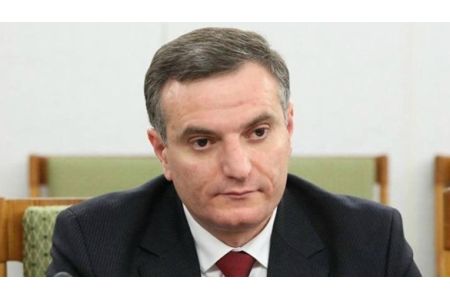
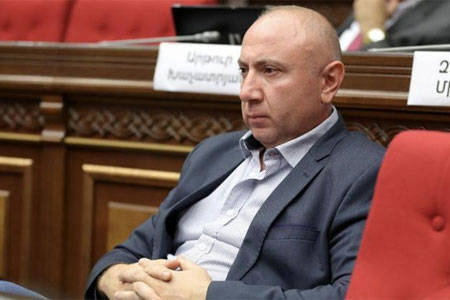
This opinion was expressed on his Facebook page by Artak Zakaryan, a member of the Republican Party of Armenia (RPA). He recalled that, according to the agreement, an armed attack on any of the three countries will be considered an attack on all parties to the agreement. "Its primary goal is to strengthen deterrence and collective capabilities, as well as counter potential aggression. This involves cooperation between the three countries 'in all areas' in security and defense. Turkey has the second-largest army in NATO. Saudi Arabia is the richest state in the Persian Gulf, home to Islam's holy sites, and one of the largest oil exporters. And Pakistan is the only Muslim country with nuclear weapons," Zakarian noted.
The politician believes that, following recent military and political events in the Middle East, the three countries are particularly concerned about the increasingly aggressive and consistent policies of both Israel and Iran. "Each of the three countries, given their own ambitious interests, growing regional opposition to them, their Muslim community, and the vectors of change in the global order, has come to the need for joint defense. Furthermore, they have realized that simply being a US ally is not enough to ensure comprehensive security," the RPA member explained.
He recalled that negotiations on creating an alliance, which could also be called an "Islamic NATO," have been ongoing since the end of last year. Zakarian noted that the agreement's wording is practically NATO- like, but the mechanism for its implementation remains unclear. "It's unclear what kind of military assistance the allies will be obligated to provide to each other, who will assess the threat level against each member, and who will decide on the need for joint action. It's also noteworthy that for Ankara, this new treaty doesn't cancel the obligations it has assumed as a NATO member. Moreover, Turkey states that the agreement is open to countries in the region. This means that the 'Islamic NATO' has the desire and potential to expand in the Middle East. It wouldn't be surprising if we see Azerbaijan there next, and subsequently, the countries of Central Asia," Zakarian noted.
According to him, it's not yet clear whose geopolitical initiative among global players this alliance is, what its long-term goals are, who they intend to arm themselves against, and what regional interests each member pursues. "It's difficult to say yet-all of this requires in-depth analysis. But the fact that the signed alliance is another turning point for the Middle East, in my opinion, is undeniable," the politician concluded.























 Analyst: The primary issue with Armenia`s new Parliament Speaker`s speech lies is its one-sided interpretation of the causes of the political crisis
 Expert: Gagik Tsarukyan embodies post-Soviet model of big business-state relations; this model is used in many other post-Soviet countries
 Expert: Azerbaijan promoting aggressive plans against Armenia at state level
 Iranologist: Baku`s propaganda of might masks the country`s inability to provide water to its own population
 NA Vice Speaker candidate believes his wife`s salary as director of HayPost is the lowest in the company`s history
 RF Permanent Representative: There is no CSTO-Armenia conflict
 Moscow: NATO seeking to "Pull" Armenia away from CSTO Allies
  Political analyst: Russia intends to determine which "Camp" Armenia will choose through a referendum
 Narek Karapetyan will give up his parliamentary salary in favor of charitable contributions.
 Armenia and France discuss further development of strategic partnership and EU cooperation
  To overcome risks Armenia must reduce domestic escalation - expert
  Zatulin: Pashinyan was eager to get back to Russia because he actually lost the elections
 Human rights activist Ruben Melikyan dismissed from YSU
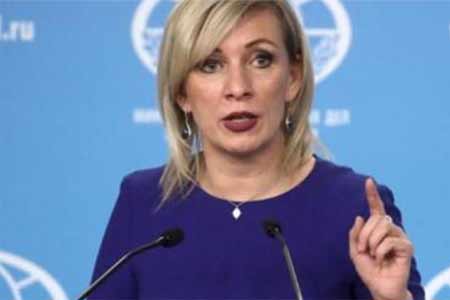 Zakharova: Armenia`s pro-EU pivot poses economic security risks to EAEU member states
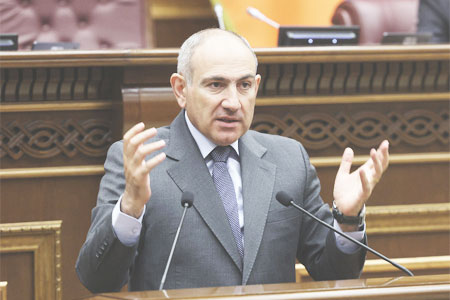 It`s time for South Caucasus countries to think of South Caucasus as single, unified region - RA premier
  Pashinyan: Armenia and Azerbaijan should leave each other alone
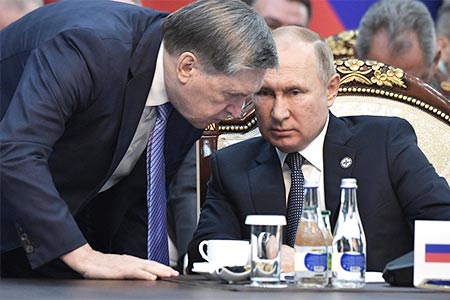 Moscow sees situation with Armenia as attempt to attack Russia-involving integration associations - Russian presidential aid