


ArmInfo. Political observer Hakob Badalyan called Armenian Prime Minister Nikol Pashinyan's address on August 8, 2025, the day the joint "Declaration of Peace" between Armenia and Azerbaijan was signed in Washington, D.C., shameful and dangerous, and revealed its true message.
On his Telegram page, he began with the final part, where the Armenian prime minister allegedly stated that "many are acting according to the logic of destroying the world," and then called for an end to discourses about the "right of return." Badalyan believes that in a situation where Azerbaijan is clearly acting against peace, with its demands and statements against Armenia, Pashinyan somehow "finds" those acting against peace in Armenia and sees in Armenia what supposedly needs to be done to make peace irreversible. "When Azerbaijan clearly and at the highest level speaks, supports, and promotes the so-called fictitious and legally groundless 'Western Azerbaijan program,' declaring that full-fledged peace cannot exist until it is implemented, Pashinyan 'in advance' turns Armenia into a risk factor for peace, denying completely objective rights substantiated by international law. This is something that is difficult to describe as anything other than shameful," the political scientist believes.
He also called the assertion that "in the parliamentary elections on June 7, Armenian citizens not only voted for peace but also took responsibility for it politically dangerous, although this does not mean that we have achieved the final result on the path to implementing the peace narrative." According to the expert, this statement is tantamount to a mine under Armenian statehood, as none of the leading opposition forces participating in Armenia's parliamentary elections has questioned peace or the need to establish relations with Azerbaijan. "Only the logic of peace proposed by the Civil Contract party or Pashinyan-its quality, reliability, trustworthiness, and predictability-has been called into question. It is generally dangerous when the ruling power, based on its own political needs, and perhaps under the influence of certain "verbal" conditions from Azerbaijan, attempts to "institutionalize" the "dilemma" of peace and war in Armenia, thereby characterizing the electoral process," the political observer explained.
Reacting to Pashinyan's statement that "August 8 divides the history of the Republic of Armenia into 'before' and 'after,'" he explained that in reality, it is Armenia's territory that is being "divided," having been leased to another state for nearly a century while formally preserving Armenia's territorial integrity and sovereignty. "And when Pashinyan declares that we have now broken the deadlock and that 'the steering wheel of our history is again in our hands,' this is a complete distortion of the real state of affairs, since 'peace' has been established only because the right to manage the road passing through Armenia's territory has been taken from Armenia's hands and transferred to others," the expert believes.
According to Badalyan, the "dilemma" of peace and war, posed by Armenia's ruling party, is completely false, artificial, and manipulative. And it is precisely this issue, in his words-the agenda of the real world, as opposed to the manipulative agenda of the "real Armenia"-that is currently one of the most important public and state issues for Armenia, a strategic issue that a modern government must address. The opposition must avoid emotional traps and succumb to the ruling party's clever propaganda tactics. "This work must be carried out both domestically and internationally. It's difficult work, but necessary and important," the political scientist asserts.
Badalyan also explained why Pashinyan still mentions August 8th. The political observer believes that such a message testifies to Pashinyan's difficult external situation and his lack of internal support, despite the Armenian prime minister's claims of public support in the parliamentary elections. "He is right in one respect: Armenian society has assumed responsibility for peace. But it assumed responsibility for peace by not giving Pashinyan 50 percent or more of the vote. This is precisely how Armenian society assumed responsibility for peace, and I think Pashinyan understands the full significance of this circumstance. Armenian society assumed responsibility for peace because assuming responsibility for peace means, at a minimum, depriving the ruling power in Armenia of its so-called constitutional majority, as well as gradually shaping a new political reality-with a new balance of power and a new logic for the political opposition," Badalyan explained.
Here, he said, Pashinyan has virtually no room for action, as he lacks the ability or resources to do anything other than what he expresses in his August 8 address. "The room for action lies exclusively with the opposition forces-within the sphere of activity of the leading opposition, or, more specifically, in continuing the changes that are already evident and beginning to show the first signs of change. Accordingly, the task is not to condemn Pashinyan and ask why he delivered this particular address. The task is to focus on what needs to be done and direct all efforts toward that," the expert concluded.















 Expert: The arrest of opposition figures in Armenia for social media posts is a systematic attempt to intimidate the public and suppress dissent.
 Azerbaijani Studies Expert: While Azerbaijan Prepares Its Generation for War, Aliyev’s Aide Calls on Armenia to Prepare Armenian Society for “Peace”
 Turkologist: Azerbaijan will never, under any circumstances, stop pressuring the Armenian people
 Political scientist: We need to move away from the question of "when" and replace it with more important questions
 International Law Specialist: Azerbaijan intends to initiate legal proceedings against Armenia by sentencing Armenian prisoners
 Dmitry Medvedev predicted a Ukrainian-like fate for Armenia amid the country`s shift in foreign policy
 Russian Security Council: In Armenia, they want to force Russian asset owners to dispose of their assets
 Zakharova: Russia ready to discuss with Armenia the prospects for expanding military cooperation as part of a review of bilateral ties
 Tevanyan: Armenia, like Ukraine and Moldova, is being drawn into the EU’s global war
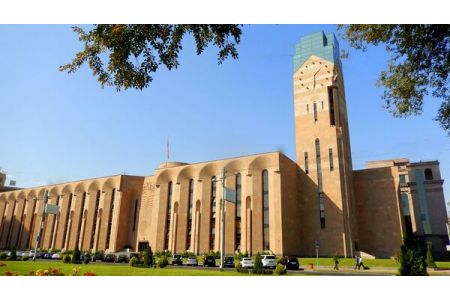 Yerevan City Hall is considering introducing a valet parking system in the city
 Expert: The circus surrounding the “Albanization” of Armenian culture in the presence of foreign ambassadors in occupied Artsakh is genocide
 Political scientist: If Russian-Armenian relations are destroyed, Turkey will take Russia`s place
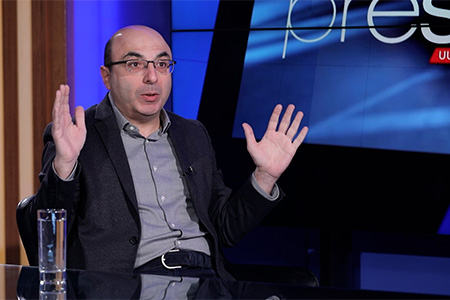 Political scientist: The Armenian public is simply obliged to significantly change the entire content of public discourse and struggle
 Cross tattoos are being removed from the skin of Christian prisoners in Azerbaijan by fire, according to a human rights activist.
 Zakharova: Armenia`s likely introduction of visas with Russia will be a step against Yerevan itself
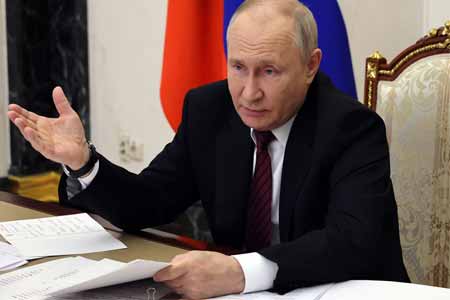 Putin: Armenia`s recognition of Karabakh as part of Azerbaijan in Prague has given Russia`s position on this issue an ambivalent character
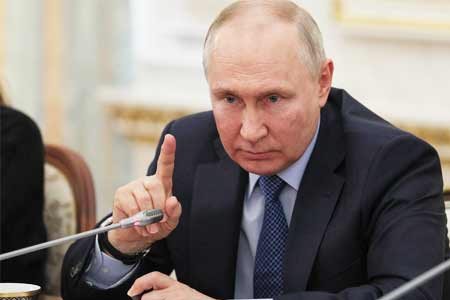 Putin: Armenia`s adoption of the law on EU accession means an announcement of its withdrawal from the Eurasian Economic Union
