
ArmInfo. Despite all the statements, issues of basic human rights in penitentiary institutions (PIs) in Armenia remain pressing.
Monitoring visits, discussions, and statements by relevant agencies are unable to "silence" reports of serious problems in places of detention, which continue to leak into the public domain. This again raises questions about how effectively measures to address identified violations are being implemented, and what systemic changes are taking place in the penitentiary system.
It is noteworthy that, a few days earlier, representatives of the Office of the Human Rights Defender (OHRD) took part in a working meeting organized at the initiative of the Ombudsman at the Penitentiary Service. The focus was on the problems identified during monitoring visits to the Abovyan and Artik correctional facilities, as well as potential solutions. However, even after this, the question remains as to the extent to which these discussions lead to practical changes, and why many issues only become the subject of widespread public debate after they have been publicly disclosed.
As a reminder, back in March 2026, Hovhannes Ghukasyan, Deputy Head of the Department for the Prevention of Torture and Cruel Treatment at the Office of the Human Rights Defender, reported that 24 cases of suicide had been registered in Armenian penal institutions in 2025. He noted that this was the highest figure in the past 15 years. He stated that the number of such cases was at least double the previous year's figure, which, according to the Ombudsman's Office representative, indicates deficiencies on the part of competent authorities in identifying the causes of suicides and the factors that contribute to these grave statistics.
These issues have repeatedly become the subject of discussion among human rights activists, public figures, and political figures. One such case was the death of a prisoner in February 2026, reported by journalist Roza Vardanyan. According to her, the man repeatedly appealed to the Prison Monitoring Group, which sent corresponding requests to the Armenian Minister of Health. "The prisoner resorted to extreme measures several times: he went on hunger strike, refused to drink even water, but this also failed to improve the situation. He even took the extreme step of swallowing foreign objects up to 15 cm long: a thermometer, a file, and pieces of iron. Some of these were removed from his body," the journalist reported at the time.
A. Sahakyan, the wife of prisoner A. Sargsyan, previously told an ArmInfo correspondent about similar problems. According to her, her husband had long complained of lung problems but had not received the necessary examinations in a timely manner. She claims that after his release in 2024, he was admitted to intensive care, where he was diagnosed with bilateral bronchitis. Later in 2025, according to the prisoner's wife, Sargsyan was again detained due to ongoing legal proceedings. According to her, his condition worsened again there. "He again began complaining of weakness and deteriorating health. For several months, treatment was limited to courses of antibiotics. However, he was not given antifungal medications, which led to further complications. Later, doctors stopped giving him antibiotics, citing the risk of worsening his condition," Sahakyan said.
She also reported that her husband had been running a fever for some time, and the symptoms previously recorded by medical staff, including coughing up blood, did not warrant further examination. The family, she said, is primarily seeking a full diagnosis. Saakyan claims that other prisoners are facing similar difficulties. Specifically, she said, one prisoner was diagnosed with echinococcus and requires constant medical supervision. "Medical care is limited to painkillers. The relatives have repeatedly expressed their willingness to arrange the necessary examination or treatment themselves, but their proposals remain unanswered," she noted.
Later, Sahakyan contacted the editorial office again and reported that her husband had self-harmed. She stated that medical assistance was not immediately provided, after which he was taken to the hospital. She believes, however, that the necessary medical care was never provided, and the issue remains unresolved.
ArmInfo also attempted to contact the Office of the Human Rights Defender for comment. They stated that, in accordance with the Law of the Republic of Armenia "On the Human Rights Defender," citizens' complaints and the information contained therein are confidential, and therefore they cannot comment on a specific case. However, the office noted that the complainant has the right to resubmit a complaint and expressed their willingness to answer the editorial office's questions after receiving an official request.
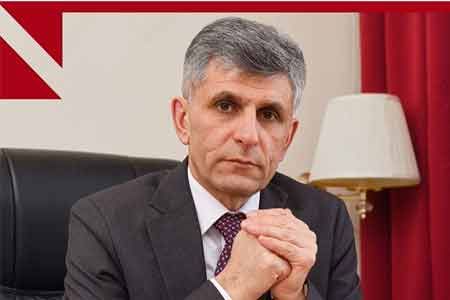
One thing is certain and clear: the criterion for effectively addressing these issues is not the number of complaints or monitoring visits, but the quality of changes made to the system that can reduce the number of such cases. As Garnik Danielyan, a member of the opposition "Armenia" faction in the National Assembly of the Republic, noted, the deplorable conditions in penal institutions have led to the increase in prison mortality. More often than not, the member of parliament noted, despite acute health problems and numerous complaints, prisoners are not transferred to medical facilities, are not provided with adequate medical care, and there is also a lack of medication. Coupled with the lack of basic living conditions, sanitary and hygienic conditions, and the lack of quality water and food, the issue of protecting basic human rights in Armenia's penal institutions is effectively unresolved.


















 Analyst: The primary issue with Armenia`s new Parliament Speaker`s speech lies is its one-sided interpretation of the causes of the political crisis
 Expert: Gagik Tsarukyan embodies post-Soviet model of big business-state relations; this model is used in many other post-Soviet countries
 Expert: Azerbaijan promoting aggressive plans against Armenia at state level
 Iranologist: Baku`s propaganda of might masks the country`s inability to provide water to its own population
 NA Vice Speaker candidate believes his wife`s salary as director of HayPost is the lowest in the company`s history
 RF Permanent Representative: There is no CSTO-Armenia conflict
 Moscow: NATO seeking to "Pull" Armenia away from CSTO Allies
  Political analyst: Russia intends to determine which "Camp" Armenia will choose through a referendum
 Narek Karapetyan will give up his parliamentary salary in favor of charitable contributions.
 Armenia and France discuss further development of strategic partnership and EU cooperation
  To overcome risks Armenia must reduce domestic escalation - expert
  Zatulin: Pashinyan was eager to get back to Russia because he actually lost the elections
 Human rights activist Ruben Melikyan dismissed from YSU
 Zakharova: Armenia`s pro-EU pivot poses economic security risks to EAEU member states
 It`s time for South Caucasus countries to think of South Caucasus as single, unified region - RA premier
  Pashinyan: Armenia and Azerbaijan should leave each other alone
 Moscow sees situation with Armenia as attempt to attack Russia-involving integration associations - Russian presidential aid