

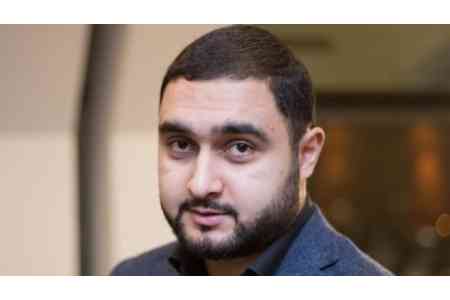
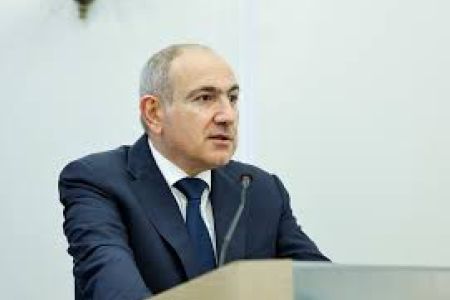
ArmInfo.The core issue with the speech of the Speaker of the Armenian Parliament of the 9th convocation, Ruben Rubinyan, to the new National Assembly lies in his one-sided interpretation of the causes of the political crisis. Analyst Tigran Dumikyan expressed this opinion on his Facebook page.
As the expert recalled, in his speech Rubinyan emphasized the need to restore parliamentary political culture, calling on deputies to overcome the stereotype that parliament has turned into an arena for meaningless disputes, insults, and disrespectful rhetoric. "According to his assessment, such an atmosphere took shape as early as 2018, but it escalated sharply after the 2020 war, when the opposition refused to accept the trust the people placed in the authorities. In this context, Rubinyan urged the parliamentary opposition to start relations from 'zero point,' guided by the principles of human decency and mutual respect. However, the fundamental problem with Rubinyan's speech lies in its one-sided interpretation of the causes of the political crisis," Dumikyan noted.
The analyst believes that the newly elected speaker of the Armenian parliament is thus attempting to pin the roots of parliamentary tension exclusively on the opposition's refusal to recognize election results. According to Dumikyan, this thesis is not only subjective, but also fails to reflect the full picture of ongoing processes. As the expert explained, the degradation of parliamentary culture and the violation of political correctness boundaries cannot be viewed solely as the consequence of a deliberate choice made by the opposition.
"In essence, they formed as a result of the policies pursued by the authorities. Political contradictions deepened against the backdrop of events that had severe consequences for national issues: the defeat in the 44-day war of 2020, the complete exodus of the Armenian population of Artsakh, the occupation of part of Armenia's sovereign territory, the authorities' unilateral, yielding policy in negotiations with Azerbaijan and Turkey, their opposing stance toward the Armenian Apostolic Church (AAC), as well as the consistent application of legal and administrative pressure against opponents. In addition, the pressure exerted on the three main opposition forces during the recent parliamentary elections and the uneven use of administrative and political resources significantly heightened public distrust in the electoral processes," the analyst noted.
He believes that these circumstances cannot be ignored when discussing the causes of the parliamentary crisis. He also notes that the obvious contradiction between Rubinyan's call and the post-election rhetoric of Armenian Prime Minister Nikol Pashinyan deserves special attention. "In the post-election period, Pashinyan has repeatedly made harsh statements against the opposition, citing arrests, criminal liability, and property seizures. In such a political environment, it's difficult to expect the opposition to accept the government's proposed 'zero point' as a basis for sincere dialogue.
Thus, Rubinyan's appeal to restore parliamentary culture is more of an attempt to influence public perception than an acknowledgment of the real causes of the crisis. Crises formed around national security, statehood, territorial losses, political trust, and relations between the authorities and the opposition cannot be overcome merely through rhetorical appeals as long as a political and institutional assessment of their causes is absent. And it does not matter how many times the authorities have been re-elected or what percentage of votes the opposition received," Dumikyan concluded.





 Expert: Economic pressure on Armenia may be virtually painless for other EAEU members, but not for Armenia itself
 Expert on protests in France: Civilizations fade when society loses a vision of the future
 Turkologist: Azerbaijan is not all-powerful—its vulnerabilities should become part of Armenia’s security strategy
 Opinion: The development of the Amulsar mine near the resort town of Jermuk is the beginning of an environmental disaster in Armenia
 Expert: The arrest of opposition figures in Armenia for social media posts is a systematic attempt to intimidate the public and suppress dissent.
 The Armenian Foreign Minister commented on the country`s return to work within the CSTO.
 The Artsakh Public Council expressed outrage at the UN Secretary-General`s behavior
 Lukashenko called for Armenia to assume the CIS presidency in 2029
 Dmitry Medvedev predicted a Ukrainian-like fate for Armenia amid the country`s shift in foreign policy
 Russian Security Council: In Armenia, they want to force Russian asset owners to dispose of their assets
 Zakharova: Russia ready to discuss with Armenia the prospects for expanding military cooperation as part of a review of bilateral ties
 Tevanyan: Armenia, like Ukraine and Moldova, is being drawn into the EU’s global war
 Yerevan City Hall is considering introducing a valet parking system in the city
 Expert: The circus surrounding the “Albanization” of Armenian culture in the presence of foreign ambassadors in occupied Artsakh is genocide
 Political scientist: If Russian-Armenian relations are destroyed, Turkey will take Russia`s place
 Political scientist: The Armenian public is simply obliged to significantly change the entire content of public discourse and struggle
 Cross tattoos are being removed from the skin of Christian prisoners in Azerbaijan by fire, according to a human rights activist.
 Zakharova: Armenia`s likely introduction of visas with Russia will be a step against Yerevan itself
 Putin: Armenia`s recognition of Karabakh as part of Azerbaijan in Prague has given Russia`s position on this issue an ambivalent character
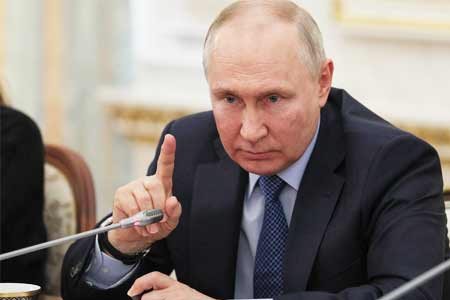 Putin: Armenia`s adoption of the law on EU accession means an announcement of its withdrawal from the Eurasian Economic Union