
ArmInfo.The development of relations with Europe and the United States must be managed in a way that prevents Armenia from endangering its vital and trusting relationships with regional powers.
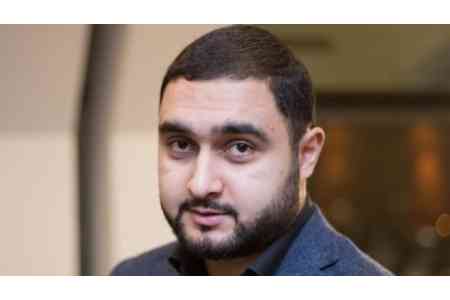
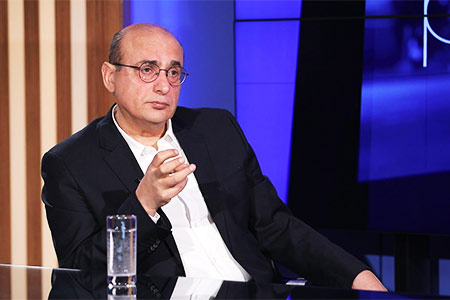
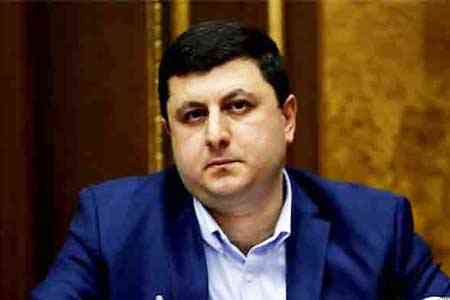
Analyst Tigran Dumikyan wrote this in his Facebook post, against the backdrop of heightened discussions by Armenian authorities regarding the "Trump Route for International Peace and Prosperity" (TRIPP) project amid the ongoing U.S.-Iran conflict.
As the expert noted, the project—which involves a specific format for an American presence in Armenia— has sparked some sensitivity and concern in relations between Yerevan and Tehran. "Tehran has repeatedly emphasized that it is closely monitoring any initiatives in the region that could strengthen U.S. influence or alter the existing strategic balance. In turn, official Yerevan assures that the project is aimed exclusively at developing regional communications and expanding economic cooperation, and is not directed against any third country," Dumikyan pointed out.
However, the analyst believes that the ongoing and increasingly harsh statements from Iranian officials show that these assurances are not perceived as sufficiently convincing in Tehran, which could lead to practical consequences. According to him, this indicates at the very least that Armenia's diplomatic corps and relevant government structures are failing to conduct sufficiently effective work—a matter of particular concern given Armenia's significant economic dependence on Iran.
In this regard, Dumikyan noted that Armenia imports approximately 20% of its natural gas from Iran, which plays a crucial role in ensuring the stability of the country's energy system. "Bilateral trade turnover amounts to approximately $800 million per year, which is significant for the Armenian economy. At the same time, Iranian territory serves as a vital transit route for Armenia, as goods imported from India, China, Persian Gulf countries—specifically the UAE and Qatar—and several Southeast Asian states enter Armenia precisely via this corridor," the expert stated.
Thus, as the analyst noted, Iran is not only a trading partner for Armenia but also a crucial logistical lifeline connecting it to the outside world. Consequently, Dumikyan argues, without fully resolving relations with Moscow, Armenia could effectively face new problems. In this regard, he recalled official assurances that relations with Russia would be settled following the elections.
"Just a few months ago, Armenian Prime Minister Nikol Pashinyan repeatedly stated in public that immediately after the parliamentary elections, Russian restrictions against Armenia would be lifted. As justification, he cited his good personal relationships with both Russian President Vladimir Putin and Prime Minister Mikhail Mishustin. However, following the elections, neither Putin nor Mishustin even congratulated Pashinyan, and after a meeting with the Russian Prime Minister in Yekaterinburg, no noticeable positive shift in Armenian-Russian relations was recorded. Meanwhile, it is vital for us that the development of relations with Europe and the U.S. does not jeopardize Armenia's trusting and important ties with regional powers. Politics is the art of the possible," the analyst noted.
In short, the expert explained, Armenia must not turn into a pawn in the geopolitical games of global powers. Instead, he argues, the country must leverage existing contradictions between them in its own interest without compromising its security and strategic priorities. "At this crucial stage, we simply have no room for error. Therefore, Armenia needs a balanced and far-sighted foreign policy that will serve exclusively the long-term interests of our state and people," Dumikyan concluded.
READ ALL COMMENTS












 Political scientist: The model of allied relations between Russia and Armenia has collapsed
 Expert: The defeated authorities` position on normalizing relations with the enemy should not affect the rights of Artsakh refugees
 Expert: Fourth Republic is not to begin with Kocharyan`s arrest
 Expert: Armenia continues to `peel away` from Russian-led military-political and economic structures
 Zakharova: Armenia`s likely introduction of visas with Russia will be a step against Yerevan itself
 Putin: Armenia`s recognition of Karabakh as part of Azerbaijan in Prague has given Russia`s position on this issue an ambivalent character
 Putin: Armenia`s adoption of the law on EU accession means an announcement of its withdrawal from the Eurasian Economic Union
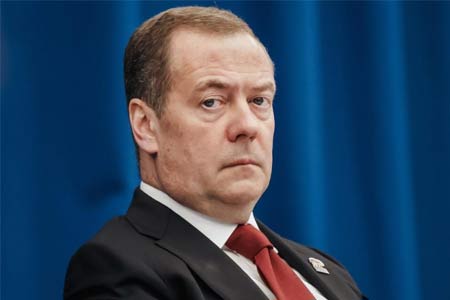 Medvedev: Yerevan will never become an EU member, but it will permanently damage relations with the Eurasian Economic Union, including with Moscow.
 Arrested Armenian oligarch on economy and new jobs
  "In Baku, we gave a worthy rebuff to the false claims regarding the past and present of our people" – Former Artsakh Parliament Speaker from Baku captivity
  NA Vice Speaker candidate believes his wife`s salary as director of HayPost is the lowest in the company`s history
 RF Permanent Representative: There is no CSTO-Armenia conflict
 Moscow: NATO seeking to "Pull" Armenia away from CSTO Allies
  Political analyst: Russia intends to determine which "Camp" Armenia will choose through a referendum
 Narek Karapetyan will give up his parliamentary salary in favor of charitable contributions.