
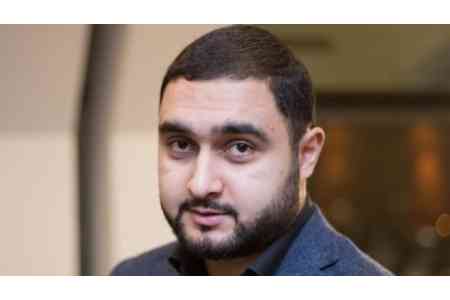
ArmInfo. The 2026 parliamentary elections once again demonstrated that the current authorities in Armenia view political competition not as a natural and necessary component of a democratic system, but rather as a factor threatening their own positions. This was written by analyst Tigran Dumikyan on his Facebook page.
Speaking about the expectations of Armenian citizens in the post-election period, he noted that the "Strong Armenia" bloc of Samvel Karapetyan, even before the distribution of parliamentary mandates, has already begun a series of meetings with the country's citizens.
In this regard, he drew attention to the fact that in Armenia's political system, the relationship between the authorities and the opposition has for many years been built on an asymmetrical model, in which real political competition was often absent. "The authorities generally did not face serious obstacles in fully implementing their own agenda, and when necessary, used opposition forces as a tool—to present them to the public or create the impression of their legitimacy," Dumikyan explained.
He emphasized that the change of power in 2018 (the Velvet Revolution, as a result of which Nikol Pashinyan became Prime Minister of Armenia - ed.) could have been considered a kind of turning point, but in reality, the essence of the phenomenon largely did not change.
"If we try to summarize the main expectations of the society that entrusted the opposition, it can be concluded that one of the key tasks of the united opposition is to form effective mechanisms to restrain the current authorities and force them to make political concessions. After all, the concerns expressed by the opposition on a number of issues during the pre-election period should appear on the agenda of the authorities themselves just a few weeks after the formation of the new parliament and government. Notably, the 'Strong Armenia' bloc, having not yet received parliamentary mandates, has already begun a series of post-election meetings with Armenian citizens. Moreover, in those communities where the political force achieved a convincing victory, a program to stimulate large families has started, providing apartments to families upon the birth of their fifth child," the analyst pointed out.
According to him, even if we set aside the scale of the social program, it must be acknowledged that in the political history of independent Armenia, it is difficult to recall a similar precedent when a political force, not yet having begun to exercise parliamentary powers, moves to practical actions. Dumikyan believes that such an approach sets a new standard of political responsibility—the principle of moving from words to deeds. He also called attention to how the current authorities respond to this political challenge. The analyst noted that at the moment, it seems that a special place among their priorities is occupied by the issue of bonus payments, drawing attention to the fact that the Armenian government at the July 16 meeting allocated an additional 5 billion drams for rewarding employees of the state system.
"At the same time, it is obvious that society places specific expectations not only on the opposition but primarily on the authorities. And this is natural, since the entire responsibility for state governance lies with the authorities. However, the main question is the following: which of the political poles will be able to more effectively justify society's expectations and, most importantly, what benefit will Armenia gain from this?" the analyst concluded.





 Expert: Economic pressure on Armenia may be virtually painless for other EAEU members, but not for Armenia itself
 Expert on protests in France: Civilizations fade when society loses a vision of the future
 Turkologist: Azerbaijan is not all-powerful—its vulnerabilities should become part of Armenia’s security strategy
 Opinion: The development of the Amulsar mine near the resort town of Jermuk is the beginning of an environmental disaster in Armenia
 Expert: The arrest of opposition figures in Armenia for social media posts is a systematic attempt to intimidate the public and suppress dissent.
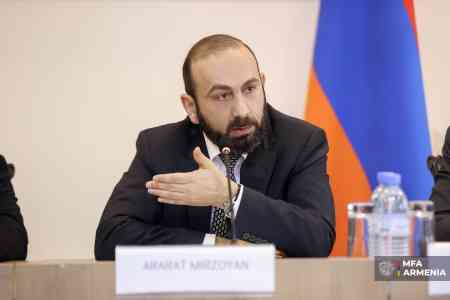 The Armenian Foreign Minister commented on the country`s return to work within the CSTO.
 The Artsakh Public Council expressed outrage at the UN Secretary-General`s behavior
 Lukashenko called for Armenia to assume the CIS presidency in 2029
 Dmitry Medvedev predicted a Ukrainian-like fate for Armenia amid the country`s shift in foreign policy
 Russian Security Council: In Armenia, they want to force Russian asset owners to dispose of their assets
 Zakharova: Russia ready to discuss with Armenia the prospects for expanding military cooperation as part of a review of bilateral ties
 Tevanyan: Armenia, like Ukraine and Moldova, is being drawn into the EU’s global war
 Yerevan City Hall is considering introducing a valet parking system in the city
 Expert: The circus surrounding the “Albanization” of Armenian culture in the presence of foreign ambassadors in occupied Artsakh is genocide
 Political scientist: If Russian-Armenian relations are destroyed, Turkey will take Russia`s place
 Political scientist: The Armenian public is simply obliged to significantly change the entire content of public discourse and struggle
 Cross tattoos are being removed from the skin of Christian prisoners in Azerbaijan by fire, according to a human rights activist.
 Zakharova: Armenia`s likely introduction of visas with Russia will be a step against Yerevan itself
 Putin: Armenia`s recognition of Karabakh as part of Azerbaijan in Prague has given Russia`s position on this issue an ambivalent character
 Putin: Armenia`s adoption of the law on EU accession means an announcement of its withdrawal from the Eurasian Economic Union