

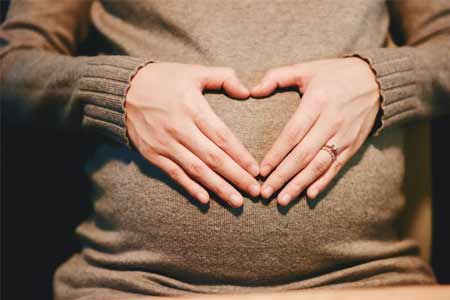
ArmInfo. Armenia's birth rate is declining year after year, ass stated by Armenian Minister of Labor and Social Affairs Arsen Torosyan at a regular meeting of the Public Council.
The session focused on the Strategy for Improving the Demographic Situation in the Republic of Armenia for 2024-2040, as well as state support programs for housing families with children. According to him, 32,042 children were born in the country in 2025, compared to 33,593 in 2024 and 36,590 in 2023. Torosyan noted that while the annual number of births had previously remained stable at approximately 36,000, a clear downward trend has emerged since 2023.
Currently, the fertility rate in Armenia stands at 1.7 children per woman of reproductive age. While this is higher than in some developed nations facing "catastrophic" demographic situations with rates as low as 0.8–0.9, Armenia aims to increase this coefficient to 2.0. "If we do not take action—though it is difficult to guarantee the effectiveness of such measures—we risk falling to even lower levels of fertility. Beyond support programs, we must work to shift social mindsets. Achieving this is extremely difficult for a variety of reasons, yet it is essential to attempt to maintain a stable demographic situation," the Minister said.
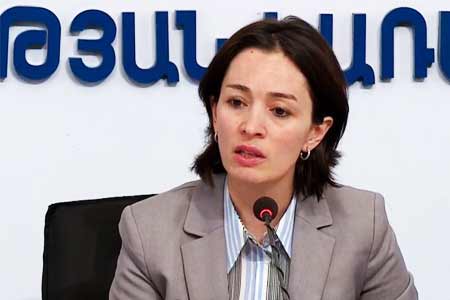
In turn, Roza Babayan, Adviser to the Minister, noted that the persistently low birth rate is driven by a multitude of factors. She reported that the average age of a woman giving birth to her first child has risen from 25–29 years, whereas for many years it had remained between 20–24. According to Babayan, while this trend carries significant risks and contributes to the decline in fertility, it is simultaneously accompanied by an increase in the working-age population, which in turn fosters economic activity.
Notably, according to data from the Statistical Committee of Armenia, 11,720 children were born in Armenia from January to May 2026, a 2.8% decrease compared to the same period last year.











 Azerbaijani Studies Expert: While Azerbaijan Prepares Its Generation for War, Aliyev’s Aide Calls on Armenia to Prepare Armenian Society for “Peace”
 Turkologist: Azerbaijan will never, under any circumstances, stop pressuring the Armenian people
 Political scientist: We need to move away from the question of "when" and replace it with more important questions
 International Law Specialist: Azerbaijan intends to initiate legal proceedings against Armenia by sentencing Armenian prisoners
 Dmitry Medvedev predicted a Ukrainian-like fate for Armenia amid the country`s shift in foreign policy
 Russian Security Council: In Armenia, they want to force Russian asset owners to dispose of their assets
 Zakharova: Russia ready to discuss with Armenia the prospects for expanding military cooperation as part of a review of bilateral ties
 Tevanyan: Armenia, like Ukraine and Moldova, is being drawn into the EU’s global war
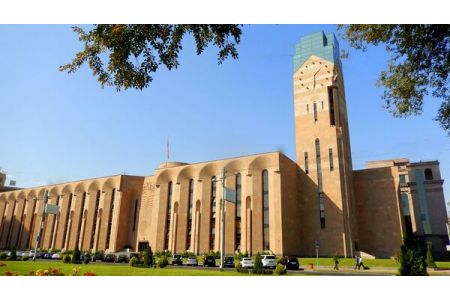 Yerevan City Hall is considering introducing a valet parking system in the city
 Expert: The circus surrounding the “Albanization” of Armenian culture in the presence of foreign ambassadors in occupied Artsakh is genocide
 Political scientist: If Russian-Armenian relations are destroyed, Turkey will take Russia`s place
 Political scientist: The Armenian public is simply obliged to significantly change the entire content of public discourse and struggle
 Cross tattoos are being removed from the skin of Christian prisoners in Azerbaijan by fire, according to a human rights activist.
 Zakharova: Armenia`s likely introduction of visas with Russia will be a step against Yerevan itself
 Putin: Armenia`s recognition of Karabakh as part of Azerbaijan in Prague has given Russia`s position on this issue an ambivalent character
 Putin: Armenia`s adoption of the law on EU accession means an announcement of its withdrawal from the Eurasian Economic Union
 Aram Vardevanyan: Public demands solutions, not apology scandals in Parliament
 Arrested Armenian oligarch on economy and new jobs