
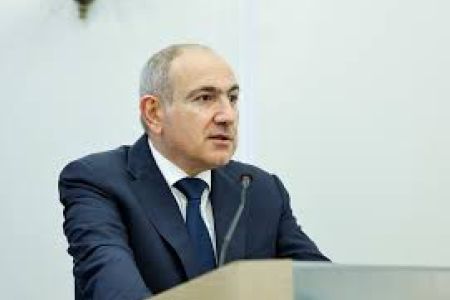
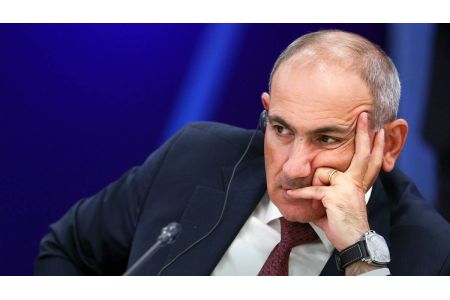
ArmInfo.Armenia has no intention of removing the issue of enclaves and exclaves from the negotiating agenda, Prime Minister Nikol Pashinyan stated during a briefing on July 9.
"To put it mildly, we are extremely interested in this topic. The village of Artsvashen is an exclave currently under Azerbaijani control, and it is part of Armenia's sovereign territory according to the principles of the 1991 Alma-Ata Declaration," the Prime Minister said.
Pashinyan warned that if Armenia were to accept the principle of "whoever controls a territory owns it," it would be tantamount to removing the issue of Armenia's occupied territories—including areas near Jermuk—from the agenda. "We must follow a de jure path and be guided by the same maps used during the delimitation process in Tavush," he emphasized.
He noted that Armenia aims to de-escalate tensions surrounding this issue, adding that the resolution found for Artsvashen will serve as a framework for settling other similar disputes. Pashinyan outlined two potential approaches: retention- the enclave or exclave remains under the control of the state to which it de jure belongs and negotiated adjustment- the parties reach an agreement to alter the status of specific territories.
The Prime Minister pointed out that Artsvashen is officially designated as an enclave on Azerbaijani maps. "This is an important nuance, and I believe we must demonstrate a mirror approach," he said, noting that this fact is significant for shaping state policy and positioning.
"We must be guided not by the principle of 'whoever controls it owns it,' but by the logic of a peace treaty," Pashinyan remarked. He emphasized that Armenia and Azerbaijan must resolve these issues without creating new problems for one another. If agreements are reached that require a public mandate under the Constitution of Armenia, the authorities will consult the will of the citizens, the Prime Minister assured.







 Opinion: The development of the Amulsar mine near the resort town of Jermuk is the beginning of an environmental disaster in Armenia
 Expert: The arrest of opposition figures in Armenia for social media posts is a systematic attempt to intimidate the public and suppress dissent.
 Azerbaijani Studies Expert: While Azerbaijan Prepares Its Generation for War, Aliyev’s Aide Calls on Armenia to Prepare Armenian Society for “Peace”
 Turkologist: Azerbaijan will never, under any circumstances, stop pressuring the Armenian people
 Political scientist: We need to move away from the question of "when" and replace it with more important questions
 Lukashenko called for Armenia to assume the CIS presidency in 2029
 Dmitry Medvedev predicted a Ukrainian-like fate for Armenia amid the country`s shift in foreign policy
 Russian Security Council: In Armenia, they want to force Russian asset owners to dispose of their assets
 Zakharova: Russia ready to discuss with Armenia the prospects for expanding military cooperation as part of a review of bilateral ties
 Tevanyan: Armenia, like Ukraine and Moldova, is being drawn into the EU’s global war
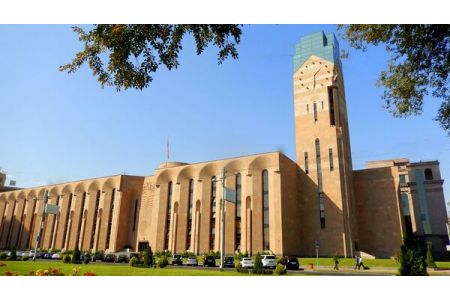 Yerevan City Hall is considering introducing a valet parking system in the city
 Expert: The circus surrounding the “Albanization” of Armenian culture in the presence of foreign ambassadors in occupied Artsakh is genocide
 Political scientist: If Russian-Armenian relations are destroyed, Turkey will take Russia`s place
 Political scientist: The Armenian public is simply obliged to significantly change the entire content of public discourse and struggle
 Cross tattoos are being removed from the skin of Christian prisoners in Azerbaijan by fire, according to a human rights activist.
 Zakharova: Armenia`s likely introduction of visas with Russia will be a step against Yerevan itself
 Putin: Armenia`s recognition of Karabakh as part of Azerbaijan in Prague has given Russia`s position on this issue an ambivalent character
 Putin: Armenia`s adoption of the law on EU accession means an announcement of its withdrawal from the Eurasian Economic Union
 Aram Vardevanyan: Public demands solutions, not apology scandals in Parliament