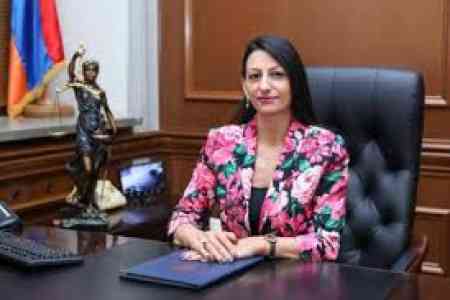
ArmInfo. The Russian Foreign Ministry sharply criticized the appointment of Artsrun Hovhannisyan, former official representative of the Armenian Ministry of Defense, as head of the National Defense Research University of Armenia.
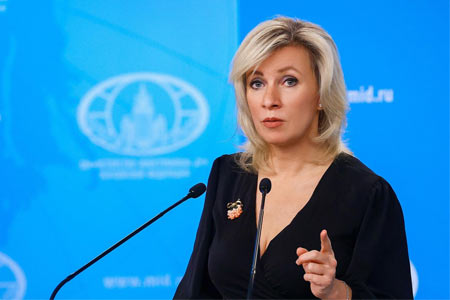
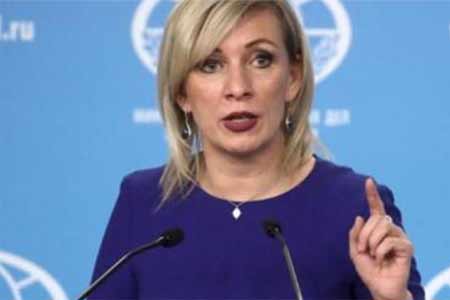
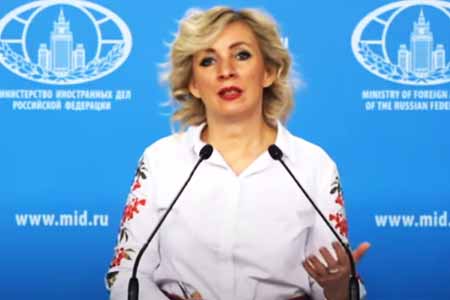
Responding to a request to comment on this appointment, made on the recommendation of the Armenian Prime Minister, Russian Foreign Ministry spokesperson Maria Zakharova noted that Moscow had taken note of Hovhannisyan's appointment to the new position. "Last year, he was remembered for his provocative statements aired on Armenian television on May 9-the 80th anniversary of the Great Victory. Specifically, he effectively expressed regret over the defeat of the Wehrmacht troops in the Battle of Stalingrad in 1943, and also claimed that the defeat of Nazi Germany thwarted Hitler's plans to create an independent 'Greater Armenia,'" Zakharova stated.
She noted that in an open letter from Russian Ambassador to Yerevan Sergei Kopyrkin to Armenian Defense Minister Suren Papikyan, published last May, as well as during high- level contacts, the Armenian side emphasized the categorical inadmissibility of such a desecration of the memory of our shared Victory.
"In response, we were told that this was supposedly a 'personal opinion' that did not reflect the official position. Meanwhile, Armenian government agencies have not publicly responded to these resonant statements. And the appointment of Hovhannisyan to the post of head of the educational institution suggests that such 'opinions' are now held in high esteem by the Armenian authorities. It seems that in Yerevan, while striving to join 'enlightened' Europe, they are simultaneously preparing to join a dangerous trend of rewriting the history of World War II, which is inconvenient for Westerners," Zakharova added.
According to her, the ideological successors of the Nazis and collaborators, who now occupy many high-ranking positions in Europe, openly justify local Nazi collaborators, portraying their complicity in the crimes of the Wehrmacht as a "national liberation struggle." One of the main goals of this line, the Russian diplomat continued, is to sever the shared historical memory of the peoples of the former USSR and erase the truth about their decisive role in ridding the world of the brown plague. "A similar strategy has been actively implemented in the Baltic countries and Eastern Europe. As is well known, the neo-Nazi regime in Kyiv has been particularly successful in this regard. This is probably why its leader, Zelensky, was so warmly received in Yerevan in early May, obligingly providing a platform for voicing vile threats against Russia. In our view, this is a direct betrayal of the memory of the heroic deeds of the Armenian people, whose glorious sons and daughters made a significant contribution to our shared Victory. Any glorification of Nazism must be subject to clear public and state condemnation.
Unfortunately, such attacks on the history of the Great Patriotic War are complemented by other examples of attempts by the current authorities of the republic to 'reformat' the historical memory of the people of Armenia-the silencing of the tragedy of the Armenian Genocide in the Ottoman Empire and the discrediting of the Armenian Apostolic Church. To what extent this meets the real aspirations of Armenian society remains to be seen by Armenians themselves," the Russian Foreign Ministry representative concluded.










 Expert: Pashinyan`s visit to Russia creates prerequisites for restoring dialogue, but thaw in relations is more symbolic
 Political analyst: After dubious elections, Armenian authorities start to tighten the screws
 Expert: Funeral of assassinated Khamenei became Iran`s diplomatic inventory of its contacts
 Armenian expert explains how Yerevan`s history is being rewritten in Azerbaijan
 Zakharova: Armenia`s pro-EU pivot poses economic security risks to EAEU member states
 It`s time for South Caucasus countries to think of South Caucasus as single, unified region - RA premier
  Pashinyan: Armenia and Azerbaijan should leave each other alone
 Moscow sees situation with Armenia as attempt to attack Russia-involving integration associations - Russian presidential aid
 Zakharova: Armenia views relations with Russia as tool for financially securing reorientation toward EU
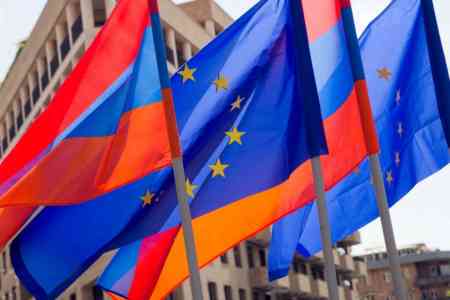 The Armenian Minister of Justice and the EU Ambassador discussed visa liberalization issues for Yerevan.
 Azerbaijan`s aggressive plans against Armenia became possible in wake of Pashinyan`s decisions on Artsakh - expert
 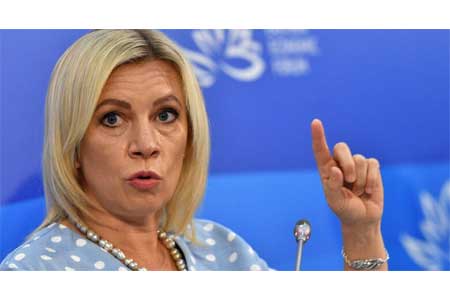 Zakharova: Russia sent a note of protest to Armenia over the act of vandalism at the "Mother Armenia" memorial in Gyumri
 Samvel Karapetyan proposes creating a post-election opposition coalition
 Artsakh`s Cultural Heritage Ombudsman called on Moscow to respond to destruction of WWII monuments by Azerbaijan in occupied NKR
 Prosecutor General`s Office petitions Central Electoral Commission for criminal prosecution of Robert Kocharyan
 Dutch Prime Minister expresses his support for Armenia`s democratic reform and economic diversification agenda
 Heritage: It`s time for Armenia`s opposition to present people with legitimate alternative to power