
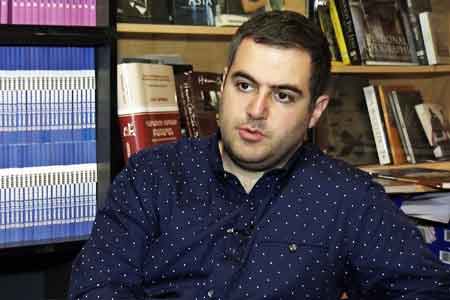
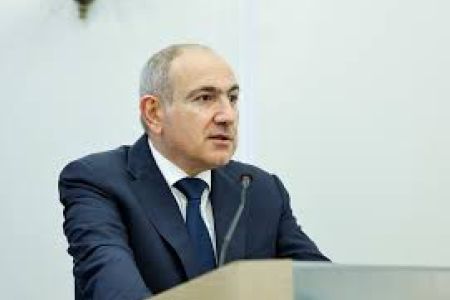
ArmInfo. The very fact of Armenian Prime Minister Nikol Pashinyan's working visit to Russia creates opportunities for restoring Armenian-Russian dialogue, but it's too early to talk about a real thaw in bilateral relations. This opinion was shared by political analyst and economist Grant Mikaelyan in an interview with an ArmInfo correspondent. "The fact of the visit itself offers certain hope and creates opportunities, given that Moscow was initially against such a visit. We saw that the previous meeting between Putin and Pashinyan (on April 1 — Ed.) was not very successful," Mikaelyan noted.
At the same time, he pointed out that the visit was not accompanied by a summit-level meeting. "At this moment, such a meeting has not taken place, and in all likelihood, it will not occur until there are substantial shifts in relations. These are limited by the geopolitical framework in which Armenia currently finds itself," the analyst believes.
According to his assessment, the contacts between Armenian Prime Minister Nikol Pashinyan and Russian Prime Minister Mikhail Mishustin have so far led only to a symbolic improvement in the atmosphere of bilateral relations. Among the key tasks for Yerevan in its relations with the Russian Federation, Mikaelyan named the removal of restrictions for Armenian businesses in the Russian market and the normalization of economic cooperation.
A symbolic thaw has occurred, and the necessary phrases were uttered by both sides. But now, it is necessary to achieve concrete results. It is vital for Armenia to remove barriers to economic access to the Russian market. This has turned into a serious problem for many in Armenia," the expert emphasized.
According to the political scientist, it is also important for the Armenian authorities to gain political legitimacy from Moscow by recognizing the election results, while the Russian side is interested in improving the operating conditions for Russian businesses in Armenia.
The expert also believes it's necessary to change the atmosphere in bilateral relations. "We need to overcome the unhealthy atmosphere in which any initiative, any person, anything related to Russia is immediately interpreted by the Armenian authorities as problematic. This creates an inappropriate situation, since a significant portion of Armenia's economy is tied to Russia, and the largest Armenian diaspora is located there," Mikaelyan stated.
The political scientist also addressed the issue of Armenia's integration choices, highlighting the problems the country has encountered within the Eurasian Economic Union.
"We see the flywheel spinning, and Armenia is being asked to determine its integration status with the Eurasian Economic Union by December 1st. Russia is insisting not simply on a referendum on EU membership, but on a vote in which citizens will be offered a mutually exclusive choice: maintaining membership in the Eurasian Economic Union or pursuing accession to the European Union," he said. However, according to Mikaelyan, holding such a referendum under the current circumstances is not in Armenia's interests.
Summing up, the expert emphasized that real conclusions about the visit's success can only be drawn once concrete results are seen. "When there are results in the economic, business, and political spheres, then we can talk about the success of the visit. At the moment, I believe it is premature to do so," the political analyst concluded.
It should be noted that Armenian Prime Minister Nikol Pashinyan paid a working visit to Russia on July 6, where he participated in the INNOPROM-2026 international industrial exhibition in Yekaterinburg and the plenary session "Industry 360: Production Without Borders." During the visit, he met with Russian Prime Minister Mikhail Mishustin. This marks Pashinyan's first visit to Russia since the 2026 parliamentary elections in Armenia and amid tensions in relations between Moscow and Yerevan.






 Expert: Economic pressure on Armenia may be virtually painless for other EAEU members, but not for Armenia itself
 Expert on protests in France: Civilizations fade when society loses a vision of the future
 Turkologist: Azerbaijan is not all-powerful—its vulnerabilities should become part of Armenia’s security strategy
 Opinion: The development of the Amulsar mine near the resort town of Jermuk is the beginning of an environmental disaster in Armenia
 Expert: The arrest of opposition figures in Armenia for social media posts is a systematic attempt to intimidate the public and suppress dissent.
 The Armenian Foreign Minister commented on the country`s return to work within the CSTO.
 The Artsakh Public Council expressed outrage at the UN Secretary-General`s behavior
 Lukashenko called for Armenia to assume the CIS presidency in 2029
 Dmitry Medvedev predicted a Ukrainian-like fate for Armenia amid the country`s shift in foreign policy
 Russian Security Council: In Armenia, they want to force Russian asset owners to dispose of their assets
 Zakharova: Russia ready to discuss with Armenia the prospects for expanding military cooperation as part of a review of bilateral ties
 Tevanyan: Armenia, like Ukraine and Moldova, is being drawn into the EU’s global war
 Yerevan City Hall is considering introducing a valet parking system in the city
 Expert: The circus surrounding the “Albanization” of Armenian culture in the presence of foreign ambassadors in occupied Artsakh is genocide
 Political scientist: If Russian-Armenian relations are destroyed, Turkey will take Russia`s place
 Political scientist: The Armenian public is simply obliged to significantly change the entire content of public discourse and struggle
 Cross tattoos are being removed from the skin of Christian prisoners in Azerbaijan by fire, according to a human rights activist.
 Zakharova: Armenia`s likely introduction of visas with Russia will be a step against Yerevan itself
 Putin: Armenia`s recognition of Karabakh as part of Azerbaijan in Prague has given Russia`s position on this issue an ambivalent character
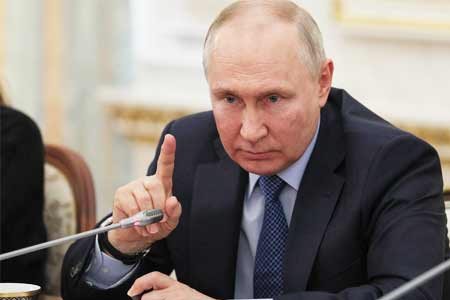 Putin: Armenia`s adoption of the law on EU accession means an announcement of its withdrawal from the Eurasian Economic Union