
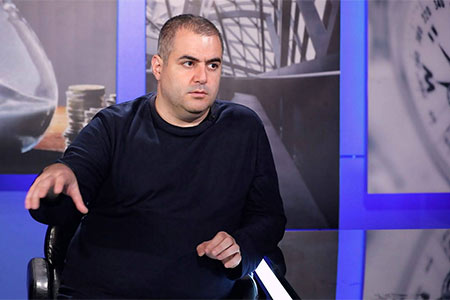
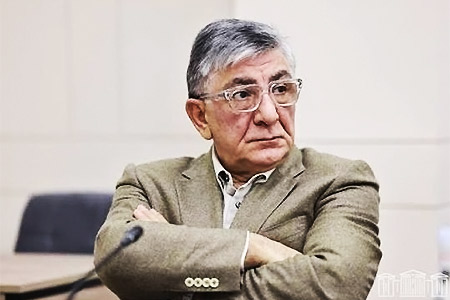
ArmInfo. Following the recent parliamentary elections, Armenian authorities have focused on preventing ant attempts to challenge the results by intensufying pressure on opposition forces, as stated by political analyst and economist Hrant Mikaelyan in an interview with an ArmInfo correspondent.
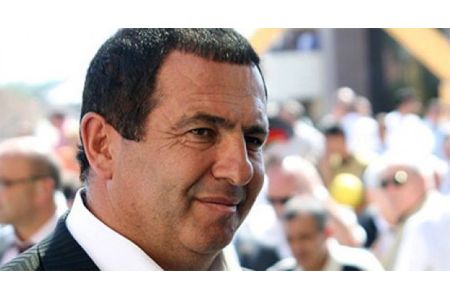
When asked to assess recent developments in the country, including the detentions of political figures, the political analyst noted that the processes unfolding in the country are primarily political rather than legal in nature. Mikaelyan drew particular attention to the fact that the strongest pressure is currently being exerted on Gagik Tsarukyan, leader of the "Prosperous Armenia" party.
"Following the dubious elections, the authorities began to 'tighten the screws' and focused on preventing any contestation of the results, specifically through repressions against the opposition. In this case, the pressure is most actively directed at Gagik Tsarukyan. It is important to emphasize that this process is primarily political in nature, not legal. It turns out that as soon as Tsarukyan secured 4%—and all election data indicates he achieved the necessary percentage to enter parliament—he is being punished for precisely this," the expert stated.
He also drew a parallel with previous electoral campaigns in Armenia, noting that in the past, the authorities were, on the contrary, interested in the presence of a parliamentary opposition to maintain their own legitimacy.
"In 2012, the authorities did everything possible they could to ensure that the Armenian National Congress passed the threshold and entered parliament. Now the situation is the opposite, and in doing so, the authorities are delegitimizing the newly forming parliament," Mikaelyan said.
The expert also noted that, despite the complaints about the vote results, opposition forces have decided to work in the new National Assembly. "The opposition agreed to go to parliament because it currently has no other means of struggle. The fact that they were unable to create alternative mechanisms for political resistance is a separate issue that their own voters are raising," he emphasized.
Speaking in a broader context, Mikaelyan stated that the internal political situation in Armenia today is extremely susceptible to foreign policy influences and pressures and is largely dictated by the foreign policy and geopolitical framework "In essence, this determines most of the processes taking place within the country, including direct influence on the authorities by a number of Western nations, such as the European Union's Rapid Response Team, with which all controversial decisions are coordinated," the analyst believes.
It is worth noting that the latest parliamentary elections in Armenia were marked by significant pressure on the opposition from the current authorities. Opposition representatives were imprisoned under various pretexts. The persecution continued after the electoral processes. Armenian Prime Minister Nikol Pashinyan gave direct orders to law enforcement agencies to imprison representatives of all major opposition forces in the country.









 Azerbaijani Studies Expert: While Azerbaijan Prepares Its Generation for War, Aliyev’s Aide Calls on Armenia to Prepare Armenian Society for “Peace”
 Turkologist: Azerbaijan will never, under any circumstances, stop pressuring the Armenian people
 Political scientist: We need to move away from the question of "when" and replace it with more important questions
 International Law Specialist: Azerbaijan intends to initiate legal proceedings against Armenia by sentencing Armenian prisoners
 Dmitry Medvedev predicted a Ukrainian-like fate for Armenia amid the country`s shift in foreign policy
 Russian Security Council: In Armenia, they want to force Russian asset owners to dispose of their assets
 Zakharova: Russia ready to discuss with Armenia the prospects for expanding military cooperation as part of a review of bilateral ties
 Tevanyan: Armenia, like Ukraine and Moldova, is being drawn into the EU’s global war
 Yerevan City Hall is considering introducing a valet parking system in the city
 Expert: The circus surrounding the “Albanization” of Armenian culture in the presence of foreign ambassadors in occupied Artsakh is genocide
 Political scientist: If Russian-Armenian relations are destroyed, Turkey will take Russia`s place
 Political scientist: The Armenian public is simply obliged to significantly change the entire content of public discourse and struggle
 Cross tattoos are being removed from the skin of Christian prisoners in Azerbaijan by fire, according to a human rights activist.
 Zakharova: Armenia`s likely introduction of visas with Russia will be a step against Yerevan itself
 Putin: Armenia`s recognition of Karabakh as part of Azerbaijan in Prague has given Russia`s position on this issue an ambivalent character
 Putin: Armenia`s adoption of the law on EU accession means an announcement of its withdrawal from the Eurasian Economic Union
 Aram Vardevanyan: Public demands solutions, not apology scandals in Parliament
 Arrested Armenian oligarch on economy and new jobs