
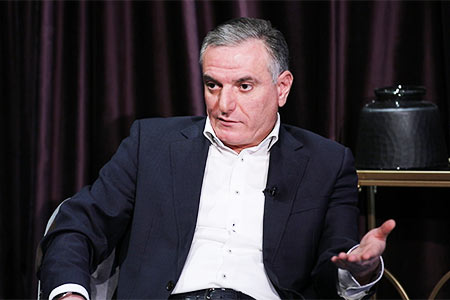
ArmInfo. Both Moscow and Brussels will expect action, not empty words, from Armenian Prime Minister Nikol Pashinyan. The future government of the Civil Contract party, which has lost its legitimacy and is holding on to power with the support of the West and Turkey, will depend on this. This is what Artak Zakaryan, a member of the board of the Republican Party, writes in his article.
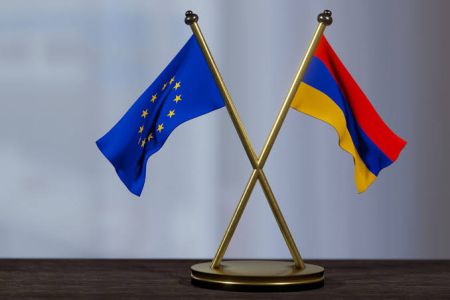
Recalling Nikol Pashinyan's meeting with Russian Prime Minister Mikhail Mishustin at the Innoprom-2026 international industrial exhibition in Yekaterinburg, the politician noted that the Russian side emphasized that Russia continues (and likely will continue) to be Armenia's largest trading partner and investor. "At the same time, Nikol, 'rushing to Europe,' stated that Armenia is inclined to further develop relations with Russia, is interested in maintaining membership in the EAEU, and is ready to resolve [problematic] issues. It was not without reason that Armenian farmers were teased that Armenian flower arrangements would soon win the hearts of European designers and connoisseurs. And Armenian trout would become the main dish of the best restaurants in Paris and Brussels. As for Armenian fruits and vegetables, according to the rosy fantasies of the capitulators, long lines were expected at the German chains Aldi, Lidl, and Kaufland, the French Carrefour, and the British Tesco. After the Russian "kuansha" and the "escalation" of the situation by the West, it became clear that Armenia itself could once again find itself "terz kaput" in this game. Therefore, without an invitation or a reception befitting a head of state, Nikol rushed to the Urals. Should Pashinyan's visit be seen as a "breakthrough" or a return to the previous "normal state"? I am sure it is not. Rather, this is a demonstration of a managed dialogue after tensions, where the main message is that Armenia cannot sever economic ties with Russia and the EAEU. This is neither a breakthrough nor a normalization, because, in my opinion, Pashinyan's visit has not eliminated the existing mistrust between Moscow and Yerevan. Russia does not want Armenia to move closer to the EU, while this process is gaining momentum, intertwining and pitting numerous regional interests," noted Artak Zakaryan.
He added that a vast chasm of irreconcilable differences and hostility exists between the EU, the US, Russia, Iran, Turkey, China, India, Georgia, and Azerbaijan. "In the South Caucasus, their interests constantly intertwine and clash over Nikol and Ilham under Erdogan's skillful leadership. And what will be the result? Not stability and regional peace, but rapidly growing contradictions and an 'all against all' confrontation, especially in Armenia. However, in Yekaterinburg, both Armenia and Russia demonstrated that they are not interested in a complete severance of relations. This is a good start, but much more is needed to continue," the politician believes.






















 Azerbaijani studies expert : Ruben Vardanyan’s wife threatened with arrest if she visits Baku
 Political scientist: The model of allied relations between Russia and Armenia has collapsed
 Expert: The defeated authorities` position on normalizing relations with the enemy should not affect the rights of Artsakh refugees
 Political scientist: If Russian-Armenian relations are destroyed, Turkey will take Russia`s place
 Political scientist: The Armenian public is simply obliged to significantly change the entire content of public discourse and struggle
 Cross tattoos are being removed from the skin of Christian prisoners in Azerbaijan by fire, according to a human rights activist.
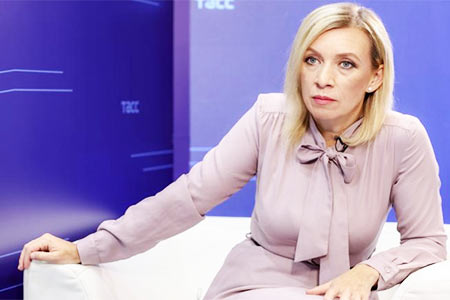 Zakharova: Armenia`s likely introduction of visas with Russia will be a step against Yerevan itself
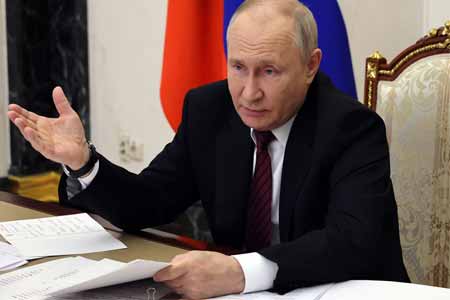 Putin: Armenia`s recognition of Karabakh as part of Azerbaijan in Prague has given Russia`s position on this issue an ambivalent character
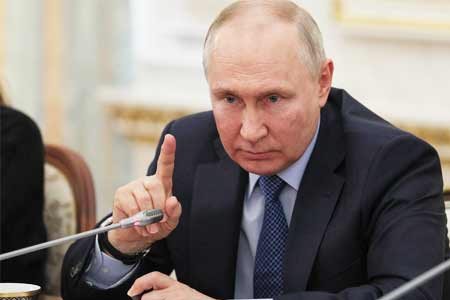 Putin: Armenia`s adoption of the law on EU accession means an announcement of its withdrawal from the Eurasian Economic Union
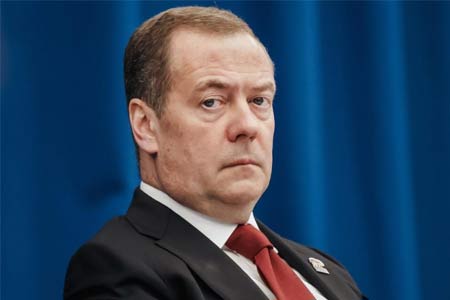 Medvedev: Yerevan will never become an EU member, but it will permanently damage relations with the Eurasian Economic Union, including with Moscow.
 Aram Vardevanyan: Public demands solutions, not apology scandals in Parliament
 Arrested Armenian oligarch on economy and new jobs
  "In Baku, we gave a worthy rebuff to the false claims regarding the past and present of our people" – Former Artsakh Parliament Speaker from Baku captivity
  NA Vice Speaker candidate believes his wife`s salary as director of HayPost is the lowest in the company`s history
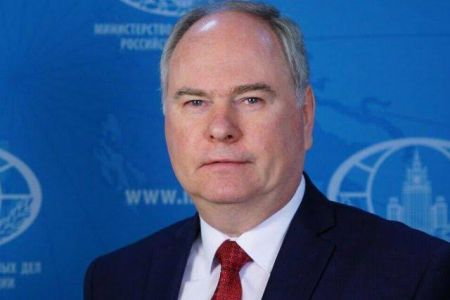 RF Permanent Representative: There is no CSTO-Armenia conflict
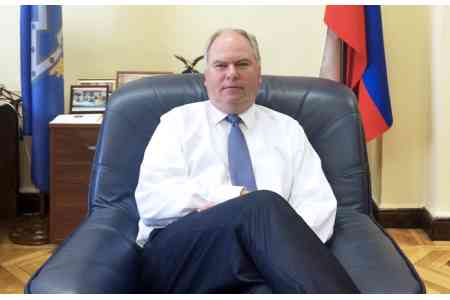 Moscow: NATO seeking to "Pull" Armenia away from CSTO Allies
 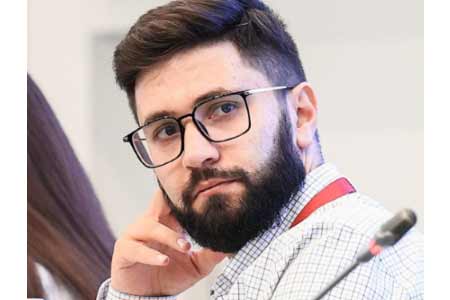 Political analyst: Russia intends to determine which "Camp" Armenia will choose through a referendum
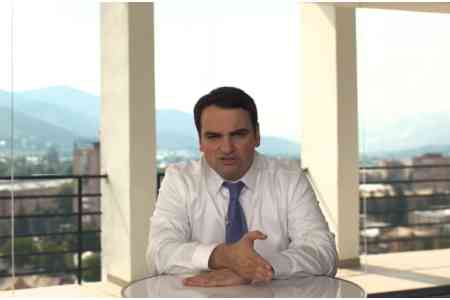 Narek Karapetyan will give up his parliamentary salary in favor of charitable contributions.