


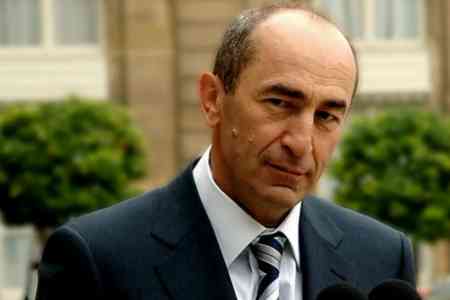
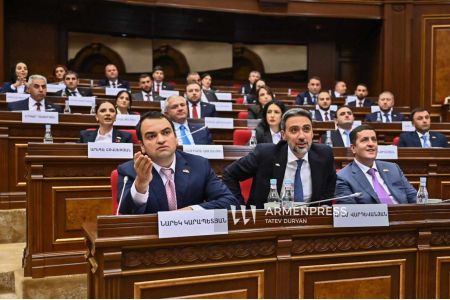
ArmInfo. The "Armenia" Bloc of Armenia's second president, Robert Kocharyan, will take parliamentary mandates and participate in the work of the country's 9th parliament. This was announced in a statement by the political party.
Following the June 7 elections, the Armenia Bloc won 12 seats in the legislative body, securing the support of just under 150,000 citizens. The opposition bloc emphasized that the Constitutional Court's July 4 ruling on the country's elections does not correct the electoral fraud and does not resolve the issue of the legitimacy of the emerging government.
"The reproduced regime lacks legitimacy. The dignified vote of more than 550,000 citizens, cast by the opposition to save the state, is absolutely essential for us. It is also necessary to clearly state that challenging the legitimacy of the votes attributed to the ruling regime in the Constitutional Court was aimed at documenting this reality. As previously announced, when accepting mandates, the Armenia bloc was and will be guided by the need for a unified opposition position and the logic of continuing the struggle, having previously discussed all possible scenarios and risks with public and professional circles," the political force said in a statement.
The bloc added that for them, parliamentary status is not a position or a convenience, but an additional legal and political tool and an opportunity for daily opposition to the current regime. "Therefore, we believe that in the difficult struggle ahead, we are obligated to use all available means to combat the government's anti- state agenda. A mandate is a weapon, and voluntarily renouncing it would be irresponsible to our state and our voters. We view representation in parliament as a tool for protecting citizens' rights, expressing their concerns, and proposing solutions. This will serve to strengthen ties with the public and international actors, present alternative approaches on international platforms, and foster large-scale public consolidation and resistance. All our actions in the National Assembly will be based on the fundamental program enshrined in the joint statement of opposition forces submitted to the Constitutional Court," the bloc added.
Kocharyan's forces stated that their efforts will be aimed at preventing violent amendments to the Armenian Constitution; protecting the Armenian Apostolic Church; defending the rights of political prisoners and prisoners of war; and overthrowing the current regime.
"Thanks to the high turnout and votes cast for the opposition forces, we were able to deprive the current government of its constitutional majority and provide the opposition forces with a much broader range of tools to shape the agenda of national resistance and implement a change of power. The Constitutional Court's decision does not mark the end of the struggle, but the beginning of a new, more coordinated phase. Aware of its responsibility to the homeland and voters, the Armenia bloc will send an ideologically steadfast political team to parliament, which, as the vanguard of political resistance, is ready to shoulder its share of responsibility. Struggle and resistance have no alternative," the political force concluded.
As a reminder, parliamentary elections were held in Armenia on June 7, 2026. Voter turnout was 58.97%. According to preliminary data from the Central Election Commission of Armenia, Nikol Pashinyan's ruling Civil Contract party, Samvel Karapetyan's Strong Armenia bloc, and second president Robert Kocharyan's Armenia bloc have all entered parliament. The remaining candidates scored below the required threshold of 4% for parties and 8-10% for blocs. Notably, businessman Gagik Tsarukyan's Prosperous Armenia party lost its 4% threshold after the Central Election Commission adjusted the preliminary vote counts for the country's parliamentary elections. Therefore, the party will not enter the new parliament.
On June 19, seven political forces filed applications with the Constitutional Court of Armenia demanding that the results of the June 7 parliamentary elections be declared invalid. On June 21, the Constitutional Court decided to consolidate all cases into a single proceeding. The first session of the Constitutional Court of Armenia began on June 26.
The court's decision was due on July 4. The High Court ruled to uphold the country's election results.
It's worth noting that on election day, observers and journalists reported numerous violations by the ruling party during the voting process from early morning. Thus, Pashinyan's party has the opportunity to single- handedly form the country's government by securing a majority of seats in the Armenian parliament. Pashinyan solemnly announced this late at night, when data from only about 10% of polling stations had been processed.


























 Azerbaijani studies expert : Ruben Vardanyan’s wife threatened with arrest if she visits Baku
 Political scientist: The model of allied relations between Russia and Armenia has collapsed
 Expert: The defeated authorities` position on normalizing relations with the enemy should not affect the rights of Artsakh refugees
 Political scientist: If Russian-Armenian relations are destroyed, Turkey will take Russia`s place
 Political scientist: The Armenian public is simply obliged to significantly change the entire content of public discourse and struggle
 Cross tattoos are being removed from the skin of Christian prisoners in Azerbaijan by fire, according to a human rights activist.
 Zakharova: Armenia`s likely introduction of visas with Russia will be a step against Yerevan itself
 Putin: Armenia`s recognition of Karabakh as part of Azerbaijan in Prague has given Russia`s position on this issue an ambivalent character
 Putin: Armenia`s adoption of the law on EU accession means an announcement of its withdrawal from the Eurasian Economic Union
 Medvedev: Yerevan will never become an EU member, but it will permanently damage relations with the Eurasian Economic Union, including with Moscow.
 Aram Vardevanyan: Public demands solutions, not apology scandals in Parliament
 Arrested Armenian oligarch on economy and new jobs
 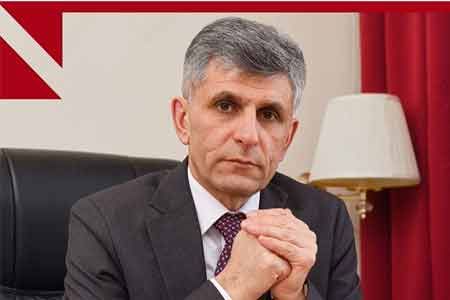 "In Baku, we gave a worthy rebuff to the false claims regarding the past and present of our people" – Former Artsakh Parliament Speaker from Baku captivity
  NA Vice Speaker candidate believes his wife`s salary as director of HayPost is the lowest in the company`s history
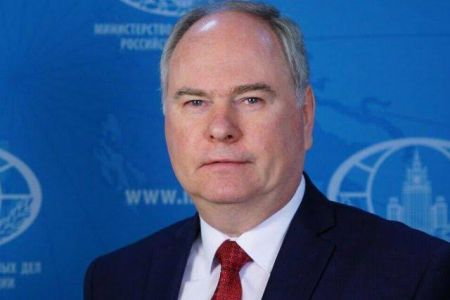 RF Permanent Representative: There is no CSTO-Armenia conflict
 Moscow: NATO seeking to "Pull" Armenia away from CSTO Allies
  Political analyst: Russia intends to determine which "Camp" Armenia will choose through a referendum
 Narek Karapetyan will give up his parliamentary salary in favor of charitable contributions.