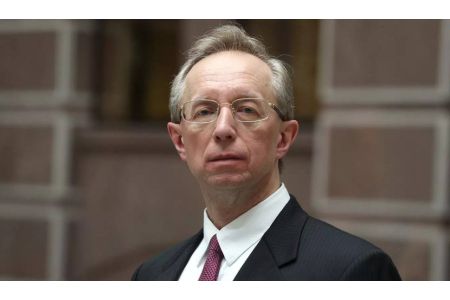
ArmInfo. Russia is making a decisive contribution to maintaining peace and stability in Transcaucasia and considers the conclusion of a legally binding agreement on the non-use of force between Georgia, Abkhazia, and South Ossetia a key objective of international discussions on security and stability in the region. This was stated by Russian Deputy Foreign Minister Mikhail Galuzin to TASS.
"Russia is making a decisive contribution to maintaining peace and stability in Transcaucasia," he said. Galuzin explained that the maintenance of relative stability is facilitated by "international discussions themselves, mechanisms for preventing and responding to incidents, hotlines between border services, and contacts between the parties." "The very existence of these mechanisms and dialogue, both at the delegation level during official rounds and on the ground, helps ensure relative stability and calm in the border area," the diplomat noted. He added that most incidents in the region involve illegal border crossings from
Georgia, but "in the overwhelming majority of cases, the authorities of Abkhazia and South Ossetia limit themselves to a brief investigation" and return violators to Georgian territory without criminal prosecution.
The Russian Deputy Foreign Minister emphasized that Moscow considers the central objective of international discussions on security and stability in the Transcaucasus "the development of a legally binding agreement on the non-use of force by Georgia against Abkhazia and South Ossetia." He stated that such an agreement should become "the most effective instrument for ensuring lasting security in the region." At the current stage, however, "partnership, allied, and equal relations between Russia and Abkhazia and South Ossetia" play a key role in ensuring security in the region. He also emphasized that Russia will continue to seek the transfer of international discussions on security and stability in the Transcaucasus from Geneva due to Switzerland's loss of status as a neutral mediator.
"We have raised this issue repeatedly and continue to do so, and we will actively and firmly raise it," the deputy minister explained. Galuzin noted that Russia considers Switzerland's neutral status to be lost after it joined the sanctions against Russia. Furthermore, he stated, the lack of direct air travel between Moscow and Geneva due to the same restrictions complicates the participation of delegations in the negotiations. Galuzin emphasized that Moscow favors finding a new venue for negotiations not only based on its own interests but also taking into account the convenience of all participants in the process. According to him, of the five country delegations participating in international discussions on security and stability in the Transcaucasus, three-Russia, Abkhazia, and South Ossetia-support the transfer of the venue. "Our allies support us. And we assume that the three co-chairs will take this very seriously," the Deputy Foreign Minister said.
International discussions on security and stability in the Transcaucasus have been held in Geneva since 2008, with the participation of Abkhazia, Georgia, Russia, the United States, and South Ossetia, and mediated by special representatives of the UN, EU, and OSCE. Work is traditionally conducted in two working groups: one on security and one on humanitarian issues. The Geneva discussions remain the only platform for dialogue between Sukhumi, Tbilisi, and Tskhinvali.













 RA Government guarantees high salaries for CC justices, Syunik families deprived of family benefits - politician
  Armenian experts, leading Turkish think tanks discuss prospects for expanding cooperation
  Political Scientist: As long as the opposition remains silent, Pashinyan can use Plan B and secure a constitutional majority
 US-Iranian memorandum more beneficial for Iran from political and economic perspective - expert
  Zakharova: Armenia`s pro-EU pivot poses economic security risks to EAEU member states
 It`s time for South Caucasus countries to think of South Caucasus as single, unified region - RA premier
  Pashinyan: Armenia and Azerbaijan should leave each other alone
 Moscow sees situation with Armenia as attempt to attack Russia-involving integration associations - Russian presidential aid
 Zakharova: Armenia views relations with Russia as tool for financially securing reorientation toward EU
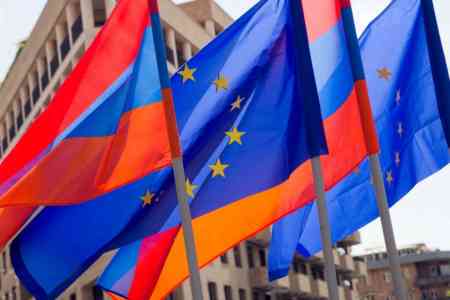 The Armenian Minister of Justice and the EU Ambassador discussed visa liberalization issues for Yerevan.
 Azerbaijan`s aggressive plans against Armenia became possible in wake of Pashinyan`s decisions on Artsakh - expert
  Zakharova: Russia sent a note of protest to Armenia over the act of vandalism at the "Mother Armenia" memorial in Gyumri
 Samvel Karapetyan proposes creating a post-election opposition coalition
 Artsakh`s Cultural Heritage Ombudsman called on Moscow to respond to destruction of WWII monuments by Azerbaijan in occupied NKR
 Prosecutor General`s Office petitions Central Electoral Commission for criminal prosecution of Robert Kocharyan
 Dutch Prime Minister expresses his support for Armenia`s democratic reform and economic diversification agenda
 Heritage: It`s time for Armenia`s opposition to present people with legitimate alternative to power
 RA Security Council Sec, Assistant to President of Azerbaijan hold negotiations in Dilijan
 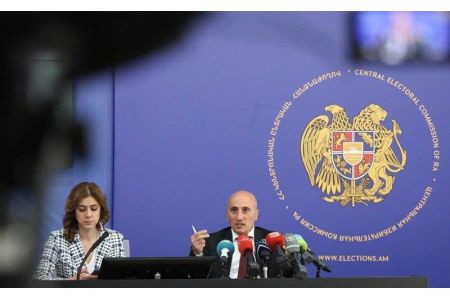 CEC Neutralizes PAP: Three Political Forces to Enter Armenian Parliament Following Election Vote