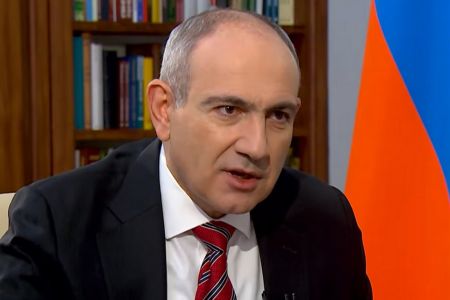
ArmInfo. Armenian Prime Minister Nikol Pashinyan avoided providing a direct answer regarding whose initiative led to the cancellation of his meeting with Russian President Vladimir Putin—a meeting Pashinyan himself had publicly announced earlier in June.
"The meeting was not planned. And the phrase 'a meeting will take place in a short time' in the context of a meeting at the level of state leaders does not imply one within a day or a week. That is, there will be a meeting in the near future," the Armenian prime minister said in response to the question of whose initiative it was that the meeting between the leaders of Armenia and Russia was cancelled, given that Pashinyan himself had announced a meeting with Vladimir Putin for the second half of June.
"The meeting was never formally scheduled. When discussing a meeting at the level of heads of state, the phrase 'in the near future' does not imply a timeframe of a day or a week. A meeting will take place eventually," the Prime Minister stated when pressed on why the summit did not occur during the second half of June as he had previously suggested. When a journalist reminded him that he had announced a post- election meeting with Putin during the parliamentary campaign, Pashinyan insisted the contexts were different, adding, "We were discussing a different topic, and I remain confident that a meeting will take place soon."
When asked whether a meeting could be expected in August on the sidelines of the Eurasian Economic Union Intergovernmental Council meeting, Pashinyan stated that this meeting would be at the level of prime ministers of the EAEU countries.
When asked whether he would discuss "sanctions with the Russian prime minister, Pashinyan stated that the term "sanctions" was incorrect in this case. "There is another topic at hand, and we will naturally discuss it," the head of the Armenian cabinet said. However, he stopped short of providing a direct assessment of the impact that recent Russian trade restrictions have had on the Armenian market.
A temporary ban on the import of stone fruits and grapes from Armenia will take effect in Russia on June 2. The restrictions apply to cherries, sweet cherries, apricots, plums, peaches, nectarines, and fresh grapes, allegedly due to "increased supply violations." This isn't the first restrictive measure Russia has imposed on Armenian exports in recent weeks. Previously, Rosselkhoznadzor banned the import of fish and fish products from Armenia, making an exception for only two enterprises that had passed Russian inspection. Russia also restricted the import of Armenian flowers, mineral water, cognac, wine, vegetables, and strawberries. Armenian authorities and observers attribute Moscow's actions not only to sanitary concerns but also to the sharp deterioration in relations amid the Armenian Prime Minister's policy of rapprochement with the EU and the US.















 Political Scientist: As long as the opposition remains silent, Pashinyan can use Plan B and secure a constitutional majority
 US-Iranian memorandum more beneficial for Iran from political and economic perspective - expert
  Political analyst: While Pashinyan pledges peace with Azerbaijan, Baku continues promoting the "Western Azerbaijan" project
 Political analyst: In light of new realities, Yerevan may propose advancing peace process with Baku without constitutional referendum
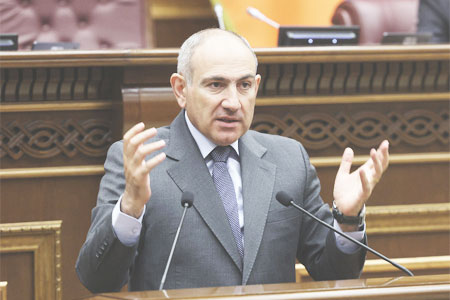 It`s time for South Caucasus countries to think of South Caucasus as single, unified region - RA premier
  Pashinyan: Armenia and Azerbaijan should leave each other alone
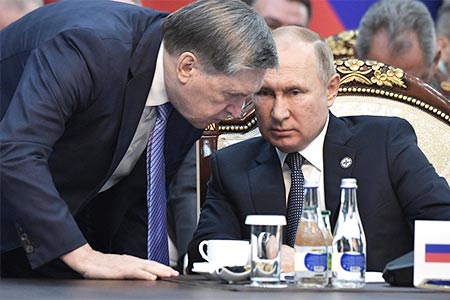 Moscow sees situation with Armenia as attempt to attack Russia-involving integration associations - Russian presidential aid
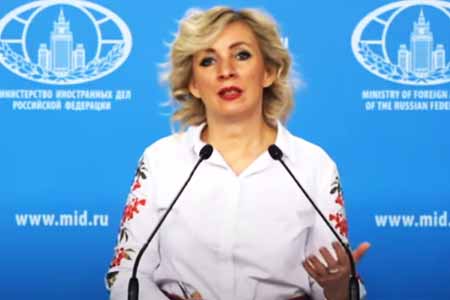 Zakharova: Armenia views relations with Russia as tool for financially securing reorientation toward EU
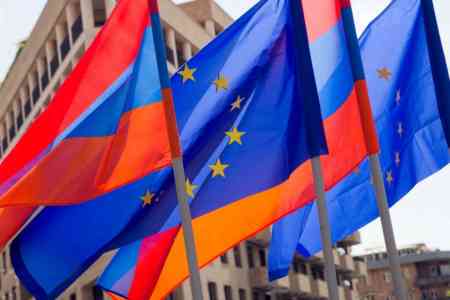 The Armenian Minister of Justice and the EU Ambassador discussed visa liberalization issues for Yerevan.
 Azerbaijan`s aggressive plans against Armenia became possible in wake of Pashinyan`s decisions on Artsakh - expert
  Zakharova: Russia sent a note of protest to Armenia over the act of vandalism at the "Mother Armenia" memorial in Gyumri
 Samvel Karapetyan proposes creating a post-election opposition coalition
 Artsakh`s Cultural Heritage Ombudsman called on Moscow to respond to destruction of WWII monuments by Azerbaijan in occupied NKR
 Prosecutor General`s Office petitions Central Electoral Commission for criminal prosecution of Robert Kocharyan
 Dutch Prime Minister expresses his support for Armenia`s democratic reform and economic diversification agenda
 Heritage: It`s time for Armenia`s opposition to present people with legitimate alternative to power
 RA Security Council Sec, Assistant to President of Azerbaijan hold negotiations in Dilijan
  CEC Neutralizes PAP: Three Political Forces to Enter Armenian Parliament Following Election Vote