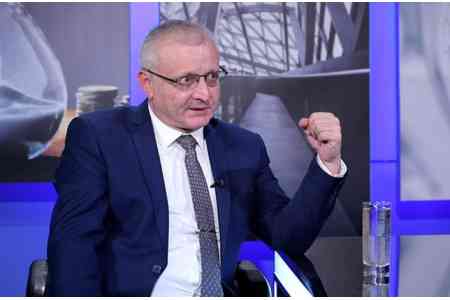
ArmInfo.The Israeli government's decision to officially recognize the Armenian Genocide, which still needs to be approved by the Knesset, is undoubtedly a significant political event. However, when assessing it, one should avoid emotional approaches and analyze the decision based on the military-political realities at hand. Political scientist Suren Surenyants shares this view.
On his Facebook page, the political scientist primarily drew attention to the profound crisis in Israeli- Turkish relations, rather than to the significant change in Israel's attitude toward the tragedy that occurred a century ago. "For decades, Tel Aviv avoided officially recognizing the Armenian Genocide to avoid jeopardizing its strategic relationship with Ankara.
Today, when these relations have reached a historic low, the same issue has become a tool of political pressure on Turkey. For example, Turkey suspended all trade with Israel in 2024; in November of that year, the Turkish president announced his intention to sever diplomatic relations; and during the Gaza War, Ankara consistently maintained harsh rhetoric, supported Hamas, and joined international legal initiatives against Israel. Thus, the government's decision is driven less by historical justice than by current geopolitical calculations. If the political situation changes, it cannot be ruled out that this issue will lose its priority on the Israeli agenda," the political scientist noted.
Secondly, he continued, Israel continues to view the Holocaust as an exceptional tragedy in human history. This approach has shaped Tel Aviv's cautious policy toward the Armenian Genocide for many years, limiting the development of similar political assessments of other genocides. Third, even if the Knesset approves the government's decision, it is unlikely to significantly change the nature of the strategic partnership between Israel and Azerbaijan. This relationship is based on security, intelligence, energy, and military-technical cooperation and played a significant role in shaping both the 44-Day War and the post- war regional realities. "Therefore, recognition of the Armenian Genocide will most likely not affect the foundations of this strategic alliance," believes Suren Surenyants.
Fourth, he adds, Israel continues its aggressive policy toward Iran. A further deepening of this confrontation could create new risks in the South Caucasus, the negative impact of which Armenia cannot ignore. Therefore, Yerevan is obliged to assess these processes not only from the perspective of historical justice, but also from the perspective of national security.
Fifth, as the political scientist noted, Israel's actions in the Gaza Strip have seriously damaged the country's international reputation. A significant portion of the international community, numerous states, and reputable human rights organizations accuse Israel of gross violations of international humanitarian law and acts of genocide. Clearly, Israel has significantly lost its moral authority as a defender of humanitarian values.
Finally, if the government's decision is approved by the Knesset, it could somewhat limit Azerbaijan's ability to maneuver between Turkey and Israel. "However, it is difficult to expect Armenia to fully take advantage of this new situation while its foreign policy continues to suffer from limited subjectivity, a lack of initiative, and a crisis of strategic thinking. In international relations, even decisions concerning historical justice are typically determined not by moral principles, but by the strategic interests of states. Therefore, it is precisely on this basis that the Israeli government's decision today should be assessed," Suren Surenyants emphasized.



















 Political Scientist: As long as the opposition remains silent, Pashinyan can use Plan B and secure a constitutional majority
 US-Iranian memorandum more beneficial for Iran from political and economic perspective - expert
  Political analyst: While Pashinyan pledges peace with Azerbaijan, Baku continues promoting the "Western Azerbaijan" project
 Political analyst: In light of new realities, Yerevan may propose advancing peace process with Baku without constitutional referendum
 It`s time for South Caucasus countries to think of South Caucasus as single, unified region - RA premier
  Pashinyan: Armenia and Azerbaijan should leave each other alone
 Moscow sees situation with Armenia as attempt to attack Russia-involving integration associations - Russian presidential aid
 Zakharova: Armenia views relations with Russia as tool for financially securing reorientation toward EU
 The Armenian Minister of Justice and the EU Ambassador discussed visa liberalization issues for Yerevan.
 Azerbaijan`s aggressive plans against Armenia became possible in wake of Pashinyan`s decisions on Artsakh - expert
 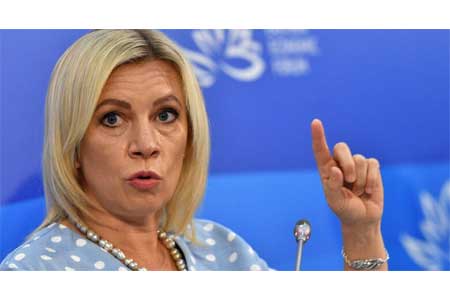 Zakharova: Russia sent a note of protest to Armenia over the act of vandalism at the "Mother Armenia" memorial in Gyumri
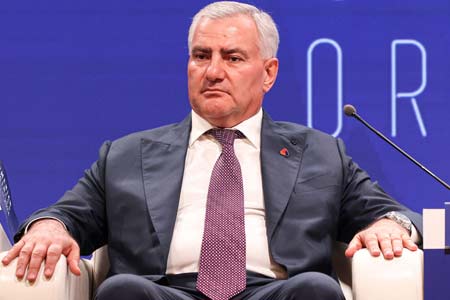 Samvel Karapetyan proposes creating a post-election opposition coalition
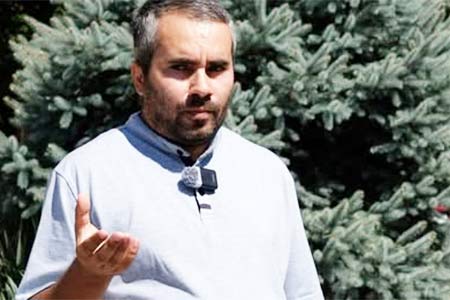 Artsakh`s Cultural Heritage Ombudsman called on Moscow to respond to destruction of WWII monuments by Azerbaijan in occupied NKR
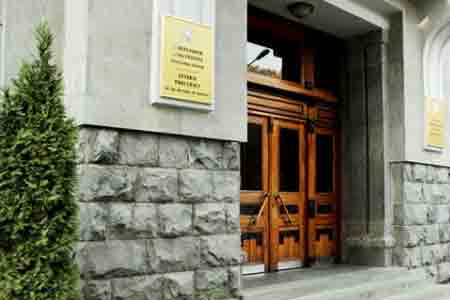 Prosecutor General`s Office petitions Central Electoral Commission for criminal prosecution of Robert Kocharyan
 Dutch Prime Minister expresses his support for Armenia`s democratic reform and economic diversification agenda
 Heritage: It`s time for Armenia`s opposition to present people with legitimate alternative to power
 RA Security Council Sec, Assistant to President of Azerbaijan hold negotiations in Dilijan
  CEC Neutralizes PAP: Three Political Forces to Enter Armenian Parliament Following Election Vote