
ArmInfo. During the electoral processes in Armenia, criminal proceedings were opened against 258 people, meaning more than 200 people were in the status of defendants.
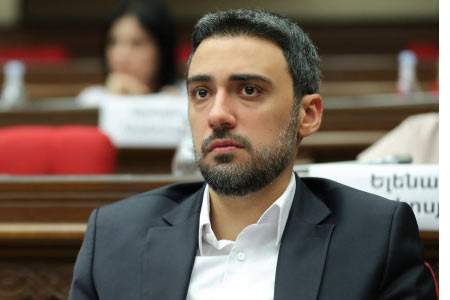
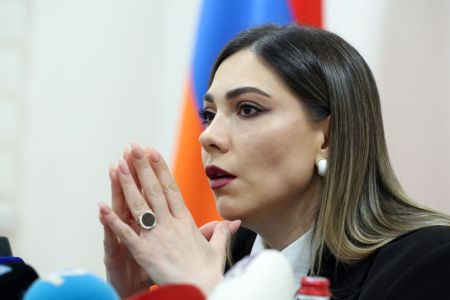
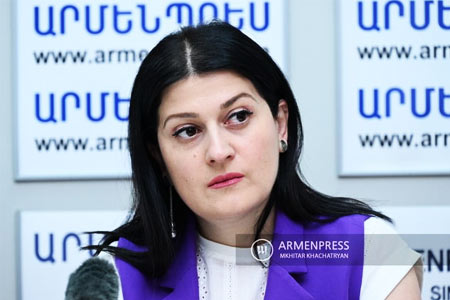
This was stated at a press conference in Yerevan by the representative of the "Strong Armenia" bloc, lawyer Aram Vardevanyan, presenting violations recorded during the organization of the parliamentary elections, on voting day and after the announcement of the results. In particular, the lawyer called to consider the events that occurred in the period from February 7 to June 7, 2026, as well as the days after the vote — from June 7 to 14. Vardevanyan noted that all the cases he listed point to one thing — that the elections in Armenia were not free and fair. One of the first and most obvious violations, he said, was the formation of a party-state.
That is, as the lawyer explained, a situation in which the activities of a party and the executive power were effectively combined. "This, in particular, manifested itself in the issue of pension increases. After the start of the electoral processes and the publication of the president of Armenia’s decree, a pension increase was announced in the country.
That is, this did not happen in 2024 or 2025, but precisely during the election period," the lawyer pointed out. Another circumstance, he said, was the amendment to the Electoral Code on April 7. As the "Strong Armenia" bloc member recalled, according to the amendments, it was forbidden to use proper names in the titles of party blocs. The lawyer emphasized that, in their view, this change was directed against the "Strong Armenia" bloc, because it had previously been announced that the bloc’s name would contain the name of Samvel Karapetyan. "Within the same changes, the requirements for declaring ballots invalid were also revised. This change had a direct impact on the election results, since for the first time in Armenia more than 16,000 ballots were declared invalid," the lawyer explained.
Speaking about hate rhetoric, Vardevanyan drew attention to the fact that it most often came from the "Civil Contract" party, in particular from Prime Minister Nikol Pashinyan. According to him, the position on this issue has already been expressed by the Administrative Court and will be presented by their political force to the Constitutional Court. "According to the court ruling that has come into force, the statements made could be perceived in a different context, despite the position of the Central Election Commission (CEC), which regarded them as ordinary sharp political rhetoric. The court also found that such statements are incompatible with a free, peaceful and healthy electoral environment," the lawyer noted. He called special attention to wiretapping and criminal prosecutions. In particular, Vardevanyan pointed to the application of double standards on this issue. As the bloc member explained, the Anti-Corruption Committee, having thousands of wiretapping materials, did not refer a single criminal proceeding to the Constitutional Court in relation to supporters or members of the "Civil Contract" party.
"At theame time, criminal proceedings were initiated against representatives of other po slitical forces for 258 people. Since February 2026, 1,000 people have been subjeacted to wiretapping, thousands of operational-investigative activities were carried out, mss pressure was exerted, and as of June 24 there were 258 people listed as defendants," the lawyer said. Vardevanyan noted that most of the wiretaps took place in April and May, while the largest number of criminal cases were initiated in June. As an example, Vardevanyan recalled that a criminal case against the "Strong Armenia" bloc’s parliamentary candidate David Kazinyan was initiated precisely on the Day of Silence — that is, one day before the elections — and not in May when the wiretapping took place.
"The reason is the absence of free and fair elections, because all these actions were aimed at creating an atmosphere of fear. This is also confirmed by cases of detaining opposition proxies on voting day, who were released a few hours later," the lawyer noted. Vardevanyan continued that observer missions recorded that about 90% of the candidates on the pre-election list of the "Civil Contract" party were civil servants. In addition, the OSCE Office for Democratic Institutions and Human Rights recorded that criminal prosecutions were used for political purposes.
"On election day, among other things, passports of about 80,000 people did not work, and the voter lists contained 17,000 hidden names that are still not being published. But I want to note that the Constitutional Court granted the relevant petition and recognized that these 17,000 people must be disclosed," the lawyer reported. Considering all of the above, Vardevanyan stated that the Constitutional Court has every basis to adopt one of three decisions: to annul the election results, to appoint a second round of voting, or to determine another procedure for allocating mandates. According to him, the uniqueness of these elections is that the court from a legal point of view can adopt any one of these three decisions.
"The 'Civil Contract' party did not win these elections. Their victory was the result of a splitting of voters' votes," the lawyer stressed. Vardevanyan also explained why they are going to court, even understanding what its decision will be. "Despite this, this process is necessary.
The main goal is to present to society the full picture of what happened, especially considering that the 'Civil Contract' party will participate in the process as a third party. What will follow the court’s decision — time will tell," Vardevanyan summed up. Recall that on June 19 seven political forces filed petitions with the Constitutional Court of Armenia demanding that the results of the parliamentary elections in the country, held on June 7, be declared invalid. On June 21 the Constitutional Court decided to combine all the cases into one proceeding. The matter will be considered by the court on June 26.






















 Armenian experts, leading Turkish think tanks discuss prospects for expanding cooperation
  Political Scientist: As long as the opposition remains silent, Pashinyan can use Plan B and secure a constitutional majority
 US-Iranian memorandum more beneficial for Iran from political and economic perspective - expert
  Political analyst: While Pashinyan pledges peace with Azerbaijan, Baku continues promoting the "Western Azerbaijan" project
 Political analyst: In light of new realities, Yerevan may propose advancing peace process with Baku without constitutional referendum
 Zakharova: Armenia`s pro-EU pivot poses economic security risks to EAEU member states
 It`s time for South Caucasus countries to think of South Caucasus as single, unified region - RA premier
  Pashinyan: Armenia and Azerbaijan should leave each other alone
 Moscow sees situation with Armenia as attempt to attack Russia-involving integration associations - Russian presidential aid
 Zakharova: Armenia views relations with Russia as tool for financially securing reorientation toward EU
 The Armenian Minister of Justice and the EU Ambassador discussed visa liberalization issues for Yerevan.
 Azerbaijan`s aggressive plans against Armenia became possible in wake of Pashinyan`s decisions on Artsakh - expert
  Zakharova: Russia sent a note of protest to Armenia over the act of vandalism at the "Mother Armenia" memorial in Gyumri
 Samvel Karapetyan proposes creating a post-election opposition coalition
 Artsakh`s Cultural Heritage Ombudsman called on Moscow to respond to destruction of WWII monuments by Azerbaijan in occupied NKR
 Prosecutor General`s Office petitions Central Electoral Commission for criminal prosecution of Robert Kocharyan
 Dutch Prime Minister expresses his support for Armenia`s democratic reform and economic diversification agenda
 Heritage: It`s time for Armenia`s opposition to present people with legitimate alternative to power
 RA Security Council Sec, Assistant to President of Azerbaijan hold negotiations in Dilijan
  CEC Neutralizes PAP: Three Political Forces to Enter Armenian Parliament Following Election Vote