

ArmInfo. The European Court of Human Rights (ECHR) ruling on cases related to the four-day April 2016 war is important because it could prevent Azerbaijan from legitimizing the crimes committed during its military aggression.
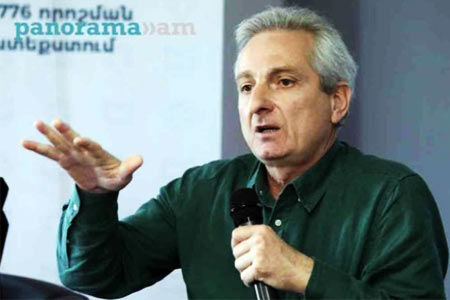
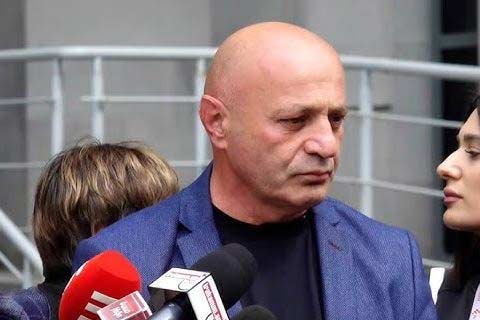
Attorney and international law specialist Ara Ghazaryan stated this at a press conference in Yerevan, discussing why the ECHR ruling on the four-day April 2016 war is so important.
As the lawyer explained, this is not just a monitoring report or an article, but a judicial decision. "And any judicial decision becomes irrefutable if it is recorded as historical fact. This is precisely the key circumstance here. Such decisions could undermine the narrative promoted by Azerbaijan that it is the victim and the Armenian side the aggressor." This is also important against the backdrop of the aggressive rhetoric that Azerbaijan is promoting," Kazaryan explained.
Therefore, according to him, despite the objections and complaints of the Azerbaijani side, including demands not to use Armenian toponyms, the ECHR has remained steadfast in its position. "As I already said, what's important here is that this has become a historical fact. Because when we talk about political discourse, as a rule, one agenda is replaced by another, and on the third day everything is forgotten. Meanwhile, the judicial decision remains," the international law specialist noted.
The second important circumstance, as Kazaryan noted, is that the ECHR has difficulty making such decisions, especially in cases involving war crimes committed during the active phase of an armed conflict. "In such cases, the ECHR typically refrains from making such decisions. However, in this case, the decision directly indicates the existence of a crime committed by Azerbaijan. And in this sense, the Azerbaijani side is forced to accept this, no matter how hard it tries to legitimize the military actions it initiated, since it is precisely judicial decisions that can undermine the so-called interpretation of 'historical truth' they are constructing," the lawyer explained. He also pointed out the importance of making a decision on a substantive legal basis. In this regard, Kazaryan suggested that such a decision would not be isolated and would be followed by other judicial decisions related to atrocities committed in the active combat zone. "This decision is also important, among other things, because it calls into question the legitimacy of the so-called 'Patriotic War'" or statements about the "self-defensive nature of Azerbaijan's actions" in 2016 and 2020. Because this is precisely what the Azerbaijani side is striving for—to justify the terrorist acts and aggressive war it has committed. And this is, among other things, the value of these judicial decisions," the lawyer concluded.
As a reminder, on June 18, the European Court of Human Rights published its first decision on cases related to the four-day April 2016 war. Among other things, the ECHR found that Azerbaijan violated the right to life of an Armenian soldier and the prohibition of torture (beheading and dismemberment). Azerbaijan was ordered to pay 90,000 euros in compensation to the victim's relatives. Former head of the Office of the Representative on International Legal Issues, Liparit Drmeyan, noted that this is an important precedent for complaints filed in defense of the rights of victims of the 44-day war of 2020. -


















 Expert: The arrest of opposition figures in Armenia for social media posts is a systematic attempt to intimidate the public and suppress dissent.
 Azerbaijani Studies Expert: While Azerbaijan Prepares Its Generation for War, Aliyev’s Aide Calls on Armenia to Prepare Armenian Society for “Peace”
 Turkologist: Azerbaijan will never, under any circumstances, stop pressuring the Armenian people
 Political scientist: We need to move away from the question of "when" and replace it with more important questions
 International Law Specialist: Azerbaijan intends to initiate legal proceedings against Armenia by sentencing Armenian prisoners
 Dmitry Medvedev predicted a Ukrainian-like fate for Armenia amid the country`s shift in foreign policy
 Russian Security Council: In Armenia, they want to force Russian asset owners to dispose of their assets
 Zakharova: Russia ready to discuss with Armenia the prospects for expanding military cooperation as part of a review of bilateral ties
 Tevanyan: Armenia, like Ukraine and Moldova, is being drawn into the EU’s global war
 Yerevan City Hall is considering introducing a valet parking system in the city
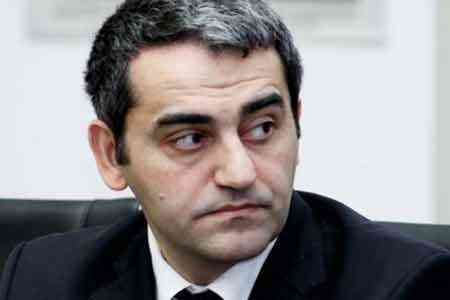 Expert: The circus surrounding the “Albanization” of Armenian culture in the presence of foreign ambassadors in occupied Artsakh is genocide
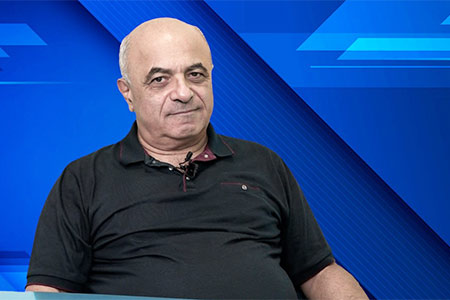 Political scientist: If Russian-Armenian relations are destroyed, Turkey will take Russia`s place
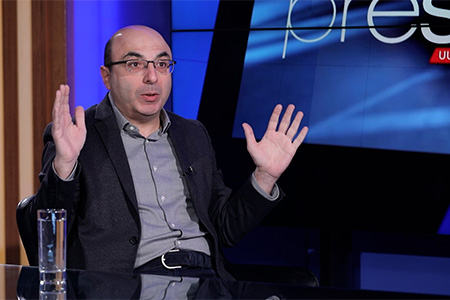 Political scientist: The Armenian public is simply obliged to significantly change the entire content of public discourse and struggle
 Cross tattoos are being removed from the skin of Christian prisoners in Azerbaijan by fire, according to a human rights activist.
 Zakharova: Armenia`s likely introduction of visas with Russia will be a step against Yerevan itself
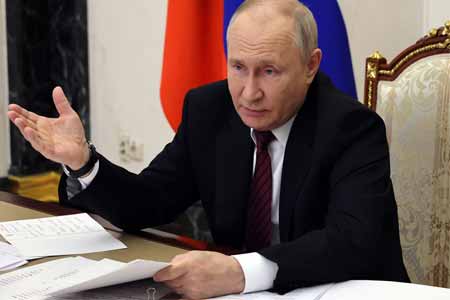 Putin: Armenia`s recognition of Karabakh as part of Azerbaijan in Prague has given Russia`s position on this issue an ambivalent character
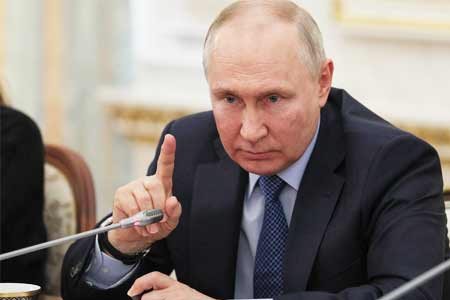 Putin: Armenia`s adoption of the law on EU accession means an announcement of its withdrawal from the Eurasian Economic Union