

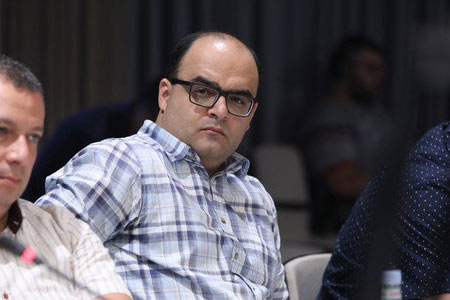
ArmInfo. If today the US focuses on Armenia's critical mineral resources, tomorrow the shale oil reserves, which many have already forgotten, may also be back on the agenda. Meanwhile, America's interest in Armenia's shale resources has a long history, writes political scientist and Doctor of Political Science Vahe Davtyan.
According to him, back in 1995, the Armenian government decided to conduct geological exploration to assess and develop the industrial potential of oil shale, oil, gas, and coal reserves discovered during the Soviet era. However, the initiative remained unfinished due to the financial and economic crisis of the 1990s. In 2011, a memorandum was signed between the RA Ministry of Energy and Natural Resources and the Isle of Man-registered International Minerals and Mines Company. The main objective of the memorandum was to explore possible avenues for the exploration and development of shale oil reserves in Armenia. The agreement provided for a joint assessment and technical study of energy resources, including potential shale gas reserves.
However, American geological exploration in Armenia began long before the signing of the aforementioned memorandum. According to research by the US Geological Survey, the Aramus region contains approximately 44 million tons of oil shale reserves. This conclusion was reached by American specialists based on research conducted in 1994. In a 2005 report, the American side presented higher estimates, noting the presence of 17-18 million tons of shale reserves in Ijevan, Shamut, and Jermanis, and approximately 128 million tons in the Dilijan region. "Today, in the context of growing geoeconomic activity by the United States in Armenia, it is possible that American interest in the entire range of Armenia's strategic resources, from critical minerals to shale reserves, will gradually expand. All of this is gradually taking on a new character of resource colonization. TRIP is one of the pillars of this strategy," the political scientist noted.


























 Azerbaijani Studies Expert: While Azerbaijan Prepares Its Generation for War, Aliyev’s Aide Calls on Armenia to Prepare Armenian Society for “Peace”
 Turkologist: Azerbaijan will never, under any circumstances, stop pressuring the Armenian people
 Political scientist: We need to move away from the question of "when" and replace it with more important questions
 International Law Specialist: Azerbaijan intends to initiate legal proceedings against Armenia by sentencing Armenian prisoners
 Dmitry Medvedev predicted a Ukrainian-like fate for Armenia amid the country`s shift in foreign policy
 Russian Security Council: In Armenia, they want to force Russian asset owners to dispose of their assets
 Zakharova: Russia ready to discuss with Armenia the prospects for expanding military cooperation as part of a review of bilateral ties
 Tevanyan: Armenia, like Ukraine and Moldova, is being drawn into the EU’s global war
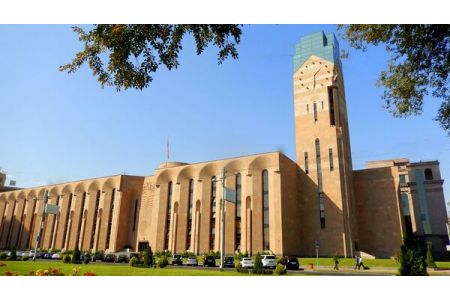 Yerevan City Hall is considering introducing a valet parking system in the city
 Expert: The circus surrounding the “Albanization” of Armenian culture in the presence of foreign ambassadors in occupied Artsakh is genocide
 Political scientist: If Russian-Armenian relations are destroyed, Turkey will take Russia`s place
 Political scientist: The Armenian public is simply obliged to significantly change the entire content of public discourse and struggle
 Cross tattoos are being removed from the skin of Christian prisoners in Azerbaijan by fire, according to a human rights activist.
 Zakharova: Armenia`s likely introduction of visas with Russia will be a step against Yerevan itself
 Putin: Armenia`s recognition of Karabakh as part of Azerbaijan in Prague has given Russia`s position on this issue an ambivalent character
 Putin: Armenia`s adoption of the law on EU accession means an announcement of its withdrawal from the Eurasian Economic Union
 Aram Vardevanyan: Public demands solutions, not apology scandals in Parliament
 Arrested Armenian oligarch on economy and new jobs