
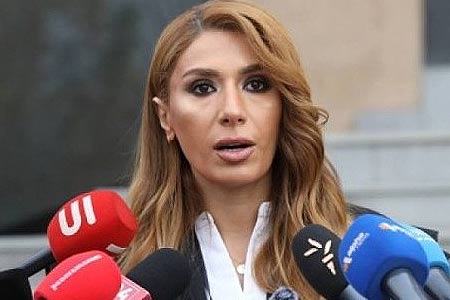
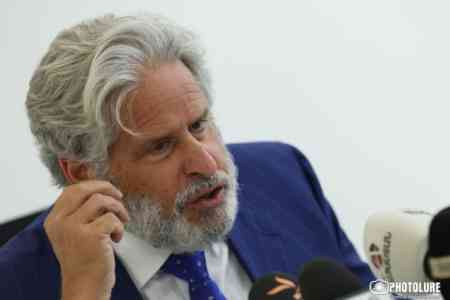
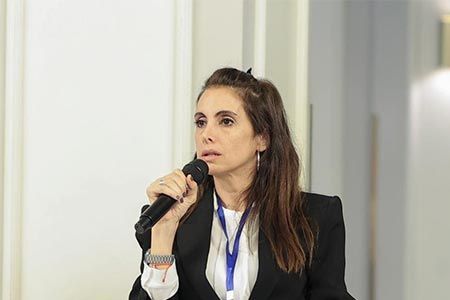
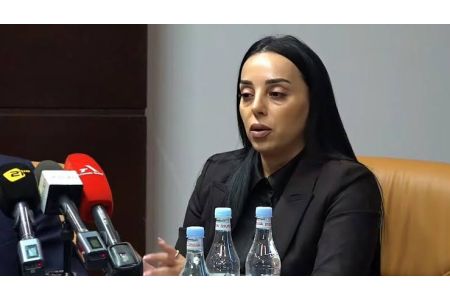
ArmInfo. Gohar Meloyan, a member of the Strong Armenia bloc and a legal expert, has presented the main violations recorded by her team in the run-up to and during the regular parliamentary elections in Armenia on June 7.
As Meloyan reported at a press conference in Yerevan on June 10, according to their preliminary estimates, around 700 members of their party were detained during the pre-election period, including elderly women who were not even actively involved in their political party's activities. She expressed her belief that such actions were intended to intimidate their supporters, since, as Meloyan noted, people were typically released without any consequences after being detained. "Moreover, in many cases, lawyers were not allowed to see those detained for several hours, which effectively violated their legal rights. Criminal complaints were filed in a number of such cases. In rule-of-law states, there is a clearly established procedure: if there are reasonable suspicions against a person, they are first notified and then summoned for questioning," the bloc member said.
Moreover, as the legal expert noted, arrests most often occurred after large meetings between their bloc representatives and voters in villages and cities. "The very next day, law enforcement agencies conducted searches of party headquarters, detained people, and organized searches of their apartments. All of this had the specific goal of creating an atmosphere of fear in populated areas," the "Strong Armenia" bloc member expressed confidence.
Furthermore, as Meloyan noted, their political force managed to build an effective monitoring system at polling stations to oversee the voting process. According to her, not one, but three lines of proxies were organized at each of the 2,005 polling stations for this purpose. "However, given the party's level of preparation, the authorities began detaining these people. Furthermore, dozens of candidates on the party list were subjected to persecution, and various preventive measures were taken against them. And the entire chain of events we had established fell apart. Moreover, this chain of violations continues to this day. The Central Election Commission continues to grant petitions regarding the persecution of candidates from our political party," Meloyan noted.
The legal expert also called for attention to expanding the powers and funding of law enforcement agencies during the pre-election period, as well as to expanding the scope of violations. In her view, this situation is abnormal and stems from a desire to turn the law enforcement system into a tool for serving a political agenda. Meloyan also pointed to the abuse of administrative resources. According to her, during the election campaign, the party's hotline received thousands of calls, and work is currently underway to process all received applications. "Most of the complaints concerned pressure on civil servants to vote for the Civil Contract party, demands to submit a Strong Armenia bloc ballot and provide confirmation of their choice," the legal expert explained.
Meloyan also reported numerous problems with the preliminary voter lists. She stated that even those citizens who checked their information in advance discovered on election day that they were not included in the lists at the appropriate polling stations. Thus, she believes, artificial obstacles were being created to citizens' right to vote. "Another problem was the unexpected change in the addresses of polling stations. While citizens were previously informed of such changes in advance, this was not the case this time," the bloc member noted.
Meloyan also condemned the authorities' decision to hold a wine festival in Yerevan from June 5 to 7, immediately before the elections. She believes that state bodies should ensure maximum accessibility to voters on election day. "In this regard, the party filed a complaint with the Central Election Commission, which was accepted for consideration. However, the streets where the festival was held remained closed, creating additional difficulties for some voters visiting the polling stations," Meloyan stated. She also recalled the existence of numerous video recordings, which, according to her, document instances of officials interfering with the voting process. Specifically, Meloyan noted that at several polling stations, village heads and municipal employees attempted to direct voters, constantly intervened in the process, and removed ballots numbered 3 or those of other political parties. Meloyan also recalled her previously reported data regarding abrupt changes in the number of voters, as well as discrepancies between the Migration and Citizenship Service lists and the Central Electoral Commission list.
Then, the Strong Armenia bloc member presented videos showing election commission members approaching ballot bags and placing or removing items from them. "Some footage also shows missing ballots and commission members filling out important documents in pencil, which is prohibited by regulations because it allows for subsequent alteration. The sharp increase in invalid ballots is also concerning. While in 2018 there were 4,706, in 2021 there were 4,593, in 2026 there were 17,097," Meloyan noted.
She also described cases where ballots with slight creases were invalidated. However, she noted that there were also opposite examples: ballots with serious damage were declared valid. She added that these ballots were often declared invalid due to minor defects. "An additional problem was the malfunction of the voter fingerprint identification devices. Despite this, polling stations continued to operate, which is a serious violation. There were also instances of commission members moving ballot boxes beyond the range of surveillance cameras, depriving observers of the opportunity to monitor the proceedings," the bloc member noted.
Meloyan also commented on statements by representatives of the Civil Contract party that the recount only improved their position. According to her, the reality is different, and their political party's vote share has declined following the recount. "Furthermore, there were cases of military personnel voting twice: first at regular polling stations, and then at military units using their military ID cards. The party is preparing a detailed report on all of these incidents. However, in reality, the Central Election Commission is obligated to respond to such reports itself, given that the media is also reporting on all of this. Ensuring the legality and proper conduct of the electoral process is the direct constitutional responsibility of the CEC," Meloyan concluded.











 Armenia and France discuss further development of strategic partnership and EU cooperation
  To overcome risks Armenia must reduce domestic escalation - expert
  Zatulin: Pashinyan was eager to get back to Russia because he actually lost the elections
 Human rights activist Ruben Melikyan dismissed from YSU
 Pashinyan removed from INNOPROM guest list
 Zakharova: Armenia`s pro-EU pivot poses economic security risks to EAEU member states
 It`s time for South Caucasus countries to think of South Caucasus as single, unified region - RA premier
  Pashinyan: Armenia and Azerbaijan should leave each other alone
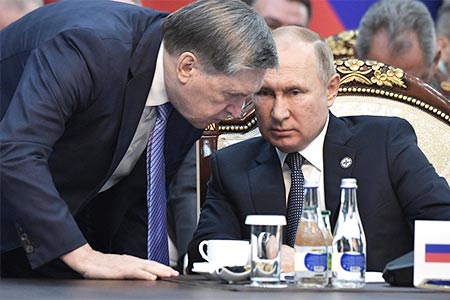 Moscow sees situation with Armenia as attempt to attack Russia-involving integration associations - Russian presidential aid
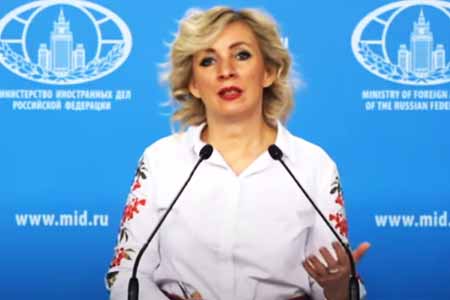 Zakharova: Armenia views relations with Russia as tool for financially securing reorientation toward EU
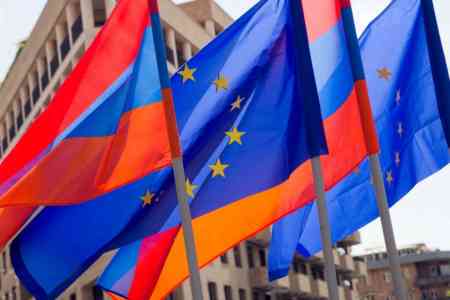 The Armenian Minister of Justice and the EU Ambassador discussed visa liberalization issues for Yerevan.
 Azerbaijan`s aggressive plans against Armenia became possible in wake of Pashinyan`s decisions on Artsakh - expert
 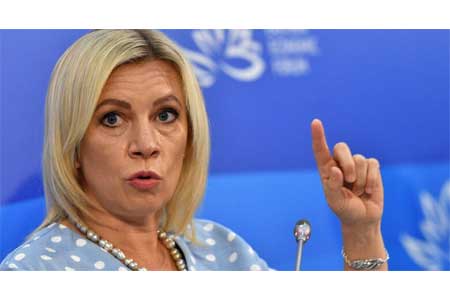 Zakharova: Russia sent a note of protest to Armenia over the act of vandalism at the "Mother Armenia" memorial in Gyumri
