
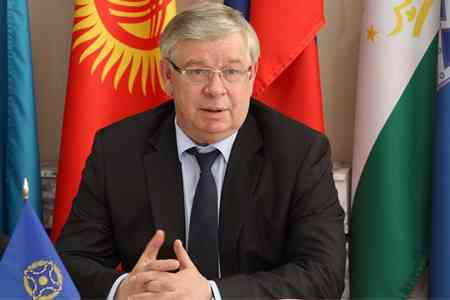
ArmInfo. The growing influence of the EU, US, and Turkey on the Caucasus countries will create an even greater source of tension in the region, as stated by Valery Semerikov, Deputy Secretary General of the Collective Security Treaty Organization (CSTO, ) at the 19th meeting of the heads of the leading units of the CIS anti-terrorism structures and the heads of the national structures of the Commonwealth countries coordinating the fight against terrorism and extremism.
"The level of conflict potential in the Caucasus region remains high. I believe that the growing influence of the European Union, the US, and Turkey on the countries of this region will create an even greater source of tension," he said, according to TASS. "The situation is particularly tense," he said, "on the CSTO's western borders. The main threat from that direction comes from Europe," Semerikov emphasized.
In recent years, the European Union has been actively increasing its presence in the Caucasus. An EU civilian monitoring mission (EUMA) is deployed in Armenia, but its work has been sharply criticized in Moscow and Baku. The United States also conducts joint military exercises with Armenia (for example, Eagle Partner) and provides financial assistance to diversify its security.
Turkey has strengthened its position in the Caucasus after the Nagorno-Karabakh war, becoming a strategic ally of Azerbaijan. Ankara is actively promoting the Zangezur Corridor project, which is changing the geopolitical balance in the region.
Against this backdrop, Armenia has effectively frozen its participation in the CSTO, skipped several summits, and announced a search for new security partners. Prime Minister Nikol Pashinyan has openly suggested that Yerevan could withdraw from the CSTO "if necessary."










 Expert: The arrest of opposition figures in Armenia for social media posts is a systematic attempt to intimidate the public and suppress dissent.
 Azerbaijani Studies Expert: While Azerbaijan Prepares Its Generation for War, Aliyev’s Aide Calls on Armenia to Prepare Armenian Society for “Peace”
 Turkologist: Azerbaijan will never, under any circumstances, stop pressuring the Armenian people
 Political scientist: We need to move away from the question of "when" and replace it with more important questions
 Lukashenko called for Armenia to assume the CIS presidency in 2029
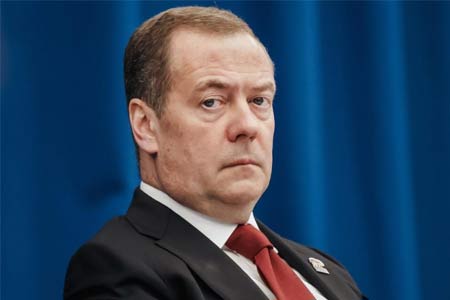 Dmitry Medvedev predicted a Ukrainian-like fate for Armenia amid the country`s shift in foreign policy
 Russian Security Council: In Armenia, they want to force Russian asset owners to dispose of their assets
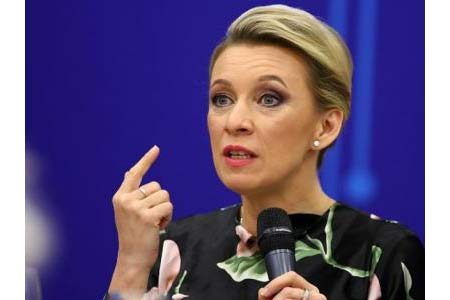 Zakharova: Russia ready to discuss with Armenia the prospects for expanding military cooperation as part of a review of bilateral ties
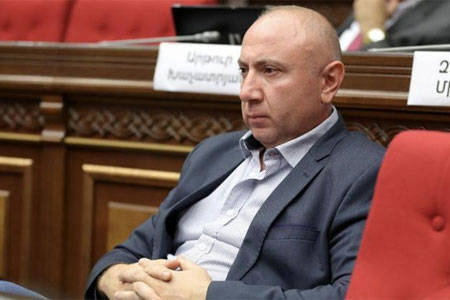 Tevanyan: Armenia, like Ukraine and Moldova, is being drawn into the EU’s global war
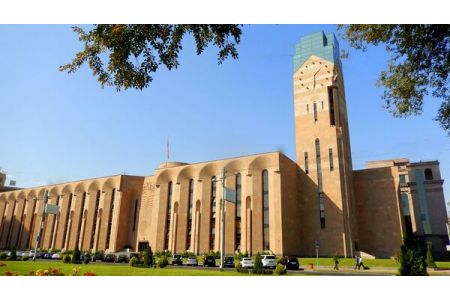 Yerevan City Hall is considering introducing a valet parking system in the city
 Expert: The circus surrounding the “Albanization” of Armenian culture in the presence of foreign ambassadors in occupied Artsakh is genocide
 Political scientist: If Russian-Armenian relations are destroyed, Turkey will take Russia`s place
 Political scientist: The Armenian public is simply obliged to significantly change the entire content of public discourse and struggle
 Cross tattoos are being removed from the skin of Christian prisoners in Azerbaijan by fire, according to a human rights activist.
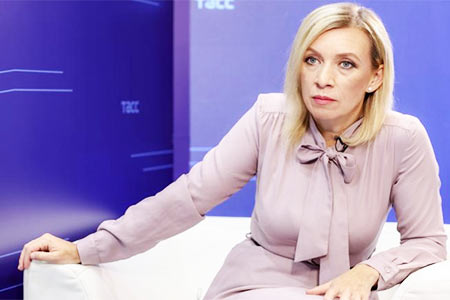 Zakharova: Armenia`s likely introduction of visas with Russia will be a step against Yerevan itself
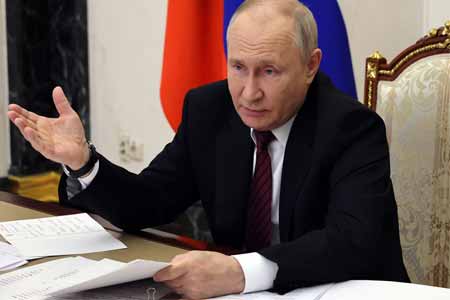 Putin: Armenia`s recognition of Karabakh as part of Azerbaijan in Prague has given Russia`s position on this issue an ambivalent character
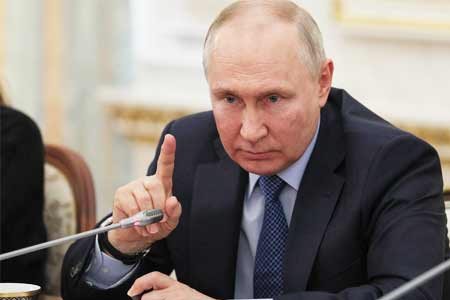 Putin: Armenia`s adoption of the law on EU accession means an announcement of its withdrawal from the Eurasian Economic Union