


ArmInfo.Former Justice Minister and former Deputy Speaker of the Armenian Parliament Arpine Hovhannisyan called on opposition forces, who have made it into parliament according to preliminary estimates, to honestly and reasonably answer questions troubling the country's citizens instead of making new promises.
On her Facebook page, Hovhannisyan called for politics to be viewed as a platform for open dialogue and outlined questions that, in her opinion, the opposition should answer, given the results of the June 7 parliamentary elections in Armenia. The first target, she said, is Samvel Karapetyan's "Strong Armenia" bloc. The former Justice Minister recalled that it was their side that had the highest expectations of victory, and there was almost no discussion of any other scenario. "For example, there was no open dialogue with voters about what would happen in the event of a defeat-whether a real defeat or a defeat due to electoral fraud. There was no discussion of the steps planned for different scenarios or what political decisions might be made under certain circumstances," Hovhannisyan noted.
In turn, Robert Kocharyan's "Armenia" bloc, according to her, contrary to numerous forecasts, political commentaries, calculations, and expectations, did everything possible to consolidate its voters. "The core of their political campaign was mobilizing their own electorate, and they solved this problem to the fullest. Despite everything, I believe that we all, as voters with opposition views, deserve answers to a number of important questions. Moreover, for me at this point, what those answers will be isn't even that important. I am ready to respect any political decision as long as it is justified, logical, and presented fairly to voters," Hovhannisyan emphasized.
First, she asked whether the opposition intends to challenge the election results in the Constitutional Court if it claims they were falsified. "If so, what is the scope and nature of the violations? Are we talking about violations recorded at individual polling stations, or violations that, in your opinion, influenced the final outcome of the election? And if you appeal to the Constitutional Court, how much trust do you have in it?" the former minister asked.
In this regard, she recalled that for many years, the opposition itself had claimed that, under the current government, the Constitutional Court was formed through political interference and controversial processes. In this vein, Hovhannisyan also called on the opposition to honestly answer whether it trusts this court enough to transfer the key stage of its political struggle there and ultimately accept its decision. "Specifically, if the Constitutional Court decides that the election results should stand and there are insufficient grounds to invalidate them, will you accept this decision? Or, is the Constitutional Court's decision acceptable to you only if it meets your expectations. And if the Constitutional Court does not satisfy your demands and the election results stand, what will the opposition do in that case? Will it intend to enter parliament?" the former Justice Minister inquired.
She then asked the opposition what the basis for their decision, if they decide to accept mandates and enter parliament, would be. Specifically, Hovhannisyan clarified which political goal can only be achieved in parliament and cannot be achieved outside of it. However, she also called for this issue to be examined from the opposite perspective and for a justification for the opposition's decision if, on the contrary, it decides not to enter parliament. "Answer me, what is the plan for further action, and what political outcome do you expect from this decision? And if parliament does become a platform for struggle, what specific tools do you intend to use? What, in your opinion, are the mechanisms that can ensure a real political outcome?" Hovhannisyan asked the opposition.
In this vein, she also called on opposition forces to clarify what they consider the most effective result of the opposition parliament's activities over the past five years and what specific political, legislative, or public impact indicates that a parliamentary mandate can be an effective political tool. "There are also frequent hints that 'this will last until the end of the year' or who knows how long, but the current government won't hold its position for long, and the political situation could change dramatically within one or two years. Is there such a calculation in the logic of maintaining mandates and remaining in parliament? If so, please elaborate. If not, why do these hints continue to circulate in the political arena?" the former Armenian Minister of Justice added.
Furthermore, she called on opposition forces to answer whether they are confident in the political reliability and loyalty of the candidates included on their lists. Hovhannisyan herself expressed the view that the opposition has problems in this regard, but nevertheless called on them to honestly state their position on the matter. "Say that too. Let those who want to win the mandate speak. These aren't accusations. These are questions you are obligated to answer. Not with slogans, not with emotion, without yet another formula like 'everything will change soon,' but with clear, understandable, and well-founded political explanations. You must lay out your arguments, your vision. Don't tell us what Prime Minister Nikol Pashinyan will say or do. Or, if that is your argument, then state it directly. Because voters not only vote, but also have the right to understand what will be done with the political mandate they received based on their vote," Hovhannisyan concluded.











 Opinion: The development of the Amulsar mine near the resort town of Jermuk is the beginning of an environmental disaster in Armenia
 Expert: The arrest of opposition figures in Armenia for social media posts is a systematic attempt to intimidate the public and suppress dissent.
 Azerbaijani Studies Expert: While Azerbaijan Prepares Its Generation for War, Aliyev’s Aide Calls on Armenia to Prepare Armenian Society for “Peace”
 Turkologist: Azerbaijan will never, under any circumstances, stop pressuring the Armenian people
 Political scientist: We need to move away from the question of "when" and replace it with more important questions
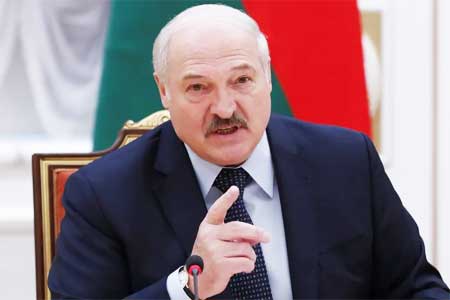 Lukashenko called for Armenia to assume the CIS presidency in 2029
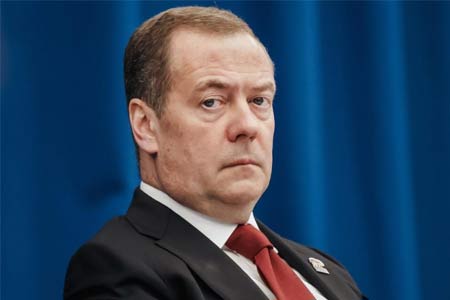 Dmitry Medvedev predicted a Ukrainian-like fate for Armenia amid the country`s shift in foreign policy
 Russian Security Council: In Armenia, they want to force Russian asset owners to dispose of their assets
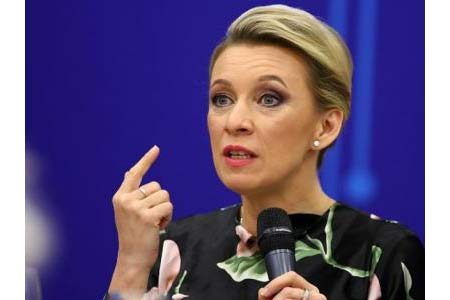 Zakharova: Russia ready to discuss with Armenia the prospects for expanding military cooperation as part of a review of bilateral ties
 Tevanyan: Armenia, like Ukraine and Moldova, is being drawn into the EU’s global war
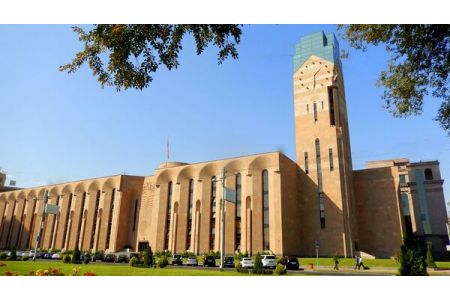 Yerevan City Hall is considering introducing a valet parking system in the city
 Expert: The circus surrounding the “Albanization” of Armenian culture in the presence of foreign ambassadors in occupied Artsakh is genocide
 Political scientist: If Russian-Armenian relations are destroyed, Turkey will take Russia`s place
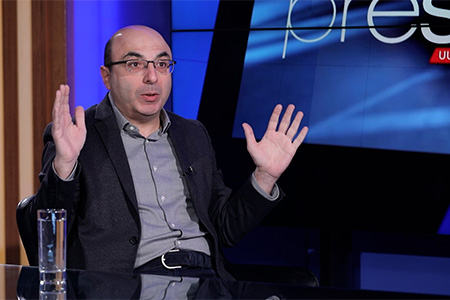 Political scientist: The Armenian public is simply obliged to significantly change the entire content of public discourse and struggle
 Cross tattoos are being removed from the skin of Christian prisoners in Azerbaijan by fire, according to a human rights activist.
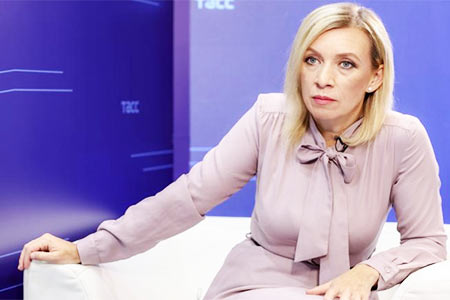 Zakharova: Armenia`s likely introduction of visas with Russia will be a step against Yerevan itself
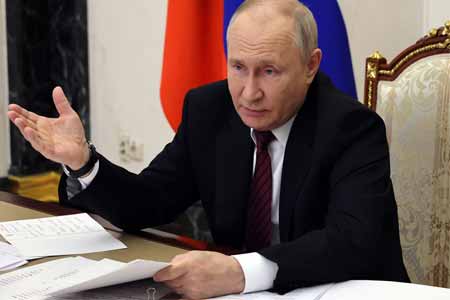 Putin: Armenia`s recognition of Karabakh as part of Azerbaijan in Prague has given Russia`s position on this issue an ambivalent character
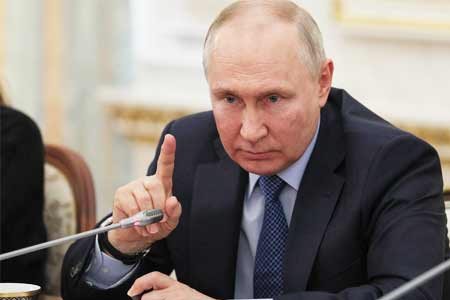 Putin: Armenia`s adoption of the law on EU accession means an announcement of its withdrawal from the Eurasian Economic Union
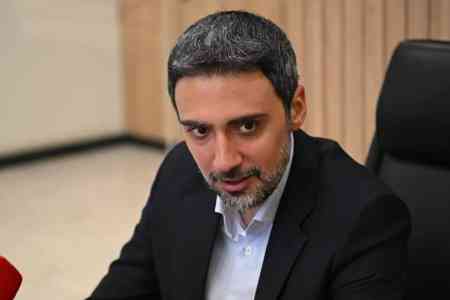 Aram Vardevanyan: Public demands solutions, not apology scandals in Parliament