
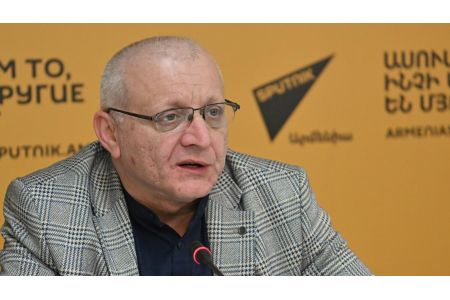
ArmInfo. Baku is trying to dictate "the boundaries of permissibility" to Yerevan, as stated by political analyst Suren Surenyants on his Facebook page.
"The Azerbaijani Ministry of Foreign Affairs 'strongly condemned' the burning of the Turkish flag in Yerevan, calling for those responsible to be held accountable and insisting that such actions cannot be justified by freedom of speech. Flag burning, of course, cannot be considered a constructive expression of political culture. However, value components are certainly not the basis of Baku's response," the political analyst emphasized.
Firstly, he continued, a selective approach is evident. Azerbaijan is quick to condemn the actions of private individuals in the capital of another country, while committing an act of vandalism at the state level, by destroying the Cathedral of the Holy Mother of God in Stepanakert. Secondly, Baku is reacting to the burning of a Turkish, rather than its own, national symbol, thereby not only reaffirming its allied relations but also attempting to influence Armenia's domestic agenda by shaping the "boundaries of what is permissible."
"Essentially, this is a political message from Baku, addressed to both the Armenian public and state institutions, with the aim of influencing the country's internal relations and decisions. Just like the demand to amend the Constitution. This reaction from Baku is not simply the burning of a flag. It is part of a broader strategy to exert pressure on Armenia, shape its domestic agenda, and dictate, from a position of 'winner,' what is 'acceptable' and what is not," Suren Surenyants wrote.
Recall, during the April 23 torchlight procession, participants burned a Turkish flag. This action has been condemned by Armenian authorities, including Prime Minister Nikol Pashinyan.




















 Analyst: The primary issue with Armenia`s new Parliament Speaker`s speech lies is its one-sided interpretation of the causes of the political crisis
 Expert: Gagik Tsarukyan embodies post-Soviet model of big business-state relations; this model is used in many other post-Soviet countries
 Expert: Azerbaijan promoting aggressive plans against Armenia at state level
 Iranologist: Baku`s propaganda of might masks the country`s inability to provide water to its own population
 NA Vice Speaker candidate believes his wife`s salary as director of HayPost is the lowest in the company`s history
 RF Permanent Representative: There is no CSTO-Armenia conflict
 Moscow: NATO seeking to "Pull" Armenia away from CSTO Allies
  Political analyst: Russia intends to determine which "Camp" Armenia will choose through a referendum
 Narek Karapetyan will give up his parliamentary salary in favor of charitable contributions.
 Armenia and France discuss further development of strategic partnership and EU cooperation
  To overcome risks Armenia must reduce domestic escalation - expert
  Zatulin: Pashinyan was eager to get back to Russia because he actually lost the elections
 Human rights activist Ruben Melikyan dismissed from YSU
 Zakharova: Armenia`s pro-EU pivot poses economic security risks to EAEU member states
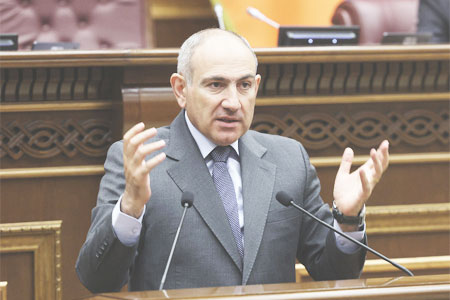 It`s time for South Caucasus countries to think of South Caucasus as single, unified region - RA premier
  Pashinyan: Armenia and Azerbaijan should leave each other alone
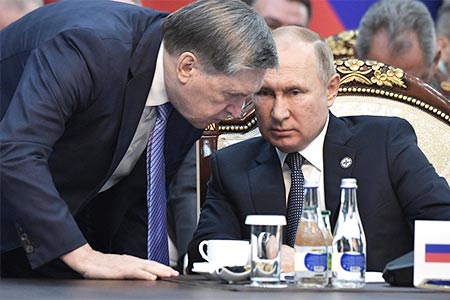 Moscow sees situation with Armenia as attempt to attack Russia-involving integration associations - Russian presidential aid