
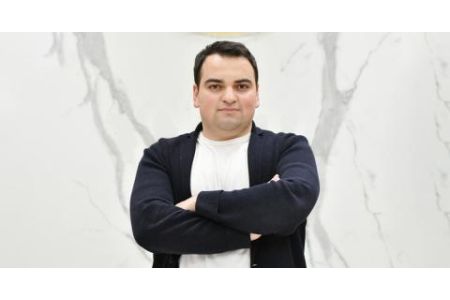
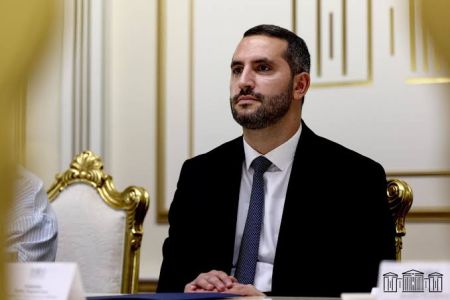
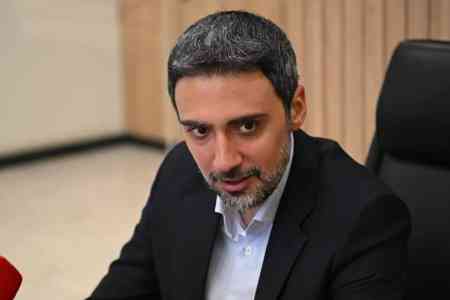
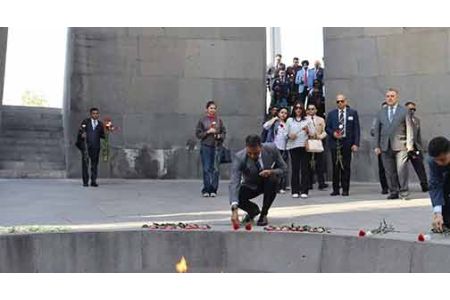
ArmInfo. The Armenian authorities have turned the fates of the Armenian Genocide victims into a political tool for advancing their agenda. Narek Karapetyan, a member of the board of the Strong Armenia party, stated this in an interview with journalists at the Tsitsernakaberd memorial complex dedicated to the victims of the Armenian Genocide.
Narek Karapetyan, along with other party members, visited Tsitsernakaberd to commemorate the 111th anniversary of the Armenian Genocide in the Ottoman Empire. The party board member noted that recognition of the Armenian Genocide has two important goals. First and foremost, he said, it aims to prevent a repetition of history in the future. "This is essential for genocide prevention mechanisms to work. And for this, its international recognition is crucial. Armenia is located in a region where it requires international support," Karapetyan noted.
Secondly, he said, it's important to remember that these aren't just numbers, but the destinies of people. "People who didn't change their faith, nationality, or language, and for this very reason were subjected to massacre. And therefore, it's strange to us that today some people (the Armenian authorities - ed.) can use the destinies of one and a half million Armenians as a political tool to resolve their current issues," the party council member lamented.
According to Karapetyan, the Armenian authorities' denial of this tragedy could lead to a lack of legal guarantees that the enemy won't make new demands tomorrow and repeat the same actions. It is for this reason, Karapetyan noted, that Azerbaijan is now claiming the right to return 300,000 Azerbaijanis to Armenia. "This is a grave internal threat to peace in our country and the future of our children. The Armenian authorities are essentially asking us to forget our past, to consign to oblivion the fate of the 1.5 million murdered Armenians. Our demand is recognition of the Genocide. We need international recognition of the Genocide, and we need Turkey itself to do so sooner or later. This is the only way to restore justice in the region and establish lasting peace between nations," Karapetyan stated.
Because, as the party council member noted, consigning to oblivion the fate of 1.5 million Armenians means allowing the same fate to befall the nation in the future. "We must have good relations with our neighbors in the region, but these relations should not be built on bloodshed; they must be based on justice. We are ready to restore relations with Turkey without preconditions, but there is a need to discuss the truth with the Turkish public. All this happened: our ancestors were murdered. If we turn a blind eye to this today, then we are allowing the same fate to befall us in the future," Karapetyan asserted.
The politician also responded to Armenian Prime Minister Nikol Pashinyan's statements that "it is necessary to stop looking for a homeland outside the internationally recognized 29,743 square kilometers of the state, as otherwise the country risks losing its statehood." In this regard, Karapetyan drew the Prime Minister's attention to the fact that genocide recognition and territorial claims are different. "We need recognition of the Armenian Genocide to restore justice. Armenia has no territorial claims against any country in the region; we demand justice," the party council member concluded. As a reminder, on April 24, 1915, the extermination of Armenian subjects of the Ottoman Empire began in Constantinople, the capital of the Ottoman Empire. It began with the arrests of Armenian intellectuals-writers and poets, architects and parliamentarians-and then escalated into the complete extermination of Armenians. As a result of these actions by the Turkish authorities, more than 1.5 million Armenians were deported, starved, and tortured to death. It should be added that in early 2025, the Prime Minister of Armenia, at a meeting with representatives of the Armenian community in Switzerland, questioned the fact of the Armenian Genocide in the Ottoman Empire. Independent experts are inclined to believe that he is either unaware that the term Genocide was introduced into circulation by genocide scholar Raphael Lemkin only in 1944, or he is deliberately trying to create a narrative that "this issue was artificially raised by the Soviet Union to put pressure on Turkey." The Armenian Genocide has been recognized by the Council of Europe (1998, 2001), the European Parliament (1987, 2000, 2002, 2005), the UN Sub-Commission on Prevention of Discrimination and Protection of Minorities[7], the World Council of Churches, the parliamentary coalition of South American countries (Mercosur), and the Parliament of Latin America (2015). The Armenian Genocide has been recognized and condemned by many countries and influential international organizations. The first to officially recognize and condemn the mass killings of Armenians was the Parliament of Uruguay (1965). The extermination of Armenians has been officially recognized as genocide (under international law) and condemned by: Austria (joint statement of the chairmen of parliamentary factions, 2015), Argentina (2 laws, 5 resolutions; 2004, 2007), Armenia (1964 as part of the USSR, 1988, 1990), Belgium (1998, 2015), Bulgaria (2007, 2015), Bolivia (2014), Brazil (2015), Vatican City (2015), Venezuela (2005), Germany (2016), Greece (1996), Italy (2000, 2019), Canada (1996, 2002, 2004), Cyprus (1975, 1982), Latvia (2021), Lebanon (1997), Libya (2019); On April 18, 2019, the Interim Government of Libya adopted a resolution recognizing the Armenian Genocide. Lithuania (2005), Luxembourg (2015), Netherlands (2004, 2018), Paraguay (2015), Poland (2005), Portugal (2019), Russia (1995), Syria (2020), Slovakia (2004), USA (2019, 2021); On April 24, 2021, US President Joe Biden officially recognized the Armenian Genocide. Uruguay (1965), France (1998, 2000, 2001, 2006), Czech Republic (2015, 2017, 2020), Chile (2007), Switzerland (2003), Sweden (2010). Turkey continues its policy of denial of this crime against humanity.










 Expert: The arrest of opposition figures in Armenia for social media posts is a systematic attempt to intimidate the public and suppress dissent.
 Azerbaijani Studies Expert: While Azerbaijan Prepares Its Generation for War, Aliyev’s Aide Calls on Armenia to Prepare Armenian Society for “Peace”
 Turkologist: Azerbaijan will never, under any circumstances, stop pressuring the Armenian people
 Political scientist: We need to move away from the question of "when" and replace it with more important questions
 Lukashenko called for Armenia to assume the CIS presidency in 2029
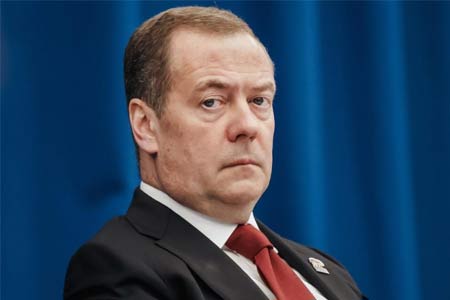 Dmitry Medvedev predicted a Ukrainian-like fate for Armenia amid the country`s shift in foreign policy
 Russian Security Council: In Armenia, they want to force Russian asset owners to dispose of their assets
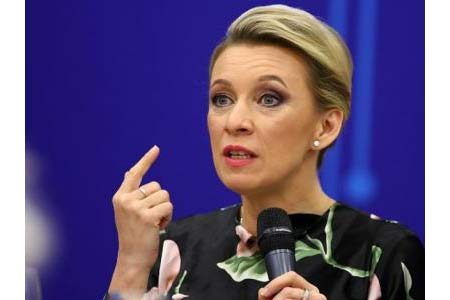 Zakharova: Russia ready to discuss with Armenia the prospects for expanding military cooperation as part of a review of bilateral ties
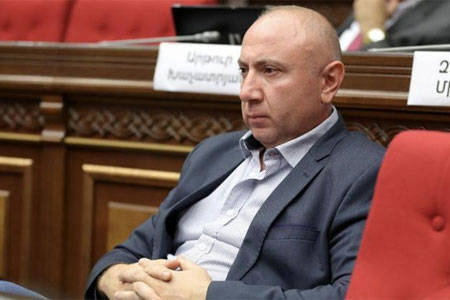 Tevanyan: Armenia, like Ukraine and Moldova, is being drawn into the EU’s global war
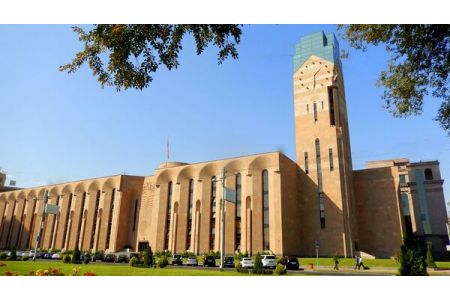 Yerevan City Hall is considering introducing a valet parking system in the city
 Expert: The circus surrounding the “Albanization” of Armenian culture in the presence of foreign ambassadors in occupied Artsakh is genocide
 Political scientist: If Russian-Armenian relations are destroyed, Turkey will take Russia`s place
 Political scientist: The Armenian public is simply obliged to significantly change the entire content of public discourse and struggle
 Cross tattoos are being removed from the skin of Christian prisoners in Azerbaijan by fire, according to a human rights activist.
 Zakharova: Armenia`s likely introduction of visas with Russia will be a step against Yerevan itself
 Putin: Armenia`s recognition of Karabakh as part of Azerbaijan in Prague has given Russia`s position on this issue an ambivalent character
 Putin: Armenia`s adoption of the law on EU accession means an announcement of its withdrawal from the Eurasian Economic Union