
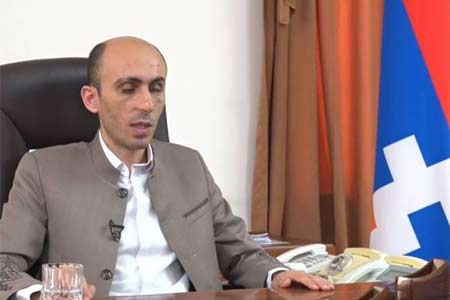
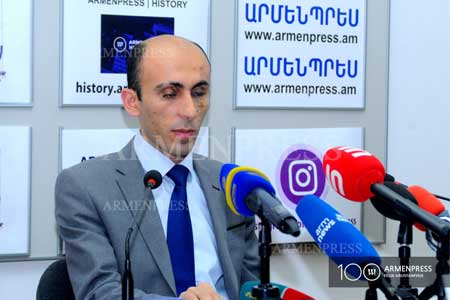
ArmInfo.The forced displacement of the population of Artsakh in the fall of 2023 is a link in the ongoing genocidal policy against Armenians, as stated by Artak Beglaryan, head of the Artsakh Union public organization and former NKR Ombudsman, at a press conference in Yerevan.
He noted that the term "ethnic cleansing" is most often used today, while the word "genocide" is rarely used in the context of what happened to the people of Artsakh. Beglaryan clarified that this is often due to the misconception that genocide necessitates a massive death toll. However, genocides are not limited to the scale of victims, but also take into account intentions and their consequences.
In this regard, the head of the Artsakh Union NGO called for dividing the events of 2020 into five stages. "The first stage was the military aggression from September 27 to November 9, 2020 (the 44-day war). The second stage, from November 10, 2020 to December 12, 2022, was a more passive stage, during which the Armenian trace was actively erased in the occupied territories, as well as attempts were made to find military-political loopholes in order to occupy the remaining part of Artsakh and physically or psychologically destroy the remaining Armenian population there. The third stage was the blockade, which is an example of active genocidal actions. The fourth stage was the military aggression of September 19-20, 2023 and the forced displacement of the entire Armenian population of Artsakh. And finally, the fifth stage, in which the people of Artsakh are still experiencing today, is the destruction of cultural heritage and property in occupied Artsakh and, at the same time, an attempt to conceal what is happening with the complicity of the Armenian authorities," Beglaryan noted.
Beglaryan noted that these events fall under Article 2, Paragraph (a) of the Convention on the Prevention and Punishment of the Crime of Genocide, which concerns the killing of members of an ethnic group. He stated this occurred during the military actions of 2020 and 2023, as well as through the blockade. In this context, he recalled that 80 civilians are currently considered victims of enforced disappearance, while approximately 100 civilians were killed in 2020 and 21 in 2023.
"Paragraph (b) of Article 2 of the Convention cites the causing of serious bodily or mental harm to members of the group. During the Azerbaijani aggression, hundreds of cases of civilian injuries were recorded. Furthermore, we must distinguish psychological terror, including the dissemination via media resources of cases involving decapitation and other forms of torture," Beglaryan stated.
All of this, he said, was documented not only by them, but also by the international community and various experts and human rights organizations. As the head of the Artsakh Union organization recalled, for example, human rights activist Juan Mendez, in a report published in November 2023, characterized the events as genocide and clearly documented the serious psychological harm inflicted on the Artsakh population. "The capture of Artsakh's military and political leadership is also proof of the act of genocide," Beglaryan noted. He emphasized that these findings were documented not only by local advocates but also by the international community and various human rights organizations. For instance, he cited human rights expert Juan Mendez, who, in a report published in November 2023, characterized the events as genocide and explicitly stated that the population of Artsakh suffered serious psychological harm. "The capture of Artsakh's military and political leadership is also proof of the act of genocide," Beglaryan added.
In conclusion, he stressed the necessity of continuing the struggle for justice and the prevention of further genocidal acts against the Armenian people. "Beyond this, we must protect our cultural heritage and continue to raise the issue of the return of the Artsakh population. The primary condition for preventing genocide is the eradication of the policy of Armenophobia, which serves as the ideological foundation of Azerbaijan's strategy. Naturally, this includes the strengthening of Armenia through the lens of historical lessons," Beglaryan said.














 Expert: Gagik Tsarukyan embodies post-Soviet model of big business-state relations; this model is used in many other post-Soviet countries
 Expert: Azerbaijan promoting aggressive plans against Armenia at state level
 Iranologist: Baku`s propaganda of might masks the country`s inability to provide water to its own population
 Political analyst: Russia intends to determine which "Camp" Armenia will choose through a referendum
 Narek Karapetyan will give up his parliamentary salary in favor of charitable contributions.
 Armenia and France discuss further development of strategic partnership and EU cooperation
  To overcome risks Armenia must reduce domestic escalation - expert
  Zatulin: Pashinyan was eager to get back to Russia because he actually lost the elections
 Human rights activist Ruben Melikyan dismissed from YSU
 Zakharova: Armenia`s pro-EU pivot poses economic security risks to EAEU member states
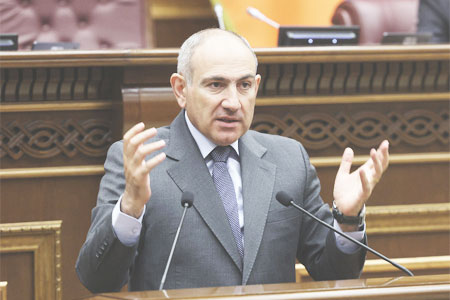 It`s time for South Caucasus countries to think of South Caucasus as single, unified region - RA premier
  Pashinyan: Armenia and Azerbaijan should leave each other alone
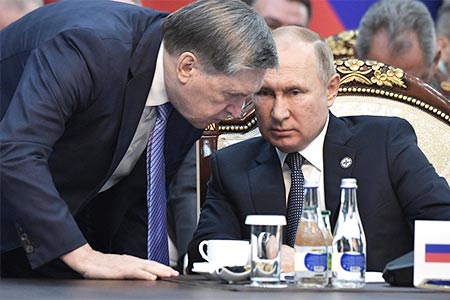 Moscow sees situation with Armenia as attempt to attack Russia-involving integration associations - Russian presidential aid
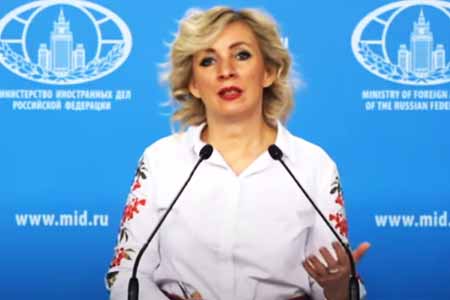 Zakharova: Armenia views relations with Russia as tool for financially securing reorientation toward EU