
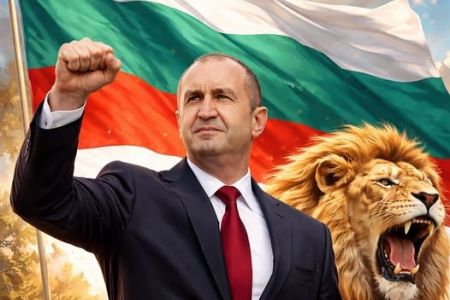
ArmInfo. What has happened in Bulgaria in the last few months is more than just a change of power. It's a political earthquake. After millions of protesters took to the streets of Sofia and other cities in late 2025 and early 2026, it became clear: the old Bulgaria is becoming history. This is the opinion expressed by Bulgarian political analysts.
December 2025 marked the beginning of the end for the old elite. The government's attempt to impose a "belt-tightening" budget for 2026 amid corruption scandals was the last straw. Popular anger was so widespread that the Zhelyazkov government didn't simply resign—it fled under the pressure of a nationwide strike.
Millions of people in the squares demanded one thing: cleansing. Rumen Radev found himself at the center of this movement. He didn't simply support the streets; he became their political battering ram, declaring that "the mafia must leave the institutions of power."
Bulgaria hadn't seen such a resounding result in decades. For the past 15-20 years, the political scene has been fragmented, and no force could boast a genuine popular mandate. Today, the situation has changed. The Progressive Bulgaria coalition, led by Radev, achieved the impossible, winning over 45% of the vote in the elections. This is an absolute record, transforming Radev from a presidential arbiter into a fully-fledged architect of the new executive branch.
Key Points of Rumen Radev's Program (Mandate 2026)
The people voted for concrete and tough steps that Rumen Radev promised to implement immediately:
• A ruthless anti-corruption purge: Elimination of "state capture models" and an audit of all major public procurement in recent years.
• Economic stability: Repeal of the predatory tax initiatives of the previous government and a freeze on energy prices.
• Direct democracy: Strengthening the role of referendums and the direct accountability of officials to voters.
• Social protection: Immediate revision of pensions and minimum wages to compensate for inflation.
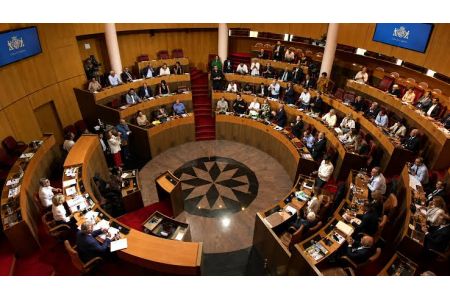
New Parliament: Balance of Power (as of April 20, 2026) Based on the processing of over 91% of the protocols, the composition of the 51st People's Assembly is as follows. Radev receives not just a majority, but the ability to shape the agenda single-handedly or with minimal partners.
Progressive Bulgaria (Rumen Radev) 44.7% 131 seats
GERB-SDS (Boyko Borisov) 13.4% 39 seats
PP-DB (Asen Vasilev) 13.2% 39 seats
DPS – New Beginning (Delyan Peevski) 6.2% 18 seats
MECH Party 4.4% 13 seats
Revival Party 4.3% 12 seats
Rumen Radev's victory with 131 out of 240 mandates marks the end of an era of political stagnation. For the first time in many years, Bulgaria has a government that relies not on backroom deals, but on the will of millions of people who stood on the barricades just a few months ago. This is a victory of hope over fear, and now Radev has all the tools to prove that these hopes were not in vain.













 Iranologist: Baku`s propaganda of might masks the country`s inability to provide water to its own population
 Analyst: Continued tensions between Yerevan and Moscow could entail new restrictive measures from Russia
 Political analyst: Russia intends to determine which "Camp" Armenia will choose through a referendum
 Armenia and France discuss further development of strategic partnership and EU cooperation
  To overcome risks Armenia must reduce domestic escalation - expert
  Zatulin: Pashinyan was eager to get back to Russia because he actually lost the elections
 Human rights activist Ruben Melikyan dismissed from YSU
 Pashinyan removed from INNOPROM guest list
 Zakharova: Armenia`s pro-EU pivot poses economic security risks to EAEU member states
 It`s time for South Caucasus countries to think of South Caucasus as single, unified region - RA premier
  Pashinyan: Armenia and Azerbaijan should leave each other alone
 Moscow sees situation with Armenia as attempt to attack Russia-involving integration associations - Russian presidential aid
 Zakharova: Armenia views relations with Russia as tool for financially securing reorientation toward EU
 The Armenian Minister of Justice and the EU Ambassador discussed visa liberalization issues for Yerevan.
 Azerbaijan`s aggressive plans against Armenia became possible in wake of Pashinyan`s decisions on Artsakh - expert
  Zakharova: Russia sent a note of protest to Armenia over the act of vandalism at the "Mother Armenia" memorial in Gyumri