
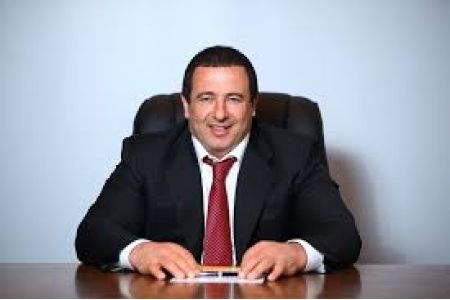
ArmInfo. Gagik Tsarukyan, leader of the Prosperous Armenia Party (PAP), presented the political party's approach to the universal health insurance system in Armenia. Tsarukyan recalled that his party is participating in the parliamentary elections with the "Armenia Proposal" program, which presents the most important issues affecting the country and the party's proposals for addressing them. One such issue, as the PAP leader noted, is healthcare, which has seen public debate intensify in recent months following the country's implementation of a universal health insurance system.
"My fundamental approach is this: health insurance is a very important system, and it certainly must work, but reforms must be implemented thoughtfully, cautiously, and without compromising the income, health, and well-being of healthcare workers. Doctors and healthcare workers must receive a decent salary commensurate with their workload. Health insurance should provide a sense of security for both patients and healthcare workers," Tsarukyan emphasized in his Facebook post.
In this regard, he noted that their party is proposing an insurance system that will provide citizens with lifelong guarantees, rather than being an election campaign with unclear funding mechanisms. "We are proposing an insurance system that doesn't lead to endless lines and hassle. Universal health insurance must be accompanied by investment in infrastructure. Re-equipping and modernizing medical facilities, improving conditions in buildings, especially in the regions, are a crucial task that the state must address with the private sector," the party leader explained. Furthermore, Tsarukyan emphasized that the state is obligated to protect its citizens in the pharmaceutical market, just as it protects them in energy and food security. Specifically, he noted that today, no one should be faced with a choice between medicine and food. "Health should not become a victim of market mechanisms or monopolies. This is both a political and humanitarian responsibility of the authorities," the party leader concluded.
As a reminder, mandatory health insurance envisions a phased implementation over three years. The first phase began on January 1, 2026. The system covers children under 18, individuals aged 65 and older (even if employed), disabled individuals aged 18 to 65, members of socially vulnerable families, and citizens earning over 200,000 drams. The base cost of an insurance policy in 2026 will be 129,600 drams (10,800 drams per month). Part of this amount is offset by payments to the Zinapa Military Insurance Fund. These payments, increased in 2021, are now returning to their previous level of 1,000 drams, regardless of salary.
The remaining portion will be reimbursed to beneficiaries upon filing their annual personal income tax return. However, in 2026, these amounts will be reimbursed monthly from the state budget. This year, individual entrepreneurs will also benefit from the system and will be required to pay their own insurance premiums. Overall, by 2026, medical insurance will cover approximately 1.6 million people.
A state fund has been created to manage the system. It will operate under temporary management for three months, after which a state selection committee will form its board of directors, which, as stated in the Concept for the Implementation of Compulsory Medical Insurance, will be chaired by the Minister of Health.








 Opinion: The development of the Amulsar mine near the resort town of Jermuk is the beginning of an environmental disaster in Armenia
 Expert: The arrest of opposition figures in Armenia for social media posts is a systematic attempt to intimidate the public and suppress dissent.
 Azerbaijani Studies Expert: While Azerbaijan Prepares Its Generation for War, Aliyev’s Aide Calls on Armenia to Prepare Armenian Society for “Peace”
 Turkologist: Azerbaijan will never, under any circumstances, stop pressuring the Armenian people
 Political scientist: We need to move away from the question of "when" and replace it with more important questions
 Lukashenko called for Armenia to assume the CIS presidency in 2029
 Dmitry Medvedev predicted a Ukrainian-like fate for Armenia amid the country`s shift in foreign policy
 Russian Security Council: In Armenia, they want to force Russian asset owners to dispose of their assets
 Zakharova: Russia ready to discuss with Armenia the prospects for expanding military cooperation as part of a review of bilateral ties
 Tevanyan: Armenia, like Ukraine and Moldova, is being drawn into the EU’s global war
 Yerevan City Hall is considering introducing a valet parking system in the city
 Expert: The circus surrounding the “Albanization” of Armenian culture in the presence of foreign ambassadors in occupied Artsakh is genocide
 Political scientist: If Russian-Armenian relations are destroyed, Turkey will take Russia`s place
 Political scientist: The Armenian public is simply obliged to significantly change the entire content of public discourse and struggle
 Cross tattoos are being removed from the skin of Christian prisoners in Azerbaijan by fire, according to a human rights activist.
 Zakharova: Armenia`s likely introduction of visas with Russia will be a step against Yerevan itself
 Putin: Armenia`s recognition of Karabakh as part of Azerbaijan in Prague has given Russia`s position on this issue an ambivalent character
 Putin: Armenia`s adoption of the law on EU accession means an announcement of its withdrawal from the Eurasian Economic Union
 Aram Vardevanyan: Public demands solutions, not apology scandals in Parliament