
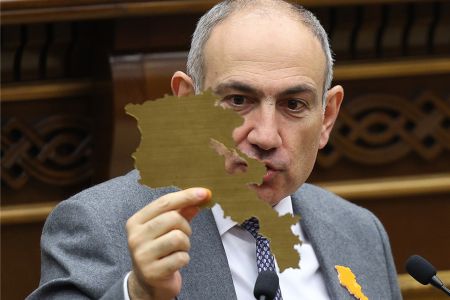
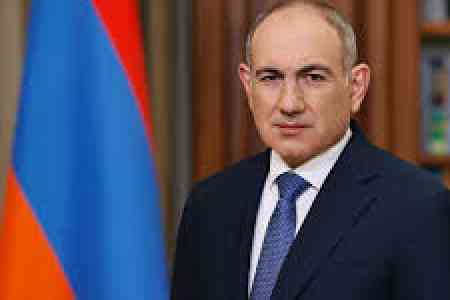
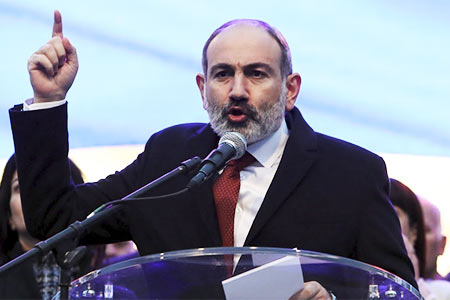
ArmInfo. On June 7, 2026, the Armenian people will have to say "yes" to the peace established between Armenia and Azerbaijan. This was stated by RA Prime Minister Nikol Pashinyan on his Facebook page on April 20, while presenting the election program of the ruling Civil Contract party.
According to the Prime Minister, this peace is still fragile, vulnerable, and requires constant attention. "Go to the polls on June 7 and become masters of the world by voting in favor of the Civil Contract," Pashinyan noted, also pointing out that the ruling party's ideological foundation is the thesis of a "real Armenia" and the doctrine of institutional changes in the country's economy, which was adopted several months ago.
The Prime Minister emphasized that the cornerstone of the Civil Contract program for 2026-2031 will be the institutionalization of peace. The peace process between Armenia and Azerbaijan began in 2024, when the border delimitation and demarcation process began in the Tavush region and the regulations on the work of joint border delimitation commissions were signed. This process continued in 2025, when the initialing ceremony of the Armenian-Azerbaijani agreement on the establishment of peace and interstate relations took place in Washington on August 8 and the principles for unblocking transport communications in the region were approved. Thus, as the head of government noted, the process of institutionalization began. The process of unblocking communications, which is de jure binding, is underway. The parties recognize that Armenia's borders are comparable to those of Soviet Armenia, and Azerbaijan's borders are comparable to those of Soviet Azerbaijan.
To institutionalize the peace process, Pashinyan primarily emphasized the need for a consistent border delimitation and demarcation process, the implementation of the TRIPP program, the final signing and ratification of the peace treaty between Armenia and Azerbaijan, and the phased implementation of the agreements reached in Washington.
The Prime Minister also emphasized that these steps should not be limited to these steps. An equally important contribution to the peace process should be contacts between civil society representatives of the two countries, the continuation and development of mutual trade, and political, cultural, and humanitarian dialogue. The "Civil Contract" will support these processes. "I am pleased to note" that some programs are already becoming a reality: mutual trade is gradually being established, and meetings between civil society representatives are taking concrete shape. "I hope that in the future, ties will also be established between businessmen of the two countries," the Prime Minister of Armenia said.













 Expert: The arrest of opposition figures in Armenia for social media posts is a systematic attempt to intimidate the public and suppress dissent.
 Azerbaijani Studies Expert: While Azerbaijan Prepares Its Generation for War, Aliyev’s Aide Calls on Armenia to Prepare Armenian Society for “Peace”
 Turkologist: Azerbaijan will never, under any circumstances, stop pressuring the Armenian people
 Political scientist: We need to move away from the question of "when" and replace it with more important questions
 International Law Specialist: Azerbaijan intends to initiate legal proceedings against Armenia by sentencing Armenian prisoners
 Lukashenko called for Armenia to assume the CIS presidency in 2029
 Dmitry Medvedev predicted a Ukrainian-like fate for Armenia amid the country`s shift in foreign policy
 Russian Security Council: In Armenia, they want to force Russian asset owners to dispose of their assets
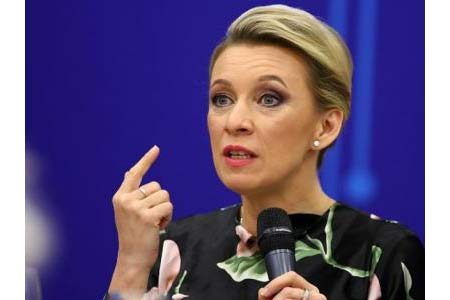 Zakharova: Russia ready to discuss with Armenia the prospects for expanding military cooperation as part of a review of bilateral ties
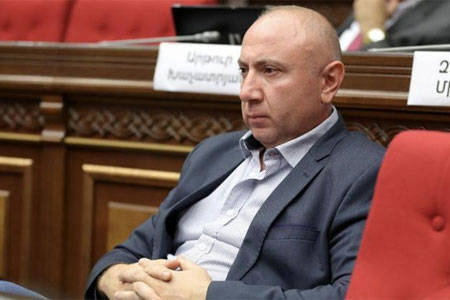 Tevanyan: Armenia, like Ukraine and Moldova, is being drawn into the EU’s global war
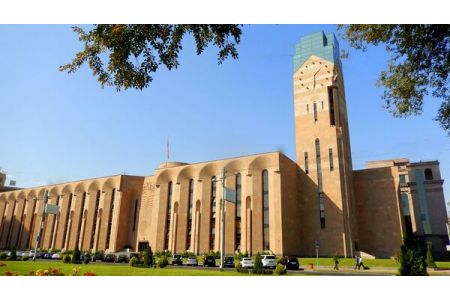 Yerevan City Hall is considering introducing a valet parking system in the city
 Expert: The circus surrounding the “Albanization” of Armenian culture in the presence of foreign ambassadors in occupied Artsakh is genocide
 Political scientist: If Russian-Armenian relations are destroyed, Turkey will take Russia`s place
 Political scientist: The Armenian public is simply obliged to significantly change the entire content of public discourse and struggle
 Cross tattoos are being removed from the skin of Christian prisoners in Azerbaijan by fire, according to a human rights activist.
 Zakharova: Armenia`s likely introduction of visas with Russia will be a step against Yerevan itself
 Putin: Armenia`s recognition of Karabakh as part of Azerbaijan in Prague has given Russia`s position on this issue an ambivalent character
 Putin: Armenia`s adoption of the law on EU accession means an announcement of its withdrawal from the Eurasian Economic Union
 Aram Vardevanyan: Public demands solutions, not apology scandals in Parliament