


ArmInfo. Any use of administrative resources must be avoided during the upcoming parliamentary elections. This was stated by Commission Chairman Vahagn Hovakimyan on April 15 during the presentation of the Central Electoral Commission's report on its activities for 2024-2025 to the National Assembly of the Republic of Armenia.
He stated that to address this issue, a guidebook was developed jointly with the RA Ministry of Justice and distributed to all government agencies. Four local government elections were held in 2024-2025, one of which was held under the majoritarian system and three under the proportional system. The results of these elections were not appealed. On April 10, 2025, the Central Election Commission approved its Strategic Development Plan for 2025-2028. The document outlines the commission's development strategy.
According to the document, the CEC's mission is to ensure the exercise of people's power through free, fair, transparent, competitive elections and referendums that meet international standards. Beginning in 2025, the commission's efforts will be focused on the effective organization of electoral processes, increasing transparency and accountability, technological development, improving voter education and awareness, and developing the capacity of election commissions.
According to the commission's chairman, given global trends related to the electoral system, it is clear that district election commissions should have regional headquarters with separate premises and equipped with modern technology. "We plan to have headquarters in 10 regions. We have received positive feedback from international partners, and the process of establishing them will be initiated after the National Assembly elections," emphasized Vahagn Hovakimyan. He added that since 2024, the digital system used by the Central Election Commission has been continuously refined and improved. Almost the entire commission process has been completely digitized, with the exception of the voting process itself, which will remain paper-based.
The digital system will also be used during the preparation and conduct of the upcoming parliamentary elections. Moreover, all polling stations with 300 or more voters will be provided with a live broadcast of the voting process and the tabulation of results. Hovakimyan also emphasized the importance of training those involved in the electoral process: members of local and regional commissions, media representatives, observers, and authorized representatives.





















 Politician: The Moldovan scenario in Armenia will lead to revolution
 American agenda in South Caucasus has two priorities: TRIPP project and increasing pressure on Iran - expert
 Armenian political scientist outlines two likely goals for tomorrow`s visit by U.S. Secretary of State to Yerevan
  Domestic escalation to lead to external escalation soon - expert
  Opinion: Situation within Armenia and on its borders will largely depend on developments surrounding Iran
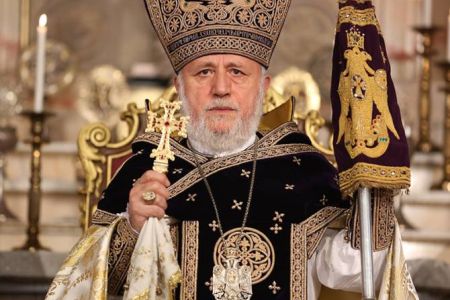 Catholicos: We must make every possible effort to ensure justice prevails for the people of Artsakh
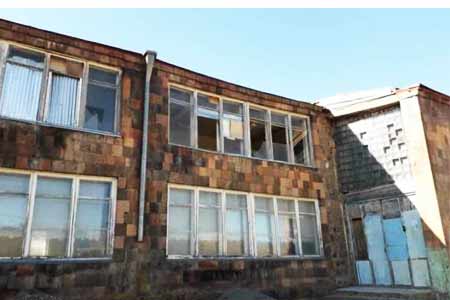 Opposition leader names newly built schools in Vayots Dzor to be handed over to Azerbaijanis
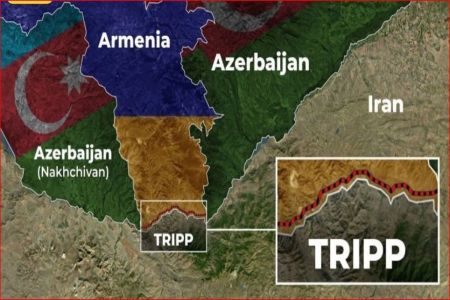 Expert: Armenia and Azerbaijan are participating in the US geopolitical game to encircle Iran
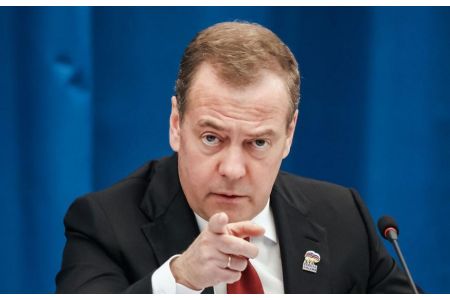 Medvedev likens Pashinyan`s stance on EAEU/ EU referendum to Trotsky`s formula
 Choice between EU and EAEU is choice between unrealizable dream and certainty
 As alternative to Russia`s policy, Armenian authorities directly or indirectly hinting at Turkey and Azerbaijan - MP
 Lukashenko: "We don`t want Armenia to withdraw the EAEU, but we can`t go against the will of the Armenian people"
 Peskov describes Armenia`s pivot toward EU as understandable and transparent
 After Artsakh and the army, Syunik will become the next target - Robert Kocharyan
 Mirzoyan assures: Issue of PoWs and detainees in Baku is constantly on Armenian government`s agenda
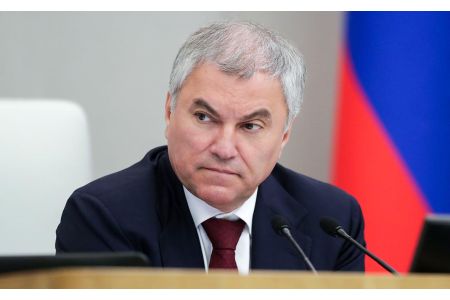 Volodin: We can no longer remain silent about processes unfolding in Armenia