
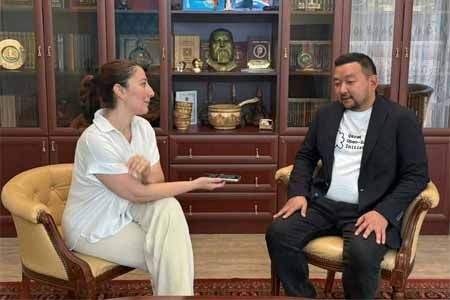
ArmInfo. A round table on the topic of was held in Yerevan. One of the invited guests was Kasym Nurbekuly Majen, founder of the Qazaq Open Source Initiative (QOSI), a non-profit organization promoting open-source and cloud-native approaches, and director of the Open Source Solutions Department of JSC (NIT), a subordinate organization of the Ministry of Artificial Intelligence and Digital Development of the Republic of Kazakhstan.
Despite a busy schedule, an ArmInfo correspondent managed to meet with one of Kazakhstan's leading experts in digitalization and AI technologies and discuss how Kazakhstan is building its digitalization and AI implementation path, the methods and solutions it uses, and the potential for technological cooperation between Kazakhstan and Armenia.
eGov and AI in Kazakhstan
Kasym Mazhen said that Kazakhstan has made significant progress in developing e-government. Systematic work in this area began in the mid-2000s, and the eGov.kz portal was launched in 2006. Today, approximately 90% of government services are available online, and for most of the most popular services, citizens no longer need to physically visit a government agency or public service center.
With the introduction of AI approaches, he said, not only service delivery channels are changing, but also the processes within the government. As one example, the expert cited eOtinish—a system for submitting and processing citizen and business inquiries.
Public inquiries create a very heavy workload. Here, AI is of enormous help: the system can automatically summarize inquiries, prepare preliminary responses based on a knowledge base and regulations, determine the category and tone of the inquiries, and generate analytics. But, of course, all of this occurs under human control, he noted.
eGovernment is also developing in parallel. While the first AI-based solutions primarily helped people quickly find the right government service, Kazakhstan is now moving toward an agent-based approach, in which the system not only provides information but also guides users through the necessary steps to obtain the service.
Will AI replace humans?
Kasym Majen noted that artificial intelligence has been generally well received in Kazakhstan. The country is building data centers, and the national supercomputer complex Alem.Cloud has been created, making it into the global TOP500 ranking and ranking 104th in the latest ranking for June 2026. But behind all this infrastructure are people, and as computing power grows, the need for specialists capable of operating it grows.
In his opinion, this is why it's necessary to focus as much as possible on training people. AI shouldn't be used for its own sake: it's important for specialists to apply it where the technology truly enhances complex or routine work. According to the founder of QOSI, he interacts with approximately 20 specialized AI agents in his daily work.
"For example, our department is small—only seven people—but I alone have a large group of agents," he shared. Comparing AI to a tool for enhancing human capabilities, the expert drew an analogy with a talented artist performing in front of an audience of thousands: even they need a microphone. "Artificial intelligence is nothing more than an amplifier," Kasym Majen emphasized.
At the same time, the expert noted, it is especially important to properly integrate AI into education. Instead of using it to identify and fill knowledge gaps, students often use the technology to complete homework or find ready-made answers to tests.
According to the expert, clear rules and methodology for using AI in education are needed—taking into account the role of the teacher, academic integrity, data protection, and the need to preserve students' fundamental knowledge.
Today, the fundamentals of artificial intelligence are already being integrated into the school curriculum in Kazakhstan. AI is not being introduced as a separate subject: in grades 1-4, "Digital Literacy" has been renamed "Digital Literacy and Artificial Intelligence," and in grades 5-11, "Computer Science" has been renamed "Computer Science and Artificial Intelligence."
A separate project is being developed for small rural schools. A pilot project using AI technologies was launched in 10 schools in the Pavlodar and Kyzylorda regions on September 1, 2026. The pilot program is expected to cover 500 small schools, and by 2029, the most effective solutions are planned to be scaled up to all 2,600 such schools in the country. AI tutors are expected to expand access to personalized learning and help close the gap in educational quality between urban and rural areas.
Similar approaches are already being used globally, but scaling up such solutions at the national level could be one of the first major cases for Central Asia.
According to the expert, if the current technological trend continues and global geopolitical tensions subside, the region's prospects look positive. Initiatives already underway—construction of data centers, development of computing infrastructure, training of specialists, community development, and cooperation between countries—are laying the foundation for the widespread adoption of AI.
In his speech at a roundtable in Yerevan, Kassym Majen discussed the idea of transitioning from Digital Crossroads to Digital Commons – the creation of shared digital resources, open standards, and technological approaches that can be used and developed by different countries. "I think there is very good scope for cooperation here for Armenia and Kazakhstan," he noted.
The QOSI founder explained that this primarily concerns open standards, reference architectures, and approaches to creating platforms for orchestrating AI workloads and related applications. Armenia and Kazakhstan can cooperate in these areas both at the national level and at the level of their engineering and scientific communities.
It is especially important that, by using common global standards and a cloud-native approach, solutions created in one country can be further adapted and used in another. "Therefore, it makes sense to think together to ensure that the solutions created do not remain exclusively domestic products but have the potential for further scalability," the expert emphasized.
At the same time, Digital Commons does not mean that one country gains access to the other's infrastructure. It is about the joint use of open standards, open-source technologies, architectural approaches, and accumulated engineering expertise while maintaining the independence of each party.
After participating in the event and discussions with his Armenian colleagues, Kasym Majen noted Armenia's great technological potential. Large data centers are developing here, there is government support for the technology sector, and programs are being implemented to attract IT specialists from various countries. Taken together, these initiatives could provide a significant boost to the development of the digital sector.
Furthermore, he noted the country's strong scientific and human resources potential. Even before the launch of Alem.Cloud, Kasym Majen and his team spoke with Armenian specialists working with the supercomputer infrastructure at one of the capital's universities. He was particularly impressed by the level of problems they were solving.
Open source and cloud-native: where to begin digitalization?
If the digitalization process had to be started from scratch, the expert recommends first embedding modern standards and technologies at the system's basic architecture level.
If Armenia is to create new government digital systems or thoroughly modernize existing ones, the expert believes it is important to immediately embrace open standards, open-source components, API-first, and cloud-native architecture.
According to him, a good technological foundation allows for the subsequent modification of individual components without rewriting the entire system from scratch. With a properly designed cloud-native architecture, individual services and workloads can be migrated or scaled, if necessary, between in-house infrastructure and public cloud platforms such as AWS, Microsoft Azure, or Google Cloud.
Thursday, October 15 2026 16:01
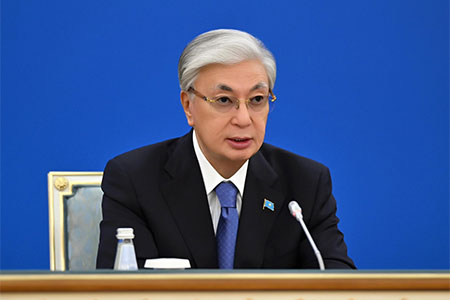 ArmInfo. Kazakh President Kassym-Jomart Tokayev welcomed the emerging reconciliation process between Azerbaijan and Armenia. >>> |
Wednesday, October 14 2026 17:49
 ArmInfo. Citizens of Russia, Armenia, and other countries with which Kazakhstan has a visa-free regime will require an electronic permit to enter the republic starting July 1, 2027. The document will be free and valid for 180 days, Zakon.kz reports, citing a government decree. >>> |
Friday, September 25 2026 10:57
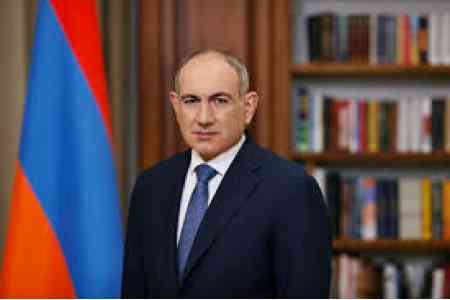 ArmInfo. RA Prime Minister Nikol Pashinyan sent a telegram of condolences to Kazakh President Kassym-Jomart Tokayev in connection with the loss of life in a tragic incident that occurred during naval exercises. >>> |
Thursday, September 24 2026 17:27
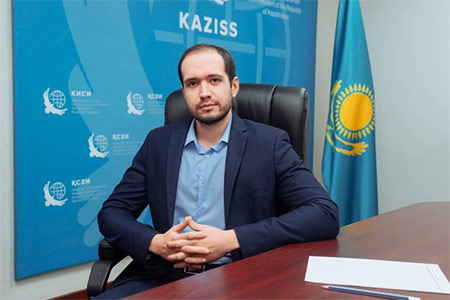 ArmInfo. The transfer to Kazakhstan of the concession to manage Armenia’s railways is a subject of considerable discussion in Yerevan. This was stated on September 24, in a conversation with an ArmInfo correspondent on the sidelines of the APRI Armenia 2026 forum, by Alisher Abdreshev, leading expert at the Department of European and American Studies of the Kazakhstan Institute for Strategic Studies (KISS). >>> |
Thursday, September 17 2026 16:41
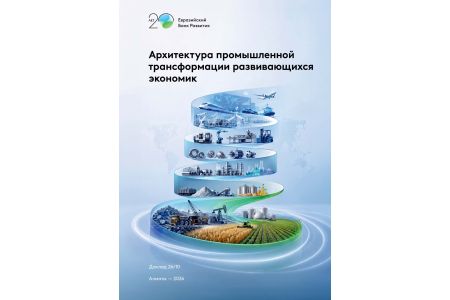 ArmInfo. The Eurasian Development Bank (EDB) has presented a new analytical report, «The Architecture of Industrial Transformation in Developing Economies», analyzing how developing countries can transition to the high-income category and establish themselves sustainably in this group. Based on a study of the historical experience of industrialization, modern theories of industrial policy, and the approaches of the World Bank and the IMF, EDB analysts propose a three-stage architecture of industrial transformation that enables external technologies and investments to be converted into domestic production capabilities, human capital, and innovation. >>> |
Monday, September 14 2026 19:16
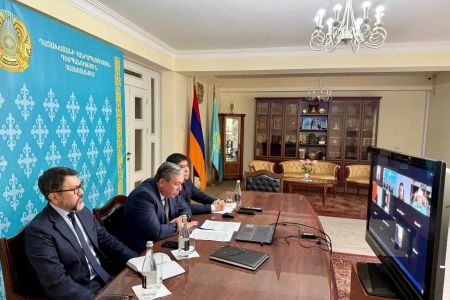 ArmInfo. To further deepen trade and economic cooperation between Kazakhstan and Armenia, an online meeting was held with representatives of QazTrade JSC, the Kazakh-Armenian Business Council, the Chamber of Commerce and Industry of Armenia, Kazakhstan's Honorary Consuls, and the Armenian business community. >>> |
Ararat Mirzoyan congratulated Mukhtar Tileuberdi on his appointment as Kazakhstan`s Foreign Minister
Tuesday, September 8 2026 10:34
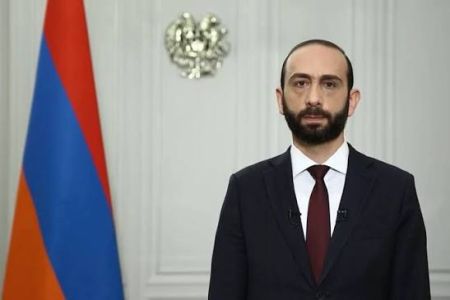 ArmInfo. Armenian Foreign Affairs and International Trade Minister Ararat Mirzoyan called Kazakh Foreign Minister Mukhtar Tileuberdi and congratulated him on his appointment as Kazakhstan's Foreign Minister. >>> |
Monday, August 24 2026 20:44
 ArmInfo. Armenian Prime Minister Nikol Pashinyan held a telephone conversation with Kazakh President Kassym-Jomart Tokayev. >>> |
Tuesday, August 4 2026 17:03
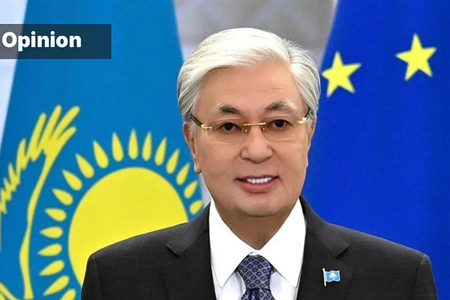 ArmInfo. Prime Minister of Armenia Nikol Pashinyan held a telephone conversation with President of the Republic of Kazakhstan Kassym-Jomart Tokayev. >>> |
Tuesday, August 4 2026 14:03
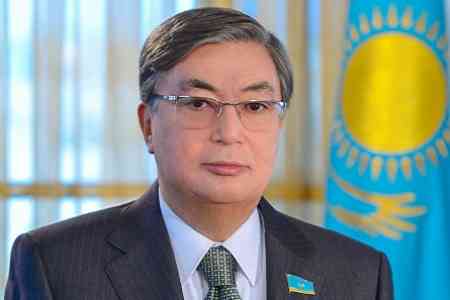 ArmInfo. President of the Republic of Kazakhstan Kassym- Jomart Tokayev sent a congratulatory message to Nikol Pashinyan on his reappointment as Prime Minister of the Republic of Armenia. >>> |
Wednesday, July 1 2026 17:19
 ArmInfo.Armenia and Kazakhstan have agreed to allocate land in their respective capitals for the construction of embassies on a reciprocal basis. During an extraordinary session on July 1, the Standing Committee on Foreign Relations of the National Assembly of Armenia issued a favorable opinion on the draft agreement submitted by the government for ratification. >>> |
Monday, June 15 2026 15:10
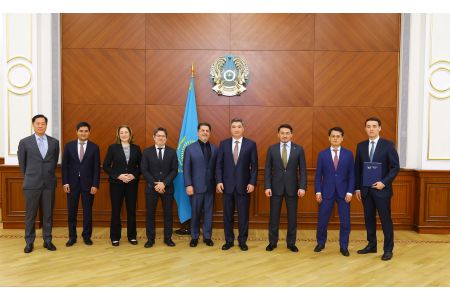 ArmInfo. Firebird Inc. today announced the signing of strategic cooperation agreements with the Government of Kazakhstan aimed at supporting the development of national next-generation artificial intelligence infrastructure, advanced computing capacity, and a globally competitive digital AI ecosystem. >>> |
Monday, June 8 2026 10:03
ArmInfo. Kazakh President Kassym-Jomart Tokayev congratulated Armenian Prime Minister Nikol Pashinyan on his Civil Contract party's victory in the parliamentary elections. This was reported on the Kazakh leader's official website. >>> |
Tuesday, June 2 2026 20:25
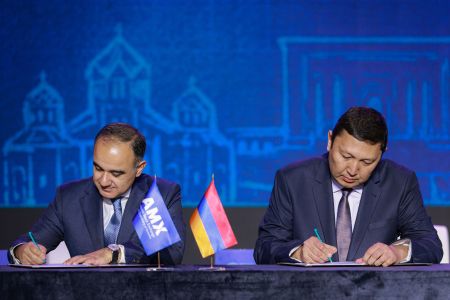 ArmInfo. The Armenian Stock Exchange (AMX) and the Kazakhstan Stock Exchange (KASE) signed a memorandum of understanding. The agreement marks an important step toward deeper cooperation between the two exchanges and further integration of regional capital markets through the Tabadul Hub initiative launched by ADX, creating new opportunities for cross-border collaboration and market connectivity. >>> |
Wednesday, April 22 2026 11:51
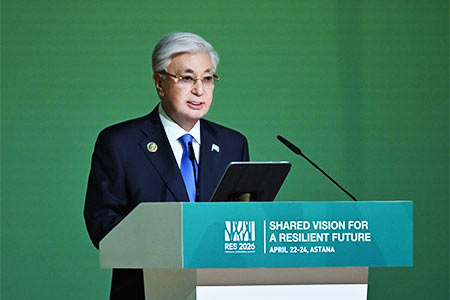 ArmInfo. Today, on Earth Day, we have gathered in Astana to reaffirm our shared responsibility to protect our planet. This means that the countries of the region clearly understand the urgency and critical importance of having a vision for achieving a sustainable future. This was stated by President of the Republic of Kazakhstan Kassym-Jomart Tokayev on April 22, opening the plenary session of the Regional Ecological Summit (RES). >>> |
Wednesday, April 22 2026 10:40
 ArmInfo. The Ministry of Transport of Kazakhstan supported the establishment of direct air service with Armenia. >>> |
Wednesday, April 22 2026 10:21
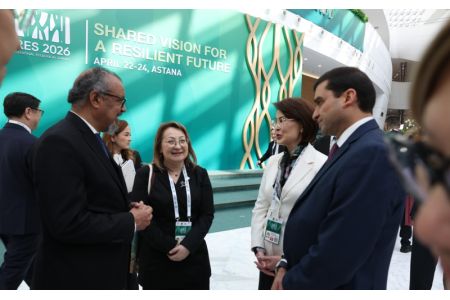 ArmInfo. The first Regional Environmental Summit (RES), the largest environmental event in Central Asia, has opened in Astana. The Kazakh capital has brought together representatives of regional states, international organizations, financial institutions, and the expert community. >>> |
Wednesday, April 22 2026 10:02
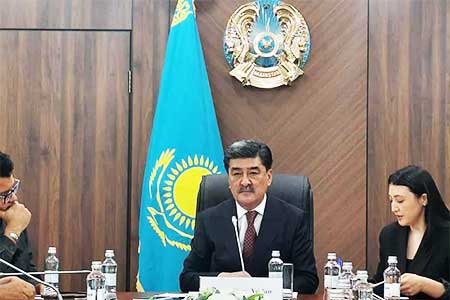 ArmInfo. The main value of the Regional Ecological Summit (RES) is that it moves problematic issues from the discussion level to practical implementation. >>> |
Friday, April 10 2026 12:24
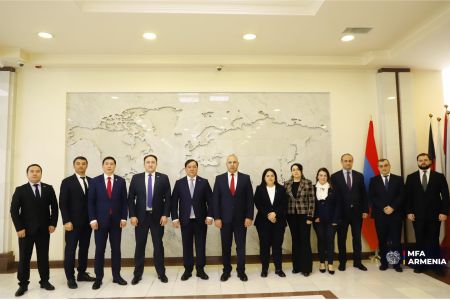 ArmInfo. Regular consular consultations between the Foreign Ministries of Armenia and Kazakhstan were held at the Armenian Foreign Ministry. >>> |
Thursday, April 2 2026 17:44
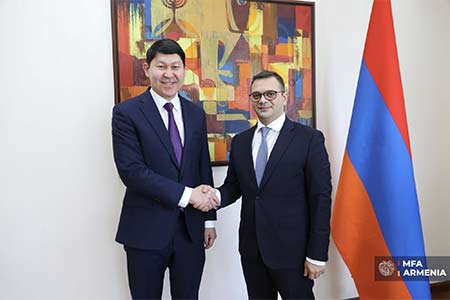 ArmInfo. Armenian Deputy Foreign Minister Robert Abisogomonyan received a delegation led by Didar Temenov, Director of the Multilateral Cooperation Department of the Kazakh Foreign Ministry. The delegation arrived in Armenia to hold political consultations between the Multilateral Cooperation Departments of the Armenian and Kazakh Foreign Ministries. >>> |

