

Azeri
mass media have recently reported Azerbaijan's decision to stop all
negotiations for buying new arms from Russia and a simultaneous decision by
some European producers to soften their arms sale terms for the South Caucasus.
Has Baku an opportunity to refuse the Russian military equipment indeed?
Azerbaijan will refuse Russian equipment
and weapon only when Russia refuses to deliver it. Otherwise, that will not
happen. In this context, everything depends on Moscow, not Baku as some people
try to present. I think that Moscow has already refused to deliver certain
types of weapon to Baku. And today Azerbaijan is trying to present the
situation in a favorable light, saying that it refuses to purchase Russian
weapon.
Why
might Russia have refused such beneficial cooperation given that over the past
5 years Baku has purchased from Moscow weaponry worth 1.7 bln USD?
There are certain problems in the
relations between Baku and Moscow that need to be settled. The first is about
close military cooperation between Baku and Ankara and purchasing of the
Turkish weapon by Azerbaijan. The second is about pretensions of Azerbaijan to
the Caspian basin. Moscow worries about aspiration of the Aliyev's regime to
help the West to dispose of Iran, as well as about Baku's actions at the southern
borders of Russia. The matter concerns illegal training of terrorists,
treatment of wounded terrorists, delivery of weapon from the territory of
Azerbaijan since the beginning of the 1990s. The aspiration of Baku and Ankara
to destabilize the situation in the North Caucasus has been proved for several
times. Finally, Israel really could offer Azerbaijan to deliver weapon at the
damping prices. This must not be ruled out either. So, 1.7 billion of the oil
dollars cannot play the key part in the relations between Moscow and Baku. Here
there are many more serious and expensive problems.
Ho much
do you think the relations between Baku and Tehran may deteriorate? The
situation is aggravating with every passing day…
The hysteria of Aliyev's regime against Iran
is directed only at local usage. Azerbaijan is guided by the feudal development
model, in which the Alyev's clan has been conducting an anti-people policy. In
this context, the clan extremely needs frightening its own people by the
external threat from the side of Armenia, Iran and even Turkmenistan from time
to time. This is a political line, an instrument used by the Aliyevs for many
years. They have no other way, because to go the normal civilized way of
development will mean for them to lose everything gained illegally.
Today
experts speak much about Armenia’s dilemma between the Customs Union and the EU
Association. It is noteworthy that the issue is raised in the political context
mostly and only few speak of its economic component…
Armenia has passed a rather difficult period of
history in the conditions of conducting foreign complementary policy. As a
result of such a policy, our country took numerous duties against the opposing
force centers. And it is quite natural that the republic cannot immediately get
rid of these duties and start conducting the new foreign policy. However,
creation of the Customs Union and the prospects of the Eurasian Union creation
are new opportunities for the foreign policy of Armenia. I think that Armenia's
interests are obvious just in these two structures. At the same time, I think
that the republic will go on developing the same way clearing out its
opportunities and prospects of possible membership in these two integration
unions. Joining the Customs Union will help Yerevan to resolve specific
economic problems, whereas the European Union is still very far away and it is
a practically impossible future for Armenia. Today, it is unreal for Armenia to
see in the EU specific potential of the economic development and integration
processes.
What
specific benefits may there be?
Armenia's joining the Customs Union will first of all
open a huge and endless market for the country, where Armenian goods will feel
more comfortable than at the European market. This is very much relevant today,
taking into account the fact that the present production capacity of Armenia
was created just at the Russian market. Secondly, joining the Customs Union
will open new integration opportunities for Armenia, including with its neighboring
countries. As I know, dozens of countries, including Iran, have already
displayed their interest in joining the Customs Union. Many customs points on
the way of goods importing to Armenia cannot but affect their final cost. In
this context, joining the CU will result in dropping of prices of the goods
imported to Armenia. As for the political component, he thinks that the
military-political and strategic relations with Russia have no alternative for
Armenia, and the history has proved that many times since 1990. These relations
will go on developing at least for the next dozens of years ensuring Armenia's
security.
Armenia
will soon mark the 100th anniversary of the Armenian Genocide in the
Ottoman Empire. Do you think Armenia conducts a correct policy on international
recognition of the Armenian Genocide?
Armenia's policy in the matter of international
recognition of the Armenian genocide has grown much for the last 4 years. Earlier the authorities of the
republic used to come forward from the extremely uncertain positions which were
damaging international recognition of this human tragedy. At the same time, it
is natural that day by day we come across changes and new challenges around the
issue. I think that the moment has come when the Armenians should demand from
Turkey what they lost as a result of the genocide. Armenians will not be satisfied even with the
Turks' apology, compensation for the moral damage and recognition of their
forefathers' mistakes. The Armenians lost their true motherland and the time
has come to demand what was taken from them. It may be and should be done only
on the basis of the UN conventions and all the internationally recognized
machineries, documents and legal basis. This is enough to reach
historical justice on the basis of the consolidated right of the people of
Armenia.
Вентиляторы vents - возможность создания комфортного микроклимата и в офисе, и дома, и на производстве. Преимущества - экономичность, прочность и соответствие международным стандартам.
One
of the key issues being discussed in the republic is the election to the
Yerevan Elders’ Council. Which of the 7 political forces participating in the
election is most likely to win?
I don't think that the upcoming elections to the
Elders' Council of Yerevan will differ from the previous ones. I think one of
the pro-governmental parties will win. Afterwards, we can expect certain
changes in the life of Yerevan and the citizens of Yerevan. Time sets new
requirements to the public and the authorities. Therefore, the newly elected
Elders' Council will have to seriously approach the basic problems of Yerevan.
It is high time to resolve the problems in the city.
Do
you mean the candidates from not only the Republican Party of Armenia but also
the Orinats Yerkir Party?
Yes, I do. Armen Yeritsyan is a respectful person and
his victory is also quite possible.
What
political consequences will this victory have given the serious public discontent
with the results of the presidential elections held in February?
The post-election tensions are normal not only for
Armenia and the CIS, but also for the world. Force-majeur situations are hardly
possible in the country. Anyway, a new wave of public discontent is undesirable
as it harms the public rather than the authorities. Any domestic political
shocks affect the country's image in the world, and consequently, the
economy. Many power centers pursue their
own interests in Armenia due to the country's geopolitical and strategic
position. In this light, one cannot rule out also a direct connection of the
recent internal processes in Armenia and those power centers. At the same time, the public's large-scale
discontent with the heavy social situation in the country is more than obvious.
Either together or apart, these two factors can become a fruitful soil for
domestic political destabilization.









 Адвокат: У партии Пашиняна по предварительным результатам нет 2/3 голос необходимых для изменения Конституции страны
 Политик: при высокой явке избирателей у нынешней власти практически не будет шансов для воспроизводства
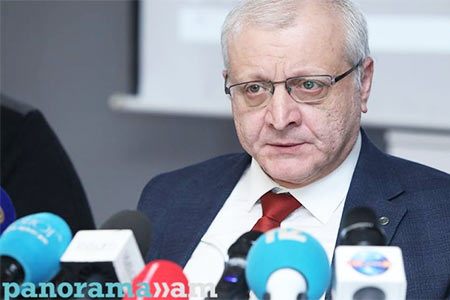 Политолог: достаточно высокая явка избирателей указывает на то, что граждане Армении активно и осознанно участвуют в формировании будущего страны
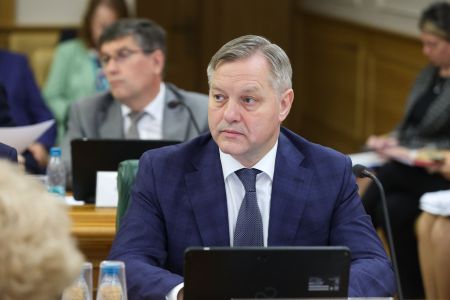 Глава секретариата Совета МПА СНГ: Крайне тяжелая атмосфера агитационной кампании на парламентских выборах в Армении сопровождалась массовыми арестами
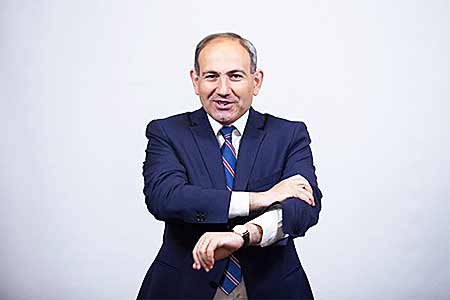 По подсчетам голосов с 533 избирательных участков партия Пашиняна лидирует с 51,13 %
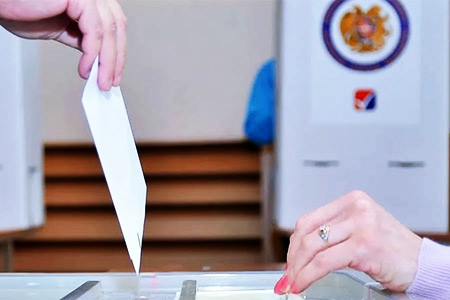 В Армении завершилось голосование на очередных парламентских выборах в стране
 "Сильная Армения": Административный суд не предоставляет судебные акты гражданам, желающим проголосовать на парламентских выборах
 Россия пытается донести Армении, что ЕС фактически уже трансформировался в военно-политический союз - Оверчук
 Глава МИД Армении: Отношения между Арменией и Россией нуждаются в оздоровлении